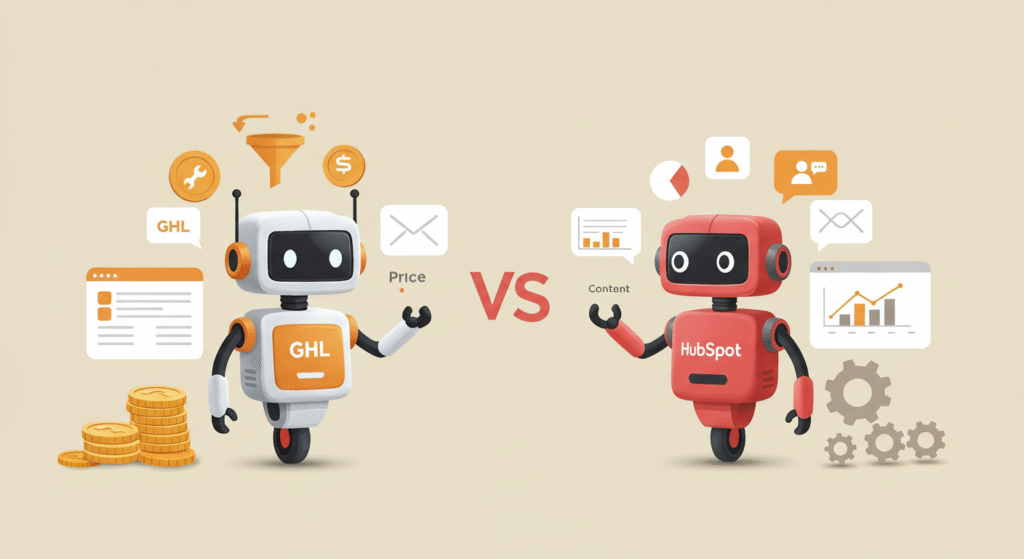
GHL vs HubSpot in 2025: Which CRM Should You Actually Use? They’re both powerful. They both promise results. But which one actually fits your business? If you’ve ever Googled “best CRM,” you know the

They’re both powerful. They both promise results. But which one actually fits your business?
If you’ve ever Googled “best CRM,” you know the rabbit hole runs deep. Every platform swears it’s the answer to your follow-up failures, sales struggles, and customer chaos. But let’s be real—most business owners don’t have time to sort through endless feature lists and marketing fluff.
So we’re cutting through the noise.
This isn’t another jargon-packed showdown full of acronyms and corporate speak. This is a straight-up, side-by-side look at GHL (GoHighLevel) and HubSpot—two of the biggest players in the CRM game—so you can finally figure out which one makes sense for your business.
Whether you’re a solo entrepreneur juggling 87 things or a growing team trying to get organized, this guide will help you make a confident, no-regrets choice.
Let’s start with a simple truth: both platforms are CRMs (CRM stands for Customer Relationship Management). They help you manage relationships, track leads, and grow your business. But they do it in very different ways.
GoHighLevel (aka GHL) is an all-in-one sales and marketing platform built with small businesses and agencies in mind. It’s like getting a website builder, CRM, funnel tool, automation engine, booking calendar, email + SMS platform—and more—in one login. It’s super customizable, cost-effective, and crazy powerful if you know how to use it.
✅ Great for local businesses, solopreneurs, consultants, and marketers
✅ Built for automation, speed, and doing more with less
✅ Often white-labeled and resold (like we do with LeadProspectingAI)
HubSpot is a robust, scalable CRM platform known for its slick design, strong brand, and powerful marketing tools. It’s got deep features for content marketing, sales pipelines, customer service, and analytics—all in one ecosystem. HubSpot’s “freemium” model means you can start small and scale… but the price tag can jump fast.
✅ Great for larger teams or content-heavy businesses
✅ Known for inbound marketing and powerful integrations
✅ Very polished interface, built for collaboration across departments
Both tools help you attract leads, stay organized, and close more deals—but GHL is all about doing more with one platform, while HubSpot is about layering up as you grow. One’s lean and scrappy. The other’s sleek and corporate.
Let’s talk numbers—because pricing is where the GHL vs HubSpot debate really heats up.
GHL keeps it simple: flat monthly pricing, unlimited users, and tons of features out of the box. It’s designed for small teams, agencies, and solo business owners who want everything in one place without paying extra for every new contact or user.
Starter Plan: ~$97/month
Agency Plan: ~$297/month (white-label options included)
Unlimited users, contacts, funnels, and automations
No hidden fees, no surprise upgrade walls.
HubSpot starts free, which sounds great—until you start growing or need more features. Then the costs creep up fast, especially if you want marketing automation, reporting dashboards, or sales tools beyond the basics.
Free Plan: $0 (basic CRM + limited tools)
Starter: From $20–$50/month per user (limited automation)
Professional & Enterprise: Can scale to $800–$3,200/month+ depending on features and contact limits
Add-ons (like marketing automation or sales tools) = extra costs
| Feature | GHL (GoHighLevel) | HubSpot |
|---|---|---|
| Starting Price | $97/month | Free (limited) |
| Full Feature Access | ✅ Included | ❌ Paid tiers only |
| Users | ✅ Unlimited | ❌ Per-user pricing on most plans |
| Contacts | ✅ Unlimited | ❌ Tiered pricing by contact size |
| White-Label Option | ✅ Available | ❌ Not offered |
| Best For | Agencies, local businesses | Mid-large businesses, SaaS teams |
Let’s break it down feature by feature so you can see what matters most for your business.
GHL: Easy to use and fully customizable. Tag leads, assign tasks, track interactions across multiple channels—all in one view.
✅ Good for small teams and solo operators who want visibility without complexity.
HubSpot: Polished and powerful. Great contact organization, timeline tracking, and activity logs.
✅ Good for larger teams needing advanced deal tracking and team collaboration.
GHL: Visual workflow builder makes it easy to automate follow-ups, lead nurturing, and more. Tons of templates included.
✅ Ideal for businesses that want hands-off marketing and follow-up without a tech headache.
HubSpot: Powerful, but only included in higher-tier paid plans. Great for email workflows, lead scoring, and content triggers.
❌ May be overkill (and overpriced) if you’re just getting started.
GHL: Built-in email and SMS tools. Send campaigns, set automations, and even track replies in one dashboard.
✅ Perfect for local businesses who want texting and emailing in one place.
HubSpot: Strong email capabilities, but SMS isn’t built-in (requires third-party tools).
❌ SMS support is limited unless you integrate another app.
GHL: Visual pipelines and basic reporting baked in. You get a clear view of your funnel—but it’s not super deep on analytics.
✅ Good for straightforward tracking and task management.
HubSpot: Advanced reporting, customizable dashboards, and detailed sales forecasting.
✅ Great for data-driven teams who live in spreadsheets.
GHL: Integrates with Zapier, Stripe, Google, Facebook, and other key tools. Fewer native integrations, but covers the essentials.
✅ Best for users who want simple integrations and built-in features.
HubSpot: Massive app marketplace. Native integrations with almost everything—but setup can get complicated.
✅ Best for teams with complex workflows and lots of tools.
GHL: Functional and customizable, but not always the prettiest. Small learning curve if you’re new.
✅ Powerful once you get used to it.
HubSpot: Slick, modern, and intuitive. Designed for teams with varying tech skill levels.
✅ Easy to navigate, especially for non-tech folks.
Choosing the right CRM isn’t about picking the “best” one overall—it’s about choosing the one that fits your needs.
✅ Agencies, coaches, consultants, and local business owners
If you offer services and want an all-in-one platform to run your business, GHL delivers.
✅ Users who want everything under one roof
Funnels, websites, email/SMS marketing, automation—GHL does it all without juggling 5+ tools.
✅ Those who value customization and affordability
You get enterprise-level tools without the enterprise-level price tag.
✅ Larger teams or companies with multiple departments
Especially if you need complex user permissions, collaboration tools, or integration with other platforms.
✅ Businesses investing in content/inbound marketing
HubSpot shines when you’re running blogs, SEO campaigns, lead magnets, and nurturing over time.
✅ Teams that need enterprise-level reporting and support
If you live in dashboards and KPIs, HubSpot’s analytics and support team are top-notch.
Even the best tools have downsides—and being honest about them helps avoid future headaches.
⚠️ User interface isn’t as polished
It works well, but it’s not the slickest experience out there.
⚠️ Has a learning curve
With so many tools in one place, it can feel overwhelming at first.
⚠️ Support depends on who you buy it from
GHL is often resold (white-labeled), so support quality can vary.
⚠️ Pricing climbs fast
What starts as “free” can easily snowball into hundreds (or thousands) per month.
⚠️ Tier system is confusing
Features are split across plans, so it’s hard to know what you’re actually getting until you need it.
⚠️ Hidden costs for scaling
More contacts? More automation? Be ready to upgrade—and pay for it.
There’s no one-size-fits-all answer—but here’s how to figure out what fits you.
Ask yourself:
What’s your budget?
How big is your team?
Are you focused on automation, content marketing, or both?
How comfortable are you with tech?
Do you want an all-in-one platform, or do you already use other tools?
| Feature/Need | GHL ✅ | HubSpot ✅ |
|---|---|---|
| Budget-friendly, flat pricing | ✔️ | ❌ |
| Easy to scale with unlimited users | ✔️ | ❌ |
| All-in-one: website, email, CRM | ✔️ | ❌ |
| Robust inbound/content tools | ❌ | ✔️ |
| Enterprise reporting & dashboards | ❌ | ✔️ |
| Clean UI + high polish | ❌ | ✔️ |
| Best for local biz/agencies | ✔️ | ❌ |
| Best for larger, multi-dept teams | ❌ | ✔️ |
If you’re leaning toward GHL but want a version that’s fully set up, supported, and customized for your industry—LeadProspectingAI gives you the power of GHL without the overwhelm.
✅ Built-in CRM
✅ Automated workflows
✅ Hands-on support
It’s CRM, streamlined for small business success.
Q: Can I migrate from one CRM to the other?
Yes—both platforms offer tools and support for migration, but it can take planning and setup time.
Q: Is GHL just a white-labeled platform?
Technically, yes. GoHighLevel is white-labeled by many providers—but that also means you can get added features, training, and support depending on who you go with.
Q: Do either offer free trials?
HubSpot offers a free tier with limited features. GHL typically has a 14-day free trial (check with your provider).
Q: Can I use both together?
You could—but it’s usually overkill. Most businesses benefit more from going all-in on one system.
Written by
LPAI Team
Helping businesses grow with AI-powered lead generation, CRM automation, and data-driven marketing strategies.

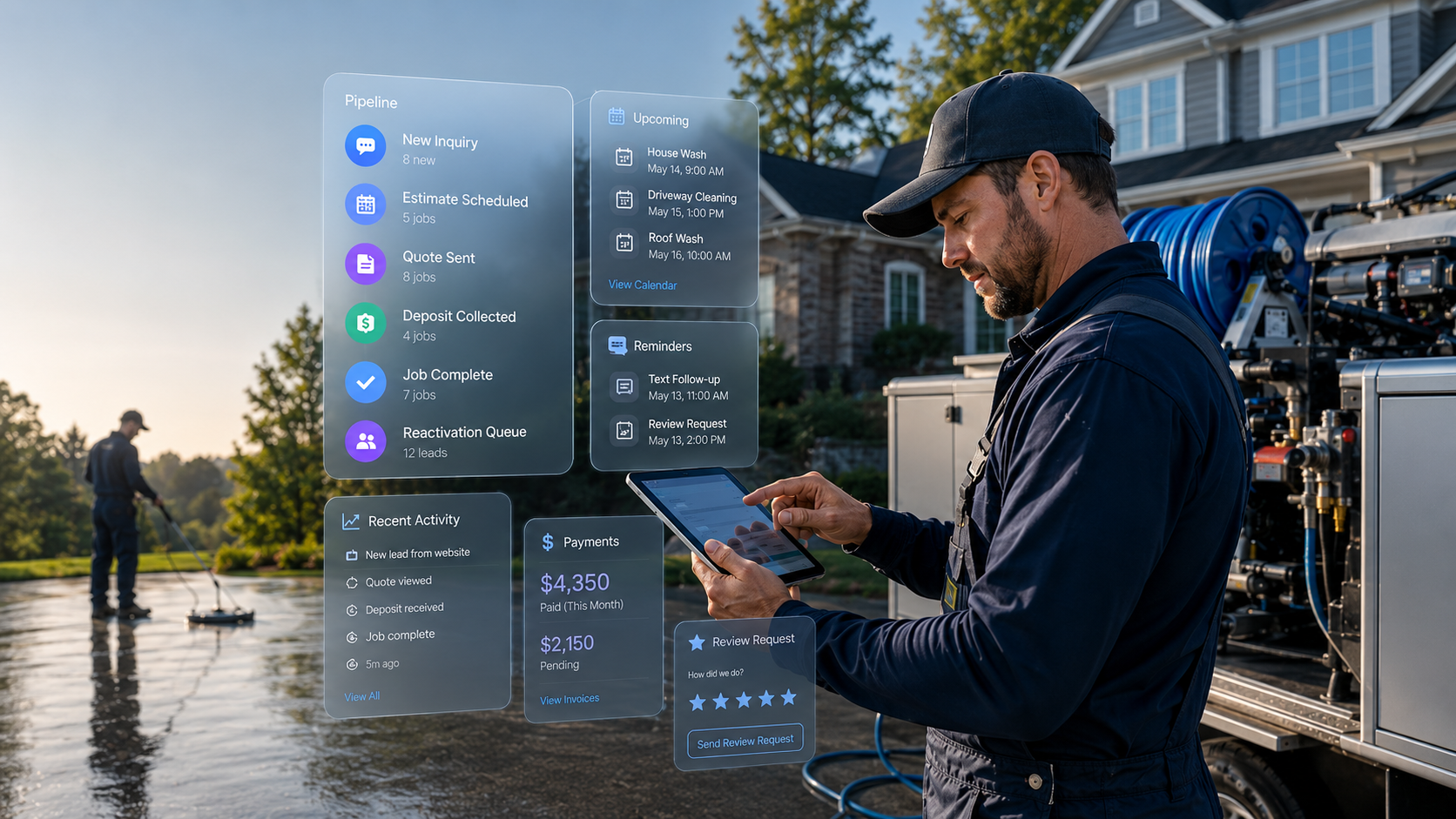
Set up a CRM in one weekend. Twin Falls and Magic Valley service businesses can capture leads, automate follow-up, and stop losing jobs with a simple system.

Set up a service business CRM in one weekend without complexity. Learn how to capture leads, automate follow-up, stay organized, and build a system that works while you focus on the job.

If you’re active in Twin Falls Chamber events, Jerome business groups, or trade associations across the Magic Valley, you already have the hardest part of affiliate marketing solved: trust. One-
Modern, SEO-optimized websites designed to turn visitors into customers.
Get a Free Quote