TL;DR:
61% of marketers say generating quality leads is their biggest challenge, yet 79% of leads never convert, almost always due to poor nurturing and slow follow-up rather than bad targeting. The teams winning in 2026 are not generating more leads. They are generating better-qualified ones, responding faster, and nurturing systematically. Here is what the research says about what is actually working.
The Quality Problem Nobody Wants to Admit
The instinct when lead volume drops is to generate more leads. Buy a bigger list. Run more ads. Publish more content. The data consistently says that is the wrong diagnosis.
According to research compiled across B2B benchmarks, 79% of marketing leads never convert into a sale, with poor nurturing and weak qualification cited as the primary cause. That means most businesses are not failing at lead generation. They are failing at what happens after a lead enters the funnel.
61% of marketers identify generating quality leads as their single biggest challenge, even as organizations generate an average of 1,877 leads per month. High volume and low conversion is not a lead generation problem. It is a qualification and follow-up problem. The fix is not more leads. It is a better system for the ones you already have.
The Four Trends Reshaping Lead Generation in 2026
1. AI Has Moved From Optional to Expected
Artificial intelligence has stopped being a competitive advantage and started being the baseline. Companies using AI for lead generation have seen more than a 50% increase in sales-ready leads, and AI improves lead qualification accuracy by approximately 40%, according to research across B2B sales benchmarks.
The practical application is not replacing prospecting with robots. It is automating the parts of prospecting that do not require human judgment: list building, contact enrichment, lead scoring, and follow-up sequencing. When those tasks run automatically, sales reps spend time on conversations instead of data entry.
64% of businesses using AI chatbots report an increase in qualified leads, and real-time AI conversation has boosted conversion rates by up to 20% in B2B settings. The chatbot market reflects that adoption: the global chatbot market is projected to nearly triple from $15.6 billion in 2024 to $46 billion by 2029, driven largely by B2B use cases in lead qualification and customer engagement.
2. Personalization at Scale Is Now the Minimum Standard
Generic outreach has stopped working not because prospects have become more sophisticated, but because they now have the tools to ignore it effortlessly. McKinsey research shows personalization can reduce customer acquisition costs by up to 50% and lift revenue by 5 to 15%. That is not a soft benefit. It is a structural cost advantage.
71% of consumers expect personalized interactions, and 76% report frustration when they do not receive them. In B2B, this translates directly: a cold email that demonstrates specific knowledge of a prospect's industry, role, or recent activity converts at a meaningfully higher rate than one that does not. Fast-growing companies derive 40% more revenue from personalization than slower-growing peers, which suggests the gap compounds over time rather than staying flat.
The barrier to personalization at scale was always the time it took to research each prospect. AI-powered tools that pull firmographic data, intent signals, and behavioral context into outreach sequences have removed that barrier for teams willing to build the workflow.
3. Speed to Lead Is the Metric Most Teams Are Ignoring
The research on response time is some of the most consistent in B2B sales, and most organizations are doing the opposite of what it prescribes. A Harvard Business Review study found that companies responding to leads within one hour are 7 times more likely to qualify those leads than companies that wait even slightly longer. Contacting a lead within 5 minutes makes them 21 times more likely to convert versus waiting 30 minutes.
The average B2B lead response time is 42 hours. A 2024 study by RevenueHero analyzing over 1,000 companies found that more than 63% of businesses did not respond to inbound leads at all, and only 17% responded instantly. The implication is straightforward: in most competitive markets, being the first to respond is a more reliable predictor of winning the deal than having the best product or the lowest price.
Automation is the only realistic solution here. No team can manually respond to every inquiry within five minutes across time zones and business hours. Automated routing, instant acknowledgment sequences, and AI-driven qualification tools are what make that response time achievable without burning out your sales team.
4. Multi-Channel Outreach Beats Any Single Channel
No single channel dominates B2B lead generation consistently across industries. 67% of the B2B buying journey now happens online before a prospect speaks to sales, which means buyers are researching across search, social, email, and content before they ever raise their hand. Meeting them across multiple channels is not optional; it is matching the behavior pattern of the buyer.
The channel data shows meaningful differences in cost and quality. Email marketing delivers $36 in ROI for every $1 spent, according to Litmus. SEO averages approximately $31 cost per lead versus trade shows at over $800, though trade show leads often carry higher purchase intent. 89% of B2B marketers use LinkedIn for lead generation, with 62% confirming it produces quality leads.
The strategic question is not which channel is best in the abstract. It is which channels reach your specific ICP at the stage of the buying journey where you can have the most influence, and whether your follow-up system can handle multi-channel responses without dropping leads.
What Lead Nurturing Actually Does to Revenue
Most teams treat lead nurturing as a nice-to-have. The data says it is structural.
According to Forrester Research, companies that excel at lead nurturing generate 50% more sales-ready leads at 33% lower cost per lead than companies that do not nurture systematically. Nurtured leads make 47% larger purchases than non-nurtured leads, according to the Annuitas Group. Those two figures together mean nurturing produces more pipeline and larger deals from the same lead volume.
The reason most teams skip it is process complexity. Building a proper nurturing sequence requires defined stages, mapped content, automated triggers, and consistent follow-through across a multi-week or multi-month buying cycle. That is difficult to maintain manually when your team is also managing active deals.
67% of lost B2B sales opportunities stem directly from sales reps not properly qualifying leads before pursuit. The overlap with poor nurturing is significant: leads that enter a pipeline without proper qualification tend to stall, consume rep time, and exit without converting. A nurturing sequence that qualifies progressively before leads reach sales hands them off at a higher readiness level, which reduces stalled deals and wasted rep time.
The Metrics That Actually Tell You If Your System Is Working
Most teams track lead volume and stop there. The metrics that diagnose system health are different.
Lead-to-MQL conversion rate: The average across all industries is 31%, according to research from First Page Sage compiled by Landbase. If you are below that, the issue is upstream in targeting or qualification criteria.
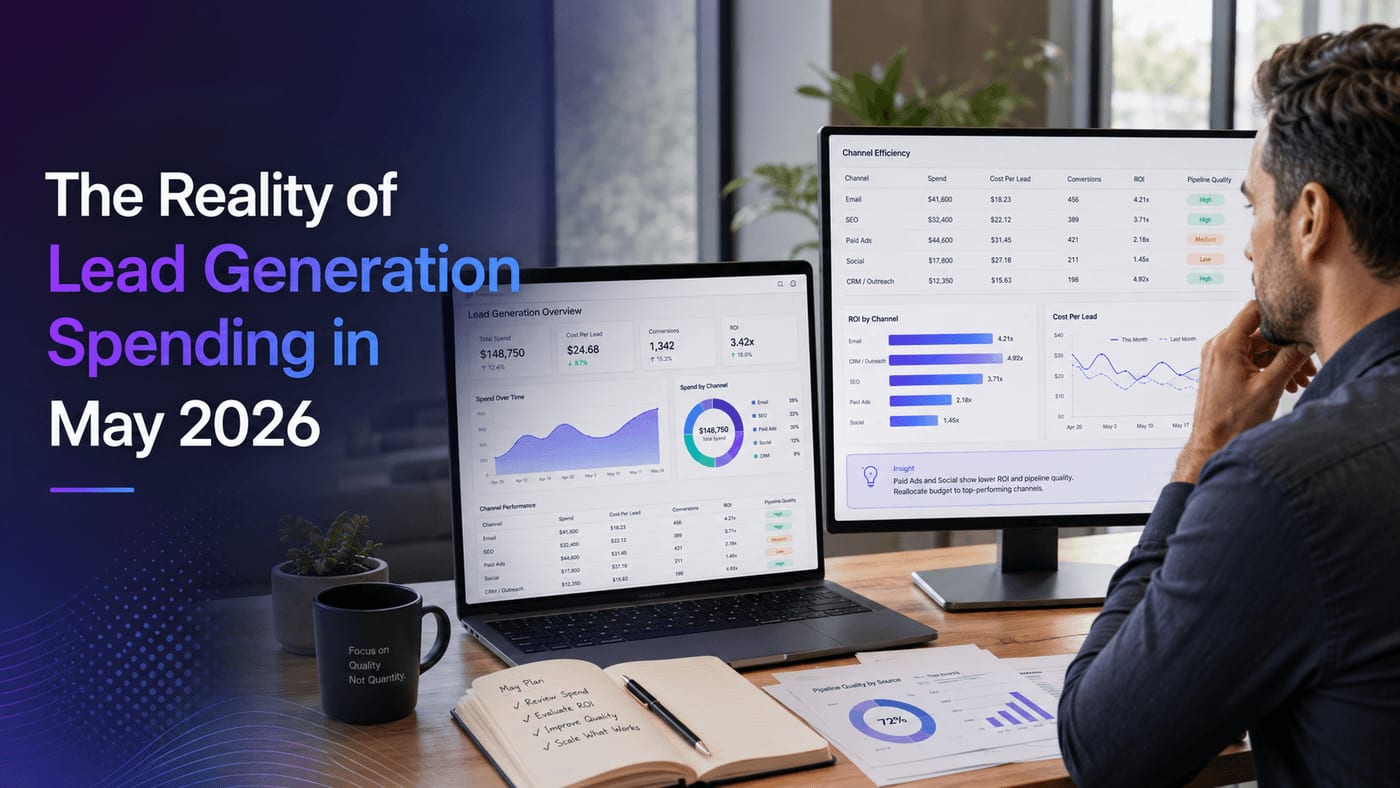
Cost per lead by channel: The average across B2B industries is approximately $198, but the range runs from $31 for organic search to over $800 for trade shows. Knowing your CPL by channel tells you where to allocate budget, not just where you are currently spending it.
Lead response time: Track the median time from inquiry to first human contact. If it is over an hour, you are losing deals before they enter your pipeline.
MQL-to-SQL conversion rate: The industry average sits at approximately 13%, meaning most leads that marketing qualifies do not meet the bar for direct sales engagement. If yours is significantly lower, it usually means the qualification criteria between marketing and sales are misaligned.
Nurtured lead close rate vs. non-nurtured: If you can segment this, it is the single most powerful argument for investing in nurturing infrastructure. The difference in deal size and conversion rate between nurtured and non-nurtured leads is consistently significant across research.
The System Question Most Teams Skip
Tools matter, but process determines whether tools produce results. The most common version of a broken lead generation system is one where data lives in multiple places: leads from one tool, email sequences in another, CRM notes in a third, and pipeline tracking in a fourth. Each handoff between tools is an opportunity to lose context, miss a follow-up, or let a lead go cold.
42% of companies acknowledge that aligning sales and marketing is essential for improving conversion rates, but fewer than half have done it operationally. That means most organizations are generating leads that their sales team cannot consistently act on because the data, timing, and qualification criteria are not synchronized.
The teams that consistently outperform on lead generation are not necessarily using the most sophisticated tools. They are using tools that talk to each other, with defined handoff criteria between marketing and sales and automated processes that handle the routine work so humans can focus on the conversations that actually require them.
Ready to Build a Lead Generation System That Actually Converts?
LeadProspecting AI is built for small businesses and growing teams that need an integrated system rather than a stack of disconnected tools. Our Lead Scraper pulls verified contact data directly into your pipeline. Our Email Warming tool protects your sender reputation so outreach actually reaches inboxes. Our AI Email Campaigns automates personalized sequences, and our CRM tracks every lead from first contact to closed deal in one place.
Start a 21-day free trial with no credit card required.
Frequently Asked Questions
Q: Do I still need to manually build lead lists, or can AI handle it?
AI can build targeted lists automatically using firmographic data, behavioral signals, and intent indicators. But the starting point still requires you to define your ideal customer profile clearly: industry, company size, role, and the specific problem you solve. Set those parameters well and AI tools will surface qualified contacts at a scale that manual research cannot match. Define them poorly and you will generate volume without quality.
Q: What is the difference between lead generation software and a CRM?
Lead generation tools find and attract new prospects. CRMs manage relationships with prospects and customers once they are in your pipeline. A lead generation tool fills the funnel. A CRM manages what is inside it. The most effective setups connect both, so contacts flow from prospecting into your sales process without manual data entry or re-entry.
Q: How much should I spend on lead generation?
Work backwards from revenue rather than forwards from budget. If your average deal is worth $5,000 and you close 20% of qualified opportunities, a $200 cost per qualified lead is defensible math. If you are closing 5%, that same $200 CPL may be unsustainable. The most important benchmark is cost per qualified lead by channel, not total spend.
Q: Is cold email still effective in 2026?
Yes, with conditions. Cold email that is personalized to a specific role and company, sent from a warmed domain with proper authentication, and followed up systematically still converts. Generic templates sent to cold purchased lists typically do not. The variable that matters most is list quality combined with personalization depth, not send volume.
Q: Should I focus on inbound or outbound lead generation?
Both serve different purposes. Inbound, through content, SEO, and website optimization, builds pipeline over time and tends to produce warmer leads. Outbound reaches prospects before they raise their hand, which allows you to be proactive about your ICP rather than waiting for them to find you. High-performing teams run both: inbound to establish a consistent floor of warm leads, outbound to accelerate growth into specific target accounts.