You paid for that lead. Maybe $30, maybe $100, maybe more. Then what happened?
If you’re like most small businesses, you sent one email. Maybe made one phone call. Didn’t hear back. Moved on.
Here’s the uncomfortable truth: 80% of sales require five or more follow-up attempts, but 44% of salespeople give up after just one. That means nearly half of all businesses are walking away from leads right when persistence would pay off.
The question isn’t whether you should follow up. It’s how often, through which channels, and how to do it without annoying people or forgetting about them entirely. After working with hundreds of small businesses on lead prospecting systems, I’ve seen the same pattern: companies that build consistent follow-up processes convert 3x more leads than those winging it.
This isn’t about being pushy. It’s about being present when your lead is finally ready to buy. Let’s break down exactly how to build a follow-up system that works without burning out your team or your prospects.
How Often Should You Actually Follow Up With Leads?
The Data Behind Effective Follow-Up Frequency
Research across industries shows a clear pattern: most conversions happen between the 5th and 12th contact. Not the first. Not the second. Somewhere in that middle zone where most businesses have already given up.
Here’s what the data tells us about follow-up frequency:
The first week: Contact every 1-2 days across different channels. This is your speed-to-lead window when interest is highest. One study found that companies responding within 5 minutes are 100x more likely to connect than those waiting 30 minutes.
Weeks 2-4: Follow up every 3-5 days. You’re staying present without overwhelming. Mix your methods (email one day, text another, phone call another). The variation prevents fatigue while maintaining visibility.
Month 2 and beyond: Shift to weekly or bi-weekly check-ins with valuable content. At this stage, you’re nurturing rather than closing. Share industry insights, helpful resources, or relevant case studies that position you as a trusted resource, not just another vendor.
The key insight: different leads need different timelines. A homeowner calling about emergency HVAC repair needs immediate follow-up and quick conversion. A business considering a CRM implementation might need months of education and relationship building. Your follow-up frequency should match their buying timeline, not just your sales goals.
Why Most Businesses Give Up After One or Two Attempts
The follow-up drop-off isn’t because business owners are lazy. It’s because manual follow-up is exhausting and easy to forget.
The psychology of giving up: After your first or second attempt goes unanswered, your brain tells you the lead isn’t interested. Why waste time on someone who’s ignoring you? But here’s what’s actually happening: they’re busy, they missed your message, or they’re not ready yet. Silence doesn’t mean no. It usually just means not now.
The operational reality: Without a system, follow-up depends on memory, sticky notes, and good intentions. You’re juggling current customers, handling operations, and managing a dozen other priorities. New leads get forgotten not because they’re unimportant, but because there’s no process ensuring they get attention.
The cost of inconsistency: When you follow up sporadically, leads can’t pattern-match your reliability. One business might contact a lead three times in two days, then vanish for two weeks. Another forgets entirely until they’re desperate for new business, then sends a generic “just checking in” message months later. Both approaches destroy trust and conversion potential.
This is where lead management systems become essential. LeadProspecting AI and similar CRM automation platforms remove the memory burden by triggering follow-ups automatically based on lead behavior, time elapsed, and response patterns. You stop relying on your memory and start relying on proven sequences.
What Happens in the First 5 Minutes vs. The First 5 Days
Speed-to-Lead: Why the Fastest Response Usually Wins
The first five minutes are everything. Research from Harvard Business Review found that companies responding to leads within 5 minutes are 21x more likely to qualify that lead than those waiting 30 minutes. By the one-hour mark, your odds of meaningful contact drop by 10x.
Why does speed matter so much? Because your lead is actively thinking about their problem right now. They just filled out your contact form, called your number, or requested a quote. Their intent is at peak levels. They’re also probably contacting your competitors simultaneously.
The speed-to-lead advantage in competitive markets: In industries like HVAC, plumbing, or roofing, the first company to respond often gets the job regardless of price. One contractor told me, “We win 60% of leads just by calling back within 10 minutes while everyone else waits until tomorrow.”
But here’s the reality check: most small businesses can’t respond in five minutes consistently. You’re on a job site. In a meeting. With a customer. Driving between appointments. This is why automated first responses paired with quick human follow-up beat trying to achieve five-minute manual responses every time.
The automation + human combo: Set up instant automated acknowledgment (“Thanks for reaching out! We received your request and will contact you within 30 minutes”) followed by actual human outreach as fast as possible. The automated response buys you time while reassuring the lead they haven’t been ignored.
The Follow-Up Timeline That Converts Cold Leads to Customers
Not every lead converts in the first conversation. Many need weeks or months of nurturing. Here’s the timeline that consistently turns cold leads warm:
Days 1-3 (The engagement phase): Your goal is to establish contact and gauge interest level. Try three different contact methods: email immediately after lead comes in, phone call within 2-4 hours if no email response, and text message at 24 hours if still no response. Each message should add value, not just say “following up.”
Week 1-2 (The qualification phase): You’re determining if this is a real opportunity worth nurturing. Follow up every 2-3 days with specific value: answer common questions they might have, share a relevant case study, offer a free resource or consultation, and ask direct qualification questions. If they engage with any message, you know there’s potential. If complete silence, they enter longer-term nurturing.
Weeks 3-8 (The education phase): Most leads aren’t ready to buy immediately. They’re researching, comparing options, getting budget approval, or waiting for the right time. Stay in touch every 5-7 days with genuinely helpful content. Avoid sales-heavy messages. Focus on building relationship and demonstrating expertise.
Month 3+ (The long game): Monthly touchpoints with valuable insights. Industry trends, helpful tips, relevant news. You’re staying top-of-mind so when they’re ready, you’re the obvious choice.
The conversion trigger: Throughout this timeline, watch for engagement signals. Did they open your last three emails? Click a link? Reply with a question? These micro-behaviors indicate rising interest and warrant more aggressive follow-up.
How to Follow Up Without Being Annoying (or Forgetting)
Multi-Channel Follow-Up: Email, Text, Phone, and Social
Different people prefer different communication channels. Some ignore phone calls but read every text. Others never check email but answer their phone. Your follow-up strategy needs to span multiple channels without feeling like stalking.
Email works for detailed information. Use it to share resources, explain complex solutions, and provide content they can reference later. Email is low-pressure and allows prospects to respond on their schedule. Best practices: personalize beyond first name, lead with value not “just checking in,” keep it scannable with short paragraphs and bullet points, and include one clear call to action.
Text messages cut through the noise. SMS has a 98% open rate compared to 20% for email. Use texts for time-sensitive offers, appointment reminders, quick questions, and brief value-adds. Keep messages conversational and concise. Never send marketing blasts via text without explicit permission due to TCPA regulations.
Phone calls build immediate rapport. Some conversations can’t happen via text or email. Complex solutions, high-value services, and relationship-driven businesses benefit from voice connection. Call when you have something specific to discuss, not just to “check in.” Leave detailed, valuable voicemails that give them a reason to call back.
Social media for passive presence. Connect on LinkedIn. Engage with their content. Share relevant insights. This isn’t direct follow-up, but it keeps you visible and builds familiarity. When they finally need your service, they already feel like they know you.
The rotation strategy: Don’t use the same channel every time. If your first three follow-ups were emails and got no response, try a text or phone call. Varying your approach increases the odds of reaching them on their preferred channel.
When to Use Automation and When to Pick Up the Phone
Automation handles consistency. Humans handle complexity. The winning combination knows when to deploy each.
Automate the routine: Initial acknowledgment messages, scheduled follow-ups at specific intervals, nurture sequences for cold leads, appointment reminders, and post-purchase check-ins. These repetitive tasks drain your energy when done manually. CRM automation excels here, ensuring nothing falls through cracks while freeing your time for high-value interactions.
Go manual for the important: When a lead responds showing high interest, when complex questions require nuanced answers, when deals are high-value and relationship-dependent, and when you’re close to conversion. These moments need human judgment, empathy, and adaptability that automation can’t replicate.
The handoff system: Start with automation to maintain consistency, then human team members take over when engagement signals appear. For example, LeadProspecting AI can send the first three follow-up emails automatically. If the lead opens all three or clicks a link, the system notifies a salesperson to make a personal phone call. Automation qualifies and warms the lead. Humans close the deal.
Avoiding the robot trap: Even automated messages should feel personal. Use the recipient’s name, reference their specific situation, write in conversational tone, and vary the content so your sequence doesn’t feel template-driven. The goal is “efficient personalization,” not obvious automation.
Building Your Follow-Up System in a CRM
Setting Up Automated Sequences That Feel Human
The best lead nurturing automation doesn’t feel automated. It feels like timely, relevant communication from someone who understands your needs.
Start with the welcome sequence: When a lead enters your system, they should receive immediate acknowledgment. Email one arrives within minutes: “Thanks for your interest. Here’s what happens next.” Email two comes 24 hours later with educational content addressing common questions. Email three arrives 48 hours later with a case study or testimonial showing results you’ve delivered.
Build behavior-based triggers: Don’t just follow up based on time elapsed. Follow up based on actions taken. If someone downloads your pricing guide but doesn’t respond, that’s different from someone who opens three emails but never clicks. Create workflow automation that responds to engagement level, adjusting frequency and intensity accordingly.
Personalization beyond first names: Use the data you have. Reference their industry, location, specific problem they mentioned, or content they’ve engaged with previously. “As a contractor in competitive markets, you probably face…” feels dramatically more relevant than “Dear [FirstName].”
The value-first framework: Every message in your sequence should give before it asks. Share a helpful tip, answer a common question, provide a relevant resource, or offer genuine insight. Only after delivering value do you include a soft call to action.
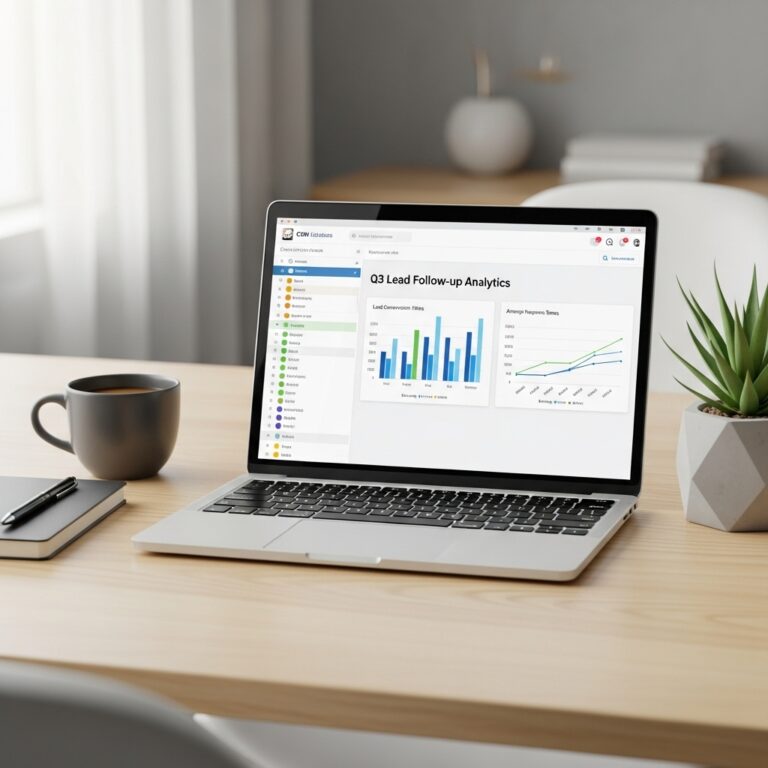
Test and refine: Track which messages get responses, which get ignored, and which cause unsubscribes. Winning sequences emerge through testing different subject lines, content angles, sending times, and frequency. Most CRM systems, including LeadProspecting AI, include analytics showing exactly which parts of your sequence work and which need adjustment.
Tracking Response Rates to Optimize Your Timing
You can’t improve what you don’t measure. Building an effective follow-up system requires tracking the right metrics and adjusting based on data, not assumptions.
Key metrics to monitor: Response rate (what percentage of leads reply to your follow-up?), connection rate (what percentage do you actually reach via phone?), conversion rate (what percentage move from lead to customer?), time-to-conversion (how long between first contact and closed deal?), and drop-off points (where in your sequence do leads stop engaging?).
Identifying your optimal frequency: If your response rate drops significantly after your third email, you might be following up too often. If it stays flat, you might not be following up enough or using the wrong channels. The data tells you where to adjust.
A/B testing your sequences: Try different follow-up schedules with similar lead segments. Does a 2-3-5 day sequence (follow up on day 2, day 5, day 10) work better than 1-2-4? Does morning outreach outperform afternoon? Do questions in subject lines beat statements? Testing reveals what works for your specific audience.
Segment-specific optimization: Different customer types need different approaches. Emergency service leads need immediate, aggressive follow-up. Consultative B2B leads need patient, value-driven nurturing. Your CRM should let you create different sequences for different lead sources, industries, or intent levels.
The feedback loop: Regularly review which leads converted and how many touchpoints it took. Look for patterns. Did most customers engage after the 5th email? Did phone calls outperform texts for your audience? Use these insights to refine your approach continuously.
Sales performance improvement through measurement: When you track follow-up metrics, your team becomes accountable. Instead of “I think I followed up with everyone,” you have data showing exactly who got contacted, how many times, through which channels, and what the results were. This transparency drives better sales performance and identifies coaching opportunities.
Ready to Build Your Follow-Up System?
You’ve seen the data. You understand why most businesses lose leads. Now it’s time to build a system that ensures you never leave money on the table again.
Here’s your 3-step action plan:
Step 1: Audit your current process. Track how many leads you’re getting, how many times you’re following up, and where leads are dropping off. You can’t fix what you can’t measure.
Step 2: Choose your automation platform. Look for a CRM that handles multi-channel follow-up (email, text, phone), sends messages based on lead behavior, tracks engagement signals, and integrates with your existing tools. LeadProspecting AI offers exactly these capabilities designed for small businesses that need results without complexity.
Step 3: Build your first sequence. Start simple with one automated workflow: immediate acknowledgment when a lead comes in, value-driven follow-up at days 2, 5, and 10, and human intervention triggered by engagement signals. Test, measure, refine.
The businesses winning in your market aren’t smarter or luckier. They’re systematic. They’ve built follow-up processes that run whether they’re on a job site, in a meeting, or taking a day off.
Start your free trial with LeadProspecting AI and see how automation turns leads you’re already paying for into customers you’re actually closing.
FAQ
How many times should you follow up with a lead before giving up?
At minimum, follow up 5-8 times over 2-3 weeks before moving a lead to long-term nurturing. Research shows 80% of sales happen after the 5th contact, but 44% of salespeople quit after just one attempt. If you’re getting zero engagement after 8 touches across multiple channels, shift them to monthly nurturing rather than abandoning them completely.
What is the best time to follow up with leads?
The absolute best time is within 5 minutes of the lead coming in, when their intent is highest. For subsequent follow-up, mid-morning (10-11am) and mid-afternoon (2-3pm) typically see higher response rates than early morning or end-of-day. Avoid Monday mornings and Friday afternoons. Test with your specific audience since different industries show different patterns.
How often should you call a prospect?
Call twice in the first week, once in week two, and then move to every 2-3 weeks unless they’ve requested less contact. If you get voicemail, leave a detailed message with value and don’t call again until your next scheduled attempt. Multiple calls in one day or aggressive daily calling damages your reputation more than it helps.
Should you follow up by email or phone?
Use both, plus text when appropriate. Start with email since it’s least intrusive, then try phone after 2-3 unanswered emails. Text works well for appointment reminders or time-sensitive offers but requires permission. Different people prefer different channels, so multi-channel follow-up increases your odds of connecting on their preferred method.
How can a CRM help with lead follow-up?
A good CRM automates your follow-up schedule, sends messages on time without manual effort, tracks which leads have been contacted and how many times, alerts you when leads show engagement signals, and prevents leads from falling through cracks when you’re busy. It turns follow-up from a memory-based task into a systematic process that runs whether you remember or not.
What should I say in follow-up messages?
Always lead with value, not “just checking in.” Share a relevant resource, answer a common question they likely have, reference something specific about their situation, or offer a concrete next step. Avoid generic messages. Every follow-up should give them a reason to respond beyond “this person is persistent.”
How do you know when to stop following up with a lead?
If you’ve attempted contact 8-10 times over 3-4 weeks across multiple channels with zero engagement (no opens, no clicks, no responses), move them to quarterly nurturing rather than weekly follow-up. They’re not ready now, but circumstances change. Complete silence for 60-90 days means they should stay in your system but at much lower frequency.
What’s the difference between lead prospecting and lead nurturing?
Lead prospecting is finding and qualifying new potential customers, while lead nurturing is building relationships with leads over time until they’re ready to buy. Prospecting focuses on initial contact and qualification. Nurturing focuses on education, trust-building, and staying top-of-mind through the buying journey. Both require systematic follow-up, just with different goals and timelines.
Can you automate follow-up without seeming like a robot?
Yes, if you personalize automated messages beyond just using first names. Reference their specific industry, problem, or situation. Write in conversational tone. Vary your content so messages don’t feel template-driven. Use behavior-based triggers so follow-up responds to their actions, not just time elapsed. The best automation feels like timely, relevant communication from someone paying attention.
How long does it typically take to convert a lead to a customer?
It varies dramatically by industry and deal size. Emergency services might convert in hours or days. B2B professional services might take 3-6 months. Home improvement projects often need 2-4 weeks. The key is matching your follow-up timeline to your industry’s typical sales cycle rather than pushing for faster conversion than your market allows.
Keep Learning: Related Resources
Want to dive deeper into lead follow-up strategies and CRM automation? These related articles can help you build on what you’ve learned here:
- Best CRM for Small Business: 5 Painful Problems It Solves Instantly – Discover how CRM software saves small businesses time and money by automating repetitive tasks and organizing customer data in one place.
- Twin Falls Needs Better Email Marketing. Here’s How Local Brands Can Compete Online – Learn proven email automation strategies for consistent customer communication and building long-term loyalty.
- Twin Falls Businesses Are Missing Out on CRM Automation – Here’s How to Fix It – Understand why small businesses need CRM software to manage leads effectively and prevent opportunities from slipping through the cracks.
- 5 High-ROI Automations Every Small Business Should Steal – Implement instant lead response automation and proven workflows that help you capture more customers without burning out.
- Why Ready-Made Websites Fail (And What Smart Small Businesses Do to Actually Convert) – See how integrating your website with a CRM creates automated lead capture and follow-up sequences that convert visitors into customers.
- GHL vs HubSpot in 2025: Which CRM Should You Actually Use? – Compare marketing automation tools and CRM platforms to find the right solution for managing your sales pipeline and automating customer outreach.
- Cold Lead Automation That Converts: Proven Email & SMS Strategies to Reignite Sales – Master the art of building automated email sequences that turn cold leads into paying customers through strategic follow-up timing.
- Sales Funnel Automation: The Ultimate 2025 Guide to Growing Your Small Business Fast – Learn how to implement a complete CRM system that guides leads through your sales pipeline automatically, from first contact to closed deal.
Each article provides actionable strategies for improving your lead follow-up process, automating customer communication, and building systems that prevent leads from being forgotten. For field service contractors looking for industry-specific automation solutions, our partner FieldServ Ai offers specialized tools designed for HVAC, plumbing, roofing, and home service professionals.