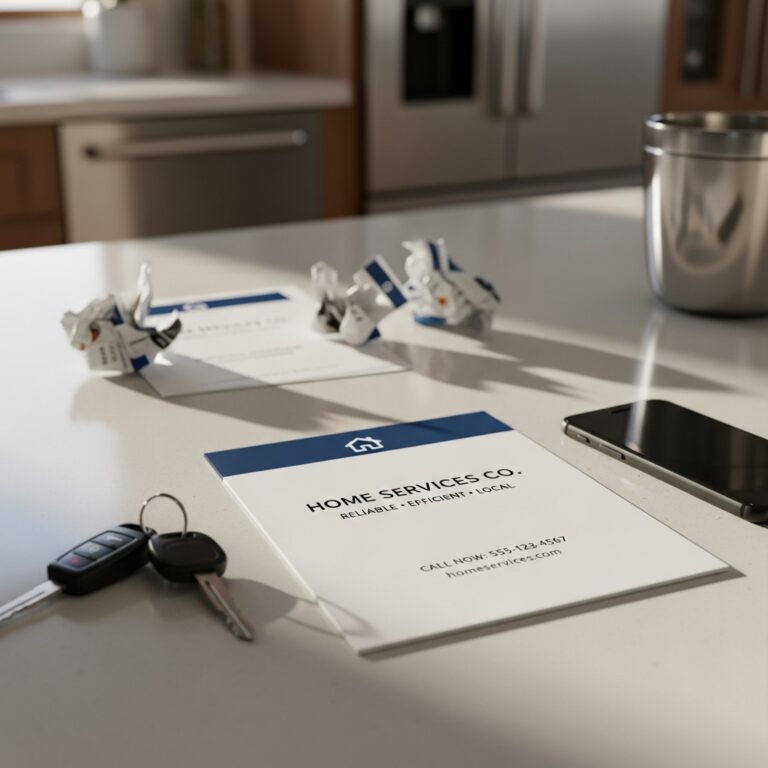
You have probably done it before. You designed a flyer, printed a few hundred copies, and spent a Saturday walking through neighborhoods stuffing them in doors. Then you waited for the phone to ring. And waited. And maybe got one call that went nowhere.
Flyer marketing gets a bad reputation because most flyers are genuinely bad. They are cluttered with too much information, plastered with stock photos that look like every other contractor in town, and written with headlines that say “Professional Services” instead of something a homeowner actually cares about. These flyers do not get kept. They get tossed in the recycling bin before anyone reads past the first line.
Here is the thing: flyers still work for home service businesses. Plumbers, HVAC technicians, landscapers, house cleaners, roofers, electricians, junk removal companies, and fencing contractors all benefit from putting something physical into a potential customer’s hands. Unlike digital ads that disappear in seconds, a well-designed flyer can sit on a kitchen counter for weeks until someone finally needs exactly what you offer.
The difference between flyers that generate calls and flyers that generate trash comes down to a few specific choices. This guide will show you what those choices are, why most service businesses get them wrong, and how you can create flyers that actually bring in work. Whether you run a one-truck operation or manage a crew of ten, these principles apply to any trade that serves homeowners.
Why Do Most Home Service Flyers Fail?
Before you can fix your flyers, you need to understand why they are not working. The mistakes are predictable, and once you see them, you will notice them everywhere.
What Makes Homeowners Throw Away a Flyer?
Homeowners make a decision about your flyer in less than three seconds. If nothing grabs their attention immediately, it goes straight to the trash. The most common reason flyers fail is visual clutter. When you try to list every single service you offer, add multiple phone numbers, include three different special offers, and squeeze in a paragraph about your company history, the result is overwhelming. People do not read overwhelming things. They throw them away.
The second killer is generic messaging. Headlines like “Quality Service You Can Trust” or “Professional Plumbing Services” say nothing specific. Every competitor uses the same language, which means your flyer blends into the pile of marketing materials homeowners see every week. If your flyer looks and sounds like everyone else, why would anyone remember you?
Are You Making These Common Flyer Mistakes?
Stock photography is one of the biggest trust destroyers in flyer marketing. When a homeowner sees the same smiling model with a wrench that appears on five other contractor flyers, they immediately sense something inauthentic. They want to know who is actually coming to their house, not a generic representation of “friendly service.”
Another common mistake is burying your contact information or making it too small to read quickly. Some business owners also skip including their license number and insurance information, which are critical trust signals for homeowners letting strangers into their homes. Finally, many flyers lack any reason for the homeowner to act now. Without a clear next step or timely offer, even interested prospects set the flyer aside and forget about it.
What Makes a Service Flyer Worth Keeping?
The flyers that stay on refrigerators and bulletin boards share specific characteristics. They focus on what homeowners actually want to know before hiring someone.
What Information Do Homeowners Actually Care About?
Homeowners hiring a service business have three primary concerns: Can I trust this person in my home? Will they actually solve my problem? How do I contact them when I need help? Your flyer should answer all three questions within seconds.
Start with a headline that speaks directly to a problem or desire. Instead of “ABC Plumbing Services,” try something like “Stop That Leak Before It Becomes a Flood” or “Your Neighbors Already Know Us.” These headlines connect to real concerns rather than just announcing what you do. For landscapers, “Spend Your Weekends Relaxing, Not Mowing” hits differently than “Professional Lawn Care.” For HVAC contractors, “Stay Cool This Summer Without the Surprise Repair Bills” addresses a genuine fear.
List only your core services. A residential plumber does not need to advertise commercial tenant improvements on a neighborhood flyer. Focus on the two or three things homeowners in that area most commonly need. Keep descriptions short and benefit-focused.
How Do You Build Trust Before You Even Meet Them?
Trust elements separate professional service businesses from random guys with a truck. Include your business name prominently, along with your license number and a note that you are fully insured. These details matter enormously to homeowners who have heard horror stories about unlicensed contractors.
Add a professional photo of yourself or your team. People want to see who might be showing up at their door. A real photo builds connection and accountability in ways that clip art never can. If you have been in business for several years, say so. “Serving Local Families Since 2018” provides social proof that you are established and legitimate.
Consider including a brief testimonial from a satisfied customer. One specific quote like “Fixed our AC the same day we called. Lifesaver!” carries more weight than claiming you have “hundreds of happy customers.” Keep it short and real.
How Do You Design a Flyer That Gets Results?
Design determines whether someone actually reads your message or tosses it aside. You do not need to be a graphic designer, but you do need to follow some basic principles.
What Should Your Flyer Look Like?
White space is your friend. Resist the urge to fill every inch of the page with text and images. A clean layout with breathing room between elements looks more professional and makes information easier to scan. Homeowners should be able to identify your business, understand what you do, and find your contact information within seconds.
Choose one or two colors that match your brand and use them consistently. Avoid neon colors or clashing combinations that look cheap. Your flyer represents your business, and a messy design suggests messy work. Use fonts that are easy to read from a slight distance. Decorative or overly stylized fonts might look creative, but they reduce readability.
Include one high-quality image that shows real work or real people. A before-and-after photo of a landscaping project, a clean HVAC installation, or your team in branded uniforms all work well. Make sure the image is sharp and well-lit. Blurry or dark photos hurt your credibility.
Which Free Tools Can You Use to Create Professional Flyers?
You do not need to hire a designer or buy expensive software. Canva offers dozens of free flyer templates that you can customize with your own text, colors, and photos. The drag-and-drop interface makes it easy for anyone to create professional-looking marketing materials in under an hour.
If you already use Microsoft Office, Publisher includes templates specifically for service businesses. Google Docs can work for simple designs, though your options will be more limited. The key is starting with a clean template rather than trying to build something from scratch. Focus on customizing the content and adding your own photos rather than reinventing the layout. Many service businesses also use tools like LeadProspecting Ai to manage the leads that come in once their marketing starts working, which helps ensure no opportunity slips through the cracks.
How Do You Get Your Flyers Into the Right Hands?
A perfectly designed flyer means nothing if it never reaches your ideal customers. Distribution strategy matters as much as design.
Where Should You Distribute for Maximum Impact?
Door-to-door distribution remains effective for home service businesses because you can target specific neighborhoods. Focus on areas with homes that match your ideal customer profile. Older homes often need more plumbing and electrical work. Established neighborhoods with mature landscaping need maintenance services. New developments might need fencing, irrigation, or HVAC maintenance plans.
Leave flyers at homes near your current job sites. Neighbors notice service trucks parked on their street and wonder who you are. A flyer introduced while you are actively working nearby creates immediate relevance. Community bulletin boards at grocery stores, coffee shops, libraries, and apartment complexes also provide exposure with minimal effort.
Timing matters. Avoid major holidays when people are distracted or traveling. Spring and fall work well for most home services because homeowners are thinking about maintenance. Early morning or late afternoon on weekends catches people when they are home and checking their doors.
How Do You Know If Your Flyers Are Working?
Tracking results separates serious marketing from guessing. The simplest method is asking every caller how they heard about you and recording the answer. Create a specific promo code or offer that only appears on your flyers so you can identify which leads came from that campaign.
QR codes provide another tracking option. Link the code to a specific landing page on your website and monitor how many people scan it. You can also use a dedicated phone number just for flyer campaigns, which lets you measure call volume directly. Review your results after each distribution effort and adjust your targeting, design, or offer based on what you learn.
The Bottom Line
Flyer marketing works when you understand why most flyers fail. Keep your design clean, focus on what homeowners actually care about, build trust with real photos and credentials, and distribute strategically to the right neighborhoods. One well-designed flyer that generates consistent calls beats a thousand generic ones that end up in the trash. Start with a single version, test it in one area, and refine based on results.
Frequently Asked Questions
How much does it cost to print flyers for a service business? Printing costs vary based on quantity and paper quality. Most service businesses spend between $50 and $150 for 500 flyers printed on quality cardstock. Bulk printing services offer lower per-piece prices, and investing in heavier paper stock makes your flyer feel more professional. The small additional cost for quality materials is worth it when your flyer represents your business.
What size flyer works best for home service businesses? Standard letter size (8.5 x 11 inches) provides enough space for your message while remaining easy to distribute. Door hangers (approximately 4.25 x 11 inches) work well because they are impossible to miss when hung on a front door handle. Postcards are another option if you plan to use direct mail rather than hand distribution.
Should I include pricing on my service flyer? For most home services, specific pricing creates more problems than it solves because job costs vary significantly. Instead, use phrases like “Free Estimates” or “Competitive Rates” to encourage potential customers to contact you. If you have a simple, standardized service at a fixed price, you can include it as a special offer to drive action.
How many flyers should I distribute to see results? Start with 200 to 500 flyers in a targeted area before investing in larger quantities. This lets you test your design and messaging without significant expense. A response rate of 1 to 2 percent is typical for flyer marketing, meaning 500 flyers might generate 5 to 10 inquiries. Track your results carefully before scaling up.
Can I put flyers directly in mailboxes? No. Placing flyers inside mailboxes without postage violates federal law and can result in fines. Stick to door handles, between screen doors, or designated community bulletin boards. If you want to reach mailboxes specifically, you need to use the postal service and pay for delivery.
How often should I distribute flyers in the same neighborhood? Consistency matters more than frequency. Distributing flyers in the same area every four to six weeks keeps your name visible without becoming annoying. Homeowners may not need your services the first time they see your flyer, but repeated exposure builds familiarity so they remember you when the need arises.
What makes a good headline for a service business flyer? Effective headlines focus on the customer’s problem or desired outcome rather than your company name. “Reclaim Your Weekends” works better than “Smith Lawn Care.” Headlines should create curiosity or speak directly to a pain point. Keep them short, specific, and benefit-oriented.
Should I use the same flyer for residential and commercial customers? No. Residential and commercial customers have different priorities and concerns. Homeowners care about trust, convenience, and results for their personal space. Business owners and property managers focus on reliability, minimal disruption, and compliance standards. Create separate flyers tailored to each audience for better results.
Flyers are great at starting conversations, but only if you follow up fast. FieldServ Ai helps service businesses turn flyer responses into scheduled jobs with online booking, automated follow-ups, and a simple system to manage every request in one place. It’s an easy way to make sure the calls your flyers generate don’t get missed.