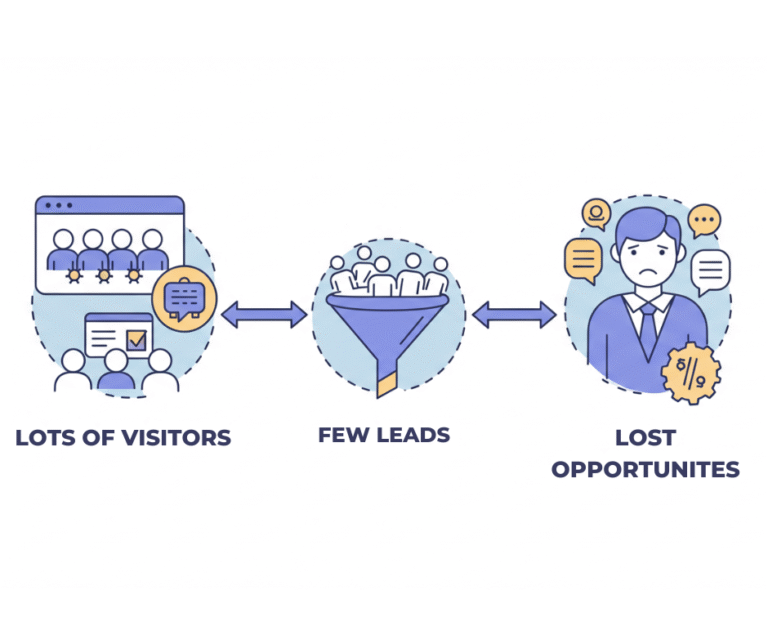
If you’re a business owner with a website, chances are you’re investing time, money, and energy to get visitors to your site. Maybe you’re running ads, sharing your URL on social media, or relying on organic search traffic. But here’s the frustrating reality: while you might be getting plenty of visitors, very few of them are turning into leads or paying customers.
Sound familiar? You’re not alone.
Many businesses struggle with this exact problem; they attract traffic but see little return in the form of actual inquiries, bookings, or sales. You might notice visitors browsing your pages, reading your content, and then… disappearing. The phone doesn’t ring as often as you’d like. Contact forms sit unanswered. And your revenue growth feels stuck despite all the effort.
Why does this happen? What’s the missing piece between having a website and turning it into a real revenue driver?
The answer may surprise you; it’s not necessarily the design of your site or how much traffic you get. Instead, the biggest reason most websites don’t convert effectively is the lack of a solid system to manage and follow up with the leads your site does generate.
The CRM Fix You Need for Lead Management & Follow-Up
Here’s the truth: a website alone is just a digital brochure; it shows what you offer, but doesn’t guarantee that visitors become customers. Many websites “capture” leads with contact forms or signup boxes, but the process often stops there. Without a system to track those leads, follow up promptly, and nurture relationships, you risk losing potential customers before they even get a chance to engage.
Think about it this way: someone visits your site, fills out a form, or clicks a call button, but if there’s no immediate action, such as an automated email, a sales call reminder, or even a simple thank-you message, that lead can slip through the cracks. Meanwhile, your busy schedule might delay manual follow-ups or cause you to forget important details.
This gap between website visits and actual business outcomes is where many businesses lose money. In fact, studies show that up to 80% of leads never convert due to poor or slow follow-up.
Lead management isn’t just about collecting names and emails. It’s about organizing your contacts, tracking interactions, and engaging prospects with timely, personalized communication. Without it, your website visitors leave without a clear path to becoming customers, no matter how great your products or services are.
This is the missing link most businesses overlook, but the good news is it’s fixable, and that fix is CRM.
What Is CRM and Why It’s the Missing Piece
CRM stands for Customer Relationship Management, but don’t let the jargon scare you. At its core, a CRM is simply a tool that helps you organize, track, and manage your interactions with current and potential customers all in one place.
Imagine having a digital assistant that automatically stores every website lead’s contact info, notes down every interaction, and reminds you exactly when to follow up. That’s CRM in action.
But CRM does much more than just store data. It automates critical parts of the sales and marketing process so you never miss a beat:
- Lead tracking: Know who your prospects are, where they came from, and how they’ve interacted with your business.
- Automated follow-up: Send personalized emails or messages immediately after someone expresses interest, keeping your business top of mind.
- Task management: Set reminders to reach out, schedule calls, or send proposals, so nothing falls through the cracks.
- Data insights: See which marketing campaigns are working and understand customer behavior to make smarter decisions.
Without a CRM, your website is like a fishing net with holes; you catch some leads, but most slip away unnoticed. Adding CRM closes that loop by turning website visitors into organized leads you can actively engage.
How CRM Automation Fixes Website Conversion Issues
Here’s where CRM automation becomes a game-changer for your website’s conversion rates. By integrating your website with a CRM, you’re not just capturing leads; you’re nurturing and converting them efficiently and consistently.
Some of the key CRM features that boost website conversions include:
- Automated Lead Capture Forms: Instead of manually collecting information, forms on your website feed directly into your CRM, instantly logging new leads without extra effort.
- Instant Follow-Up Emails or Texts: The moment a visitor fills out a form, your CRM can send a personalized thank-you message or provide the next steps, engaging prospects while their interest is high.
- Task Reminders for Sales Outreach: The system notifies you or your team when it’s time to follow up by phone or email, ensuring timely contact that can turn a lead into a sale.
- Personalization Based on Visitor Behavior: Some CRMs track what pages visitors viewed or what offers they clicked, allowing you to tailor messages that address their specific interests and needs.
Let’s put this into perspective: companies that use CRM automation see an average increase of 29% in sales revenue and a 53% improvement in customer retention.¹
For example, a local service business might use CRM automation to immediately follow up with a website visitor who requested a quote, schedule an appointment automatically, and remind the client a day before the service. This seamless experience not only converts the lead but also builds trust and encourages repeat business.
In short, CRM automation transforms your website from a static information page into an active sales engine that captures, nurtures, and converts leads, helping you grow your business smarter, faster, and more reliably.
Common Objections & How to Overcome Them
Many business owners hesitate to adopt CRM automation because of some common concerns. Let’s address these head-on:
“My business is too small for CRM.”
This is a widespread misconception. CRM systems today are designed to scale with your business, whether you have five customers or five thousand. Even a solo entrepreneur benefits from automating lead tracking and follow-ups because it frees up precious time and prevents missed opportunities. Think of CRM as an investment in growth, not just a tool for large companies.
“CRM is too complicated to learn and use.”
Modern CRM platforms prioritize user experience with intuitive dashboards, drag-and-drop builders, and guided tutorials. Many offer onboarding support and customer service to help you get started without needing a tech degree. Plus, automation means you set it up once and let the system do the heavy lifting, reducing manual work.
“CRM is too expensive for my budget.”
Gone are the days when CRM software was only for enterprises with big budgets. Today, many providers offer flexible pricing models, including free tiers and pay-as-you-grow plans, making it affordable for small businesses. When you consider the time saved and revenue gained through better conversion, CRM pays for itself quickly.
By understanding and overcoming these objections, you position your business to take advantage of tools that can significantly boost sales and customer satisfaction.
Step-by-Step Guide to Adding CRM Automation to Your Website
Ready to integrate CRM automation and start converting more visitors? Here’s a simple roadmap:
- Choose the Right CRM Platform:
Research CRMs that fit your industry, business size, and goals. Look for features like ease of use, automation capabilities, integration with your website, and customer support. Popular options include HubSpot, Zoho, and Salesforce, but many others might fit your specific needs. - Set Up Lead Capture Forms Integrated with CRM:
Embed forms on your website that automatically funnel visitor information into your CRM database. Make sure these forms are easy to find and quick to complete. You can include fields for name, email, phone number, and specific interests. - Create Automated Follow-Up Workflows:
Use your CRM to design email or text message sequences that trigger immediately after someone submits a form. This could be a thank-you note, a special offer, or a request to schedule a call. Tailor these workflows based on visitor behavior and preferences. - Train Your Team and Monitor Results:
Ensure your team knows how to use the CRM and understands its value. Regularly review metrics like response time, lead conversion rates, and customer feedback to refine your processes. Continuous improvement helps maximize the benefits of automation.
Bonus Tips to Boost Website Conversions Beyond CRM
While CRM automation is the powerhouse for lead management, optimizing your website itself can amplify results:
- Clear Call-to-Actions (CTAs): Use prominent, action-oriented buttons like “Get a Free Quote” or “Schedule a Consultation” to guide visitors toward engagement.
- Fast-Loading Pages: Website speed impacts user experience and search rankings. Compress images and streamline code to keep loading times under 3 seconds.
- Mobile-Friendly Design: With over half of web traffic coming from mobile devices, your site must look and function perfectly on smartphones and tablets.
- Social Proof and Testimonials: Showcasing reviews, ratings, and customer success stories builds trust and reduces hesitation for visitors considering your services.
Combining these website best practices with CRM automation creates a seamless, persuasive journey from visitor to customer.
Start Converting Smarter with LeadProspectingAI
Design and traffic matter, but the real reason most websites fail to convert is a lack of consistent lead management and follow-up. Without a system in place, potential customers slip through the cracks.
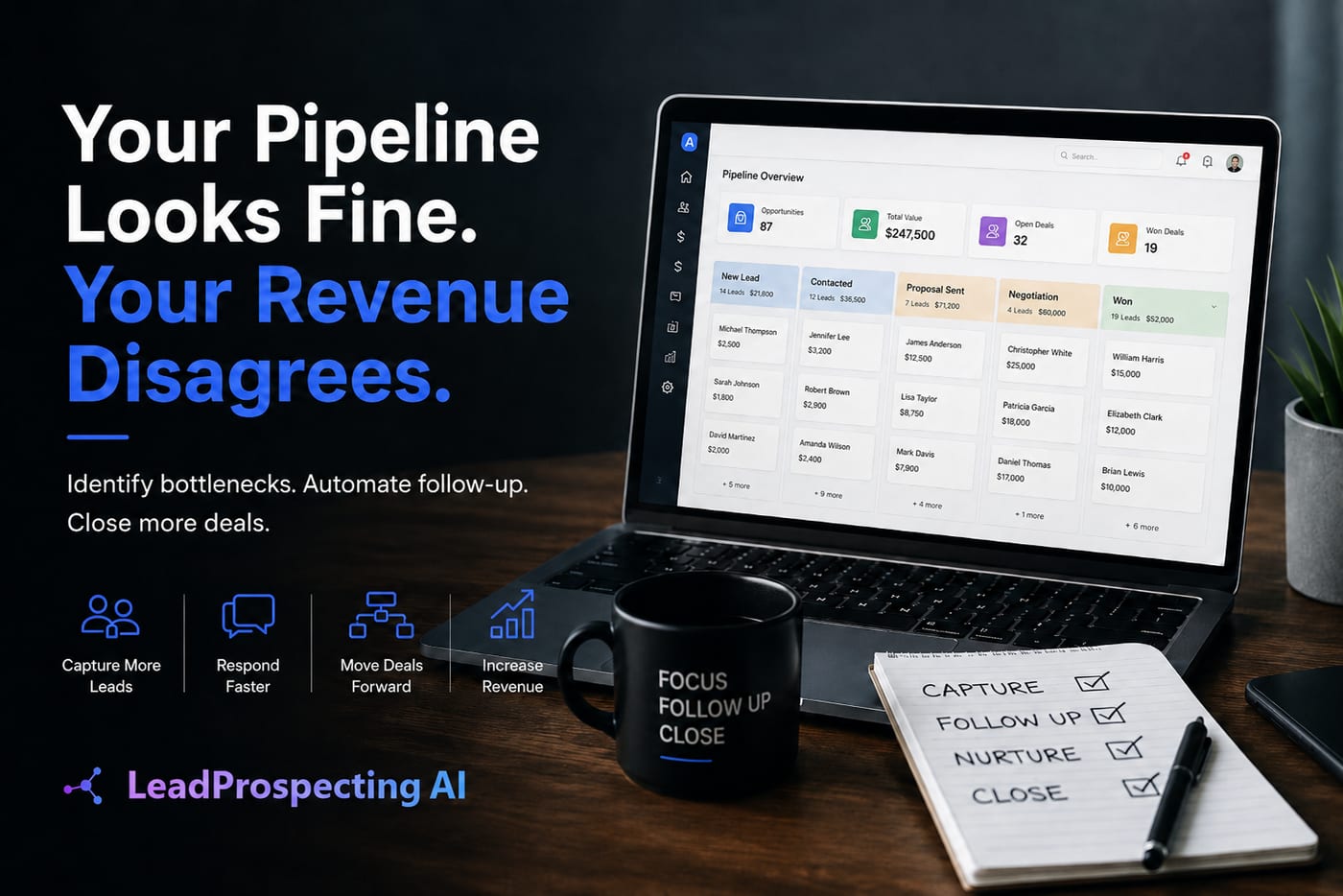
LeadProspectingAI gives you the CRM automation fix you need, capturing every lead, sending timely follow-ups, and helping you turn passive visitors into paying clients.
- Automated lead capture
- Instant follow-ups
- Smart workflows built for small businesses
Your website should be your top sales tool. Let’s make that happen together.
Let us help!
Ready to convert more leads and grow your business the smart way? Sign up at LeadProspectingAI