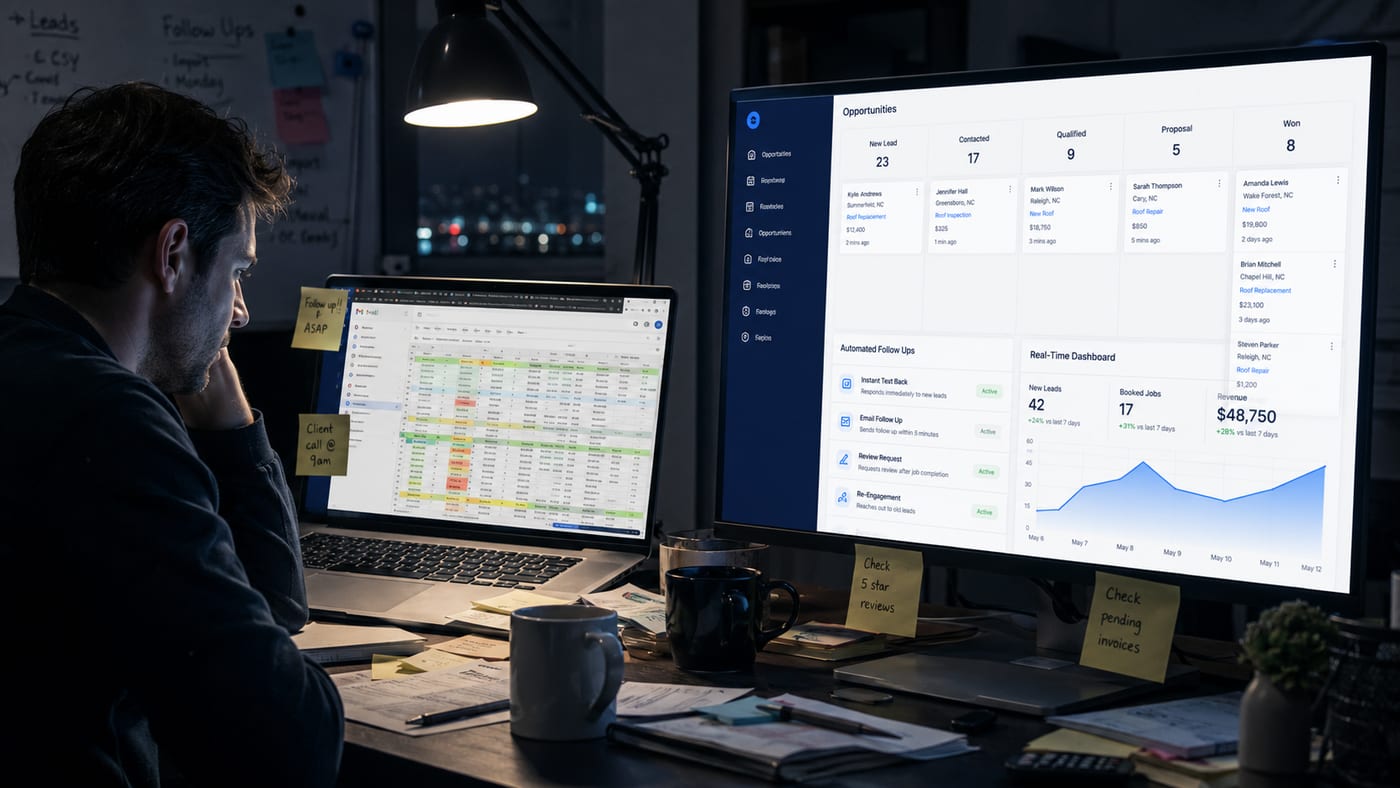
If you’ve ever spent an entire afternoon manually sending follow-up emails, copy-pasting the same message to dozens of prospects, or trying to remember who you contacted three weeks ago, you already know why marketing automation exists.
You just haven’t implemented it yet.
Marketing automation is the system that takes all the repetitive, time-consuming tasks you do manually and handles them for you. Automatically. While you focus on the work that actually grows your business.
For small businesses trying to compete without a massive marketing team or unlimited budget, it’s not just helpful, it’s essential.
Before Automation: The Manual Marketing Nightmare
Most small businesses start the same way: doing everything by hand.
You send every email individually. You manually add contacts to your list. You set calendar reminders to follow up. You try to remember who downloaded what, who responded to what, and who needs to be contacted next.
It works at first. But it doesn’t scale. And eventually, the cracks start to show.
Sending Every Email by Hand (And Why It Doesn’t Work)
Here’s what manual email marketing looks like:
You capture a lead. You send them a welcome email. You wait a few days and send a follow-up. You wait a week and send another one. You manually check whether they opened it. You try to remember to send them something valuable next month.
Multiply that by ten leads. Then fifty. Then a hundred.
Suddenly, you’re spending hours every week just managing email. And even then, you’re missing people. You forget to follow up. You send the wrong message at the wrong time. You lose track of who’s interested and who’s not.
Email automation solves this. Instead of manually sending every email, you build a sequence once, and it runs forever. A lead comes in, and the system takes over. Welcome email. Follow-up three days later. Check-in a week later. All automatic.
The Follow-Up Problem Every Small Business Faces
Here’s the harsh truth: most sales happen after the fifth follow-up. But most salespeople give up after the second.
Why? Because following up manually is exhausting.
You send an email. They don’t respond. You wait a few days and send another. Still nothing. You tell yourself you’ll try again next week. You forget. They hire someone else.
Without lead nurture automation, you’re relying on memory, discipline, and time you don’t have. With it, the system does the follow-up for you, consistently, persistently, without you having to think about it.
Why “Just Work Harder” Isn’t the Answer
The default advice for struggling businesses is always the same: work harder. Send more emails. Make more calls. Post more on social media.
But that’s not sustainable. You can’t manually scale. You can’t personally send 500 emails a day, manage 50 simultaneous campaigns, and follow up with every lead at the perfect time.
You need systems. You need workflow automation. You need tools that do the heavy lifting so you can focus on strategy, relationships, and growth.
What Is Marketing Automation? (The System That Changes Everything)
So what is marketing automation, really?
At its core, it’s software that handles repetitive marketing tasks for you, automatically.
Marketing Automation Meaning and What It Really Does
Marketing automation is a system that:
- Sends emails based on triggers and schedules
- Nurtures leads without manual follow-up
- Segments audiences based on behavior
- Tracks engagement across channels
- Delivers personalized content at scale
- Moves prospects through your sales funnel automatically
It’s not about replacing human connection. It’s about removing the grunt work so you can focus on the things that actually require a human touch.
How Automation Software Takes Over the Repetitive Work
Think of marketing automation as a personal assistant who never sleeps, never forgets, and never gets tired.
Someone downloads a guide from your website at 2 AM? The system sends them a thank-you email immediately.
They click a link in that email? The system tags them as “interested” and adds them to a nurture sequence.
They don’t open your emails for two weeks? The system tries a different approach or sends a re-engagement message.
All of this happens without you lifting a finger. You set the rules once, and the automation software executes them forever.
During Automation: What Your Day Looks Like with a System
Once you implement marketing automation, your entire workflow changes.
Not because you’re doing different work, but because the system is handling the repetitive tasks that used to eat up your time.
Email Automation That Runs in the Background
Instead of manually sending every email, you build sequences that run on autopilot.
A lead signs up for your newsletter? They get a welcome series.
Someone downloads your guide? They get educational content tailored to their interest.
A customer makes a purchase? They get onboarding emails, check-ins, and upsell offers, all automated.
Email automation means your marketing never stops, even when you do.
Lead Nurture That Happens While You Focus on Other Things
Not every lead is ready to buy today. Some need time. Some need education. Some need to see your name a few more times before they trust you.
With lead nurture automation, you stay in front of them without manually managing every interaction.
The system sends them valuable content. It checks in periodically. It tracks their engagement and adjusts the messaging based on their behavior.
By the time they’re ready to buy, you’ve already built trust, without spending hours on manual follow-up.
Campaign Management Without the Constant Manual Work
Running a campaign used to mean:
- Manually sending emails
- Tracking responses in a spreadsheet
- Following up individually with everyone who engaged
- Trying to remember who got what message
With campaign management automation, you build the campaign once and let the system handle execution.
You define the audience. You create the messages. You set the triggers. And the system runs the entire campaign from start to finish.
Workflow Automation That Connects Your Entire Business
Marketing automation isn’t just about email. It’s about connecting every part of your customer engagement process.
Someone fills out a form? The system adds them to your CRM, sends a follow-up email, and notifies your sales team.
A lead reaches a certain engagement score? The system moves them to a “hot lead” list and triggers a sales outreach sequence.
A customer hasn’t purchased in six months? The system sends a re-engagement offer.
Workflow automation ties everything together so your business runs smoothly without constant manual intervention.
How Marketing Automation Actually Works
If you’re new to automation, the concept might feel abstract. Here’s how it actually works in practice.
Triggers, Workflows, and the Magic Behind the Scenes
Marketing automation runs on a simple logic: if this happens, then do that.
These are called triggers and actions.
Examples:
- Trigger: Someone downloads a guide → Action: Send them a welcome email
- Trigger: A lead opens three emails in a row → Action: Notify your sales team
- Trigger: A customer hasn’t purchased in 90 days → Action: Send a re-engagement offer
You build these workflows once, and the system executes them automatically every time the trigger happens.
The Customer Journey from First Contact to Conversion
Marketing automation is designed to move people through the customer journey without manual effort.
Stage 1: Awareness
A stranger finds your website, downloads a resource, or signs up for your list. The system captures their info and sends a welcome sequence.
Stage 2: Consideration
They engage with your content. The system tracks their behavior and sends educational resources tailored to their interests.
Stage 3: Decision
They show buying intent, clicking pricing pages, requesting demos, and engaging heavily. The system alerts your sales team and triggers a sales-focused sequence.
Stage 4: Retention
After they buy, the system onboards them, checks in regularly, and nurtures them for repeat business.
All of this happens automatically, based on predictive analytics and behavior tracking.
After Automation: What Growth Actually Looks Like
Here’s what happens when you stop doing everything manually and start using systems.
More Leads, More Conversions, Less Manual Work
With marketing automation, you can handle 10x the leads without working 10x harder.
Your lead generation doesn’t stop because you’re busy. Your follow-ups don’t fall through the cracks. Your campaigns run consistently, even when you’re not at your desk.
And because the system nurtures leads automatically, your lead conversion rates improve. You’re not just capturing more leads, you’re converting more of them into customers.
Customer Retention Through Smarter Engagement
Acquiring a new customer costs five times more than keeping an existing one. But most businesses focus all their energy on acquisition and ignore retention.
Marketing automation makes customer retention effortless.
You can set up automated check-ins, send personalized offers based on purchase history, and re-engage customers who haven’t bought in a while, all without manual effort.
The result? More repeat business, more referrals, and higher lifetime value per customer.
Scaling Business Without Scaling Your Workload
The real power of marketing automation is this: it lets you grow without burning out.
You can launch more campaigns, nurture more leads, serve more customers, and generate more revenue, without needing to hire a full marketing team.
That’s how scaling a business actually works, not by working harder, but by building systems that do the work for you.
Marketing Automation + CRM: The Power Combo
Marketing automation and CRM are two sides of the same coin. You need both to run a truly efficient business.
Why CRM and Marketing Automation Need Each Other
CRM software tracks relationships and sales activity. It tells you who your leads are, where they are in your pipeline, and what your sales team is doing.
Marketing automation nurtures those relationships. It sends the right messages at the right time, tracks engagement, and moves people through your funnel.
Together, they create a seamless system where:
- Leads are captured and tracked automatically
- Marketing nurtures them until they’re sales-ready
- Sales follows up at the perfect moment
- Customers are retained and re-engaged automatically
How CRM Automation and Marketing Automation Work Together
When your CRM and marketing automation are integrated, magic happens.
A lead fills out a form on your website. Your CRM captures their info. Your marketing automation sends them a welcome email. They engage with your content. The system scores them based on engagement. When they hit a certain threshold, your sales team gets notified.
All of this happens automatically. No manual data entry. No missed opportunities. No leads falling through the cracks.
This is CRM automation and marketing automation working together to create a system that actually scales.
Choosing Marketing Automation Software (The Smart Way)
Not all marketing automation platforms are created equal. Some are built for enterprise teams with unlimited budgets. Some are overly complicated. Some promise the world and deliver confusion.
HubSpot Alternatives That Don’t Require a PhD
HubSpot is powerful. It’s also expensive and has a steep learning curve.
A good HubSpot alternative gives you the same automation power without the complexity or the price tag. Look for platforms that:
- Let you build workflows visually
- Integrate with your existing tools
- Don’t charge per contact (or charge reasonably)
- Offer real support, not just a knowledge base
ActiveCampaign Alternatives for Small Teams
ActiveCampaign is great for email automation but can feel clunky when you need full sales automation and CRM functionality.
If you need something more integrated, look for ActiveCampaign alternatives that combine marketing automation, CRM, and sales tools in one platform.
Keap Alternatives That Actually Make Sense
Keap (formerly Infusionsoft) is powerful but notorious for being complicated and expensive.
A good Keap alternative offers the same automation capabilities without requiring you to hire a consultant to set it up. Look for tools that are intuitive, affordable, and built for real small businesses, not just marketing agencies.
The Role of AI in Modern Marketing Automation
Marketing automation is already powerful. Add AI, and it becomes exponentially smarter.
AI Marketing Tools That Do the Heavy Lifting
AI marketing tools can:
- Write personalized email copy at scale
- Predict which leads are most likely to convert
- Optimize send times for maximum engagement
- Segment audiences based on behavior patterns
- Generate content ideas and campaign strategies
This isn’t futuristic tech. It’s available now, and businesses that adopt AI automation early have a massive competitive advantage.
Predictive Analytics and Personalized Marketing
Predictive analytics uses machine learning to analyze past behavior and predict future actions.
Your marketing automation platform can use this to:
- Score leads based on likelihood to convert
- Recommend the best next action for each contact
- Personalize content based on individual preferences
- Identify at-risk customers before they churn
The result? Personalized marketing at scale, without manual effort.
FAQs
What is marketing automation and how does it work?
Marketing automation is software that handles repetitive marketing tasks automatically, like sending emails, nurturing leads, and managing campaigns. It works by using triggers (like form submissions or email opens) to automatically execute actions (like sending follow-up emails or moving contacts between lists).
What’s the difference between marketing automation and email marketing?
Email marketing is just one piece of marketing automation. Marketing automation includes email but also handles lead scoring, workflow automation, campaign management, customer segmentation, and integration with your CRM and other tools.
Do I need marketing automation if I’m a small business?
Yes, small businesses benefit the most because automation lets you compete without a big team. You can nurture leads, run campaigns, and follow up consistently without spending all day on manual tasks.
How is marketing automation different from CRM?
CRM tracks relationships and sales activity. Marketing automation nurtures those relationships through automated campaigns and workflows. You need both: CRM tells you who people are, and marketing automation moves them through your funnel.
What can marketing automation actually do for my business?
Marketing automation can send email sequences, score leads based on engagement, segment your audience, trigger follow-ups based on behavior, manage multi-channel campaigns, re-engage past customers, and connect your marketing and sales teams automatically.
How long does it take to set up marketing automation?
It depends on the platform. Some tools let you build simple workflows in an hour. More complex setups might take a few days. Look for platforms with templates and pre-built workflows to speed up the process.
What’s the ROI of marketing automation?
Businesses that use marketing automation see higher conversion rates, better lead nurture, increased customer retention, and more revenue per employee. The ROI comes from doing more with less, reaching more people without adding headcount.
What are the best alternatives to HubSpot, ActiveCampaign, and Keap?
The best alternative depends on your needs, but look for platforms that combine CRM, marketing automation, and sales tools in one place, without the complexity or cost of enterprise platforms. LeadProspecting AI offers powerful automation built specifically for small businesses.
Can marketing automation help with customer retention?
Absolutely. You can automate check-ins, send re-engagement campaigns, deliver personalized offers based on purchase history, and nurture past customers to encourage repeat business, all without manual effort.
How does AI improve marketing automation?
AI adds predictive lead scoring, personalized content recommendations, optimal send time predictions, and intelligent segmentation. It analyzes patterns in your data to help you make smarter decisions and automate more effectively.
Keep Learning: Related Resources
Want to dive deeper into marketing automation and building systems that scale? These related articles can help you implement what you’ve learned:
- 5 High-ROI Automations Every Small Business Should Steal – Get specific, actionable automation workflows you can implement today to save time and increase conversions.
- Best CRM for Small Business 2025: Top Tools to Transform Your Customer Management – Compare CRM platforms and find the right solution that combines marketing automation with customer management.
- GHL vs HubSpot in 2025: Which CRM Should You Actually Use? – Understand the differences between major automation platforms and which one fits your business needs and budget.
- Twin Falls Businesses Are Missing Out on CRM Automation – Here’s How to Fix It – See real examples of how automation helps small businesses compete without massive marketing teams.
- Why Ready-Made Websites Fail (And What Smart Small Businesses Do to Actually Convert) – Learn how to transform your website from a static brochure into an automated lead generation system.
- Cold Lead Automation That Converts: Proven Email & SMS Strategies to Reignite Sales – Master the art of re-engaging cold leads with automated sequences that bring customers back.
- Sales Funnel Automation: The Ultimate 2025 Guide to Growing Your Small Business Fast – Build a complete automated sales funnel that moves prospects from awareness to purchase without manual intervention.
- Twin Falls Needs Better Email Marketing. Here’s How Local Brands Can Compete Online – Get practical email automation strategies that help small businesses stay consistent with customer communication.
Each article provides specific strategies and tools for automating your marketing, scaling your business, and building systems that work even when you’re not. For field service contractors and home service providers looking for specialized automation solutions, our partner FieldServ AI offers industry-specific tools designed for HVAC, plumbing, roofing, and landscaping professionals.