TL;DR:
Stop wasting time on leads that go nowhere. AI-powered lead scoring uses behavioral data to automatically rank your prospects by conversion potential—helping Twin Falls businesses respond faster to hot leads, automate follow-ups for warm prospects, and boost conversion rates by up to 75%. Learn how predictive lead scoring turns your CRM into a sales prioritization machine, so you can focus on the prospects most likely to book, buy, and become loyal customers.
Imagine knowing exactly which of your leads are most likely to book an appointment—before you even make the first call.
For service-based businesses in Twin Falls and across the Magic Valley, this isn’t a fantasy. It’s the reality that AI-powered lead scoring makes possible.
If you’re a contractor, plumber, HVAC specialist, or any local service provider, you know the frustration: you get 50 leads from Facebook or your website, but only five turn into paying jobs. The rest? They ghost you, go with a competitor, or were never serious to begin with.
The problem isn’t your service. It’s that you’re treating all leads equally when they’re anything but equal.
Traditional lead management relies on guesswork, gut feelings, and spreadsheets that can’t tell you who’s ready to buy and who’s just browsing. But in 2025, smart businesses are using AI to do what manual tracking never could: automatically identify which prospects deserve your immediate attention and which ones need more nurturing.
Here’s what that means for your bottom line: companies using lead scoring see a 77% improvement in lead generation ROI, and 75% of businesses report increased conversion rates after implementing lead scoring systems.
In this guide, we’ll break down exactly how AI-powered lead scoring works, why it’s a game-changer for Twin Falls businesses, and how you can start using it today—without needing a data science degree or a massive tech budget.
Let’s dive in.
What Is Lead Scoring—And Why Most Small Businesses Get It Wrong
Lead scoring is simply the process of ranking your prospects based on how likely they are to become customers.
Think of it like this: not every person who walks into your store is equally ready to buy. Some are comparison shopping. Others are just killing time. But a few are ready to pull out their credit card right now.
Lead scoring helps you identify who’s who—so you can focus your energy on the people most likely to say yes.
The Old Way: Manual Guesswork
Most small businesses in Twin Falls handle leads the old-fashioned way:
- They get a form submission or phone call
- Someone manually enters it into a spreadsheet or sticky note
- They try to remember to follow up… eventually
- If the lead doesn’t respond immediately, they move on
Here’s a real example: A Twin Falls roofing contractor gets 50 leads from Facebook ads in a single week. Without any system to prioritize, the sales team calls them in the order they came in. By the time they reach lead #30, leads #1-10 have already hired a competitor who responded faster.
The result? Time wasted on cold leads, while hot prospects slip through the cracks.
According to industry data, 67% of sales teams waste time pursuing leads that will never convert. That’s not just frustrating—it’s expensive. Every hour spent chasing dead-end leads is an hour you could’ve spent closing deals with qualified buyers.
The Disconnect Between Interest and Action
Here’s what makes manual lead tracking so ineffective: it treats every inquiry the same.
But in reality, there’s a massive difference between someone who:
- Fills out a form at 2 AM and never opens your follow-up emails
- Visits your pricing page three times, downloads your service guide, and responds to your text within five minutes
One of these leads is window shopping. The other is ready to book.
Without a system to track and score these behaviors, you’re flying blind. You have no way to know who’s hot and who’s cold until you’ve already wasted time and money finding out the hard way.
That’s where AI changes everything.
Enter AI Lead Prioritization—Your Smart Assistant for Sales Focus
AI-powered lead scoring is like having a sales assistant that never sleeps, never forgets, and always knows who’s most likely to convert.
Instead of relying on gut feelings, AI looks at real data: how often someone opens your emails, how long they spend on your website, how quickly they respond to your messages, and dozens of other behavioral signals that predict buying intent.
Then it automatically assigns each lead a score—like a grade from 0 to 100—that tells you exactly where to focus your attention.
How It Works in Plain English
Let’s break it down with a simple example.
A Twin Falls plumbing company gets three leads in one morning:
Lead A: Filled out the contact form, opened two follow-up emails, visited the pricing page twice, and responded to a text message within 10 minutes.
Lead B: Downloaded a free guide about water heater maintenance, opened one email, but hasn’t visited the website since.
Lead C: Submitted a form but used a fake phone number and hasn’t engaged with any follow-up communication.
Without AI, all three leads look the same in your inbox. But with AI lead prioritization, here’s what happens:
- Lead A gets a score of 85 (hot lead—immediate response needed)
- Lead B gets a score of 45 (warm lead—add to nurture campaign)
- Lead C gets a score of 10 (cold lead—likely not serious)
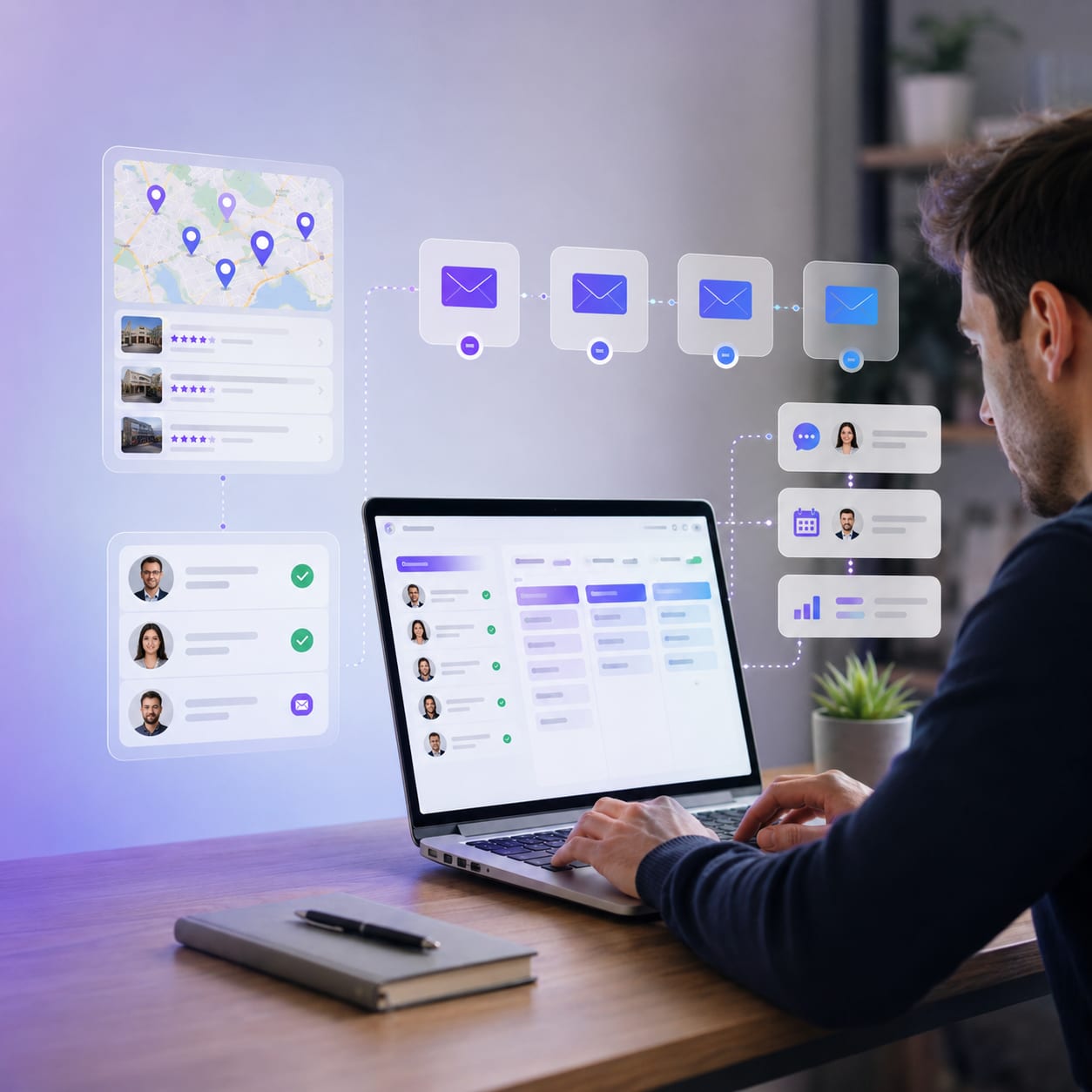
Your system automatically alerts you about Lead A, triggers an automated email sequence for Lead B, and archives Lead C so you don’t waste time.
The result? The plumbing company calls Lead A within five minutes, books the appointment, and closes a $3,500 water heater replacement—all because they knew exactly who to prioritize.
The Factors AI Considers
AI lead prioritization analyzes dozens of data points to predict conversion likelihood:
- Engagement signals: Email opens, link clicks, website visits, time spent on key pages
- Response speed: How quickly someone replies to calls, texts, or emails
- Source quality: Where the lead came from (referral, Google search, Facebook ad)
- Demographic fit: Location, budget signals, job type requested
- Behavioral patterns: Return visits, content downloads, pricing page views
The beauty of AI is that it learns over time. As you close more deals, the system gets smarter about which behaviors actually predict conversions for your specific business.
Real Results from AI Lead Prioritization
A local HVAC company in Twin Falls implemented AI lead scoring and saw immediate results:
- Response time dropped from 4 hours to 8 minutes for high-scoring leads
- Conversion rate increased by 42% in the first quarter
- Sales team saved 12 hours per week by not chasing unqualified prospects
The system automatically flagged emergency repair requests (which scored higher based on urgency keywords) and routed them to available technicians within minutes—while lower-priority maintenance inquiries were added to scheduled follow-up campaigns.
According to recent industry research, responding to leads within five minutes can boost conversion rates by up to 391% compared to waiting just one hour. AI lead prioritization makes that speed possible—even for small teams.
How Predictive Lead Scoring Works (Without Needing a Data Science Degree)
Let’s demystify the technology. Predictive lead scoring might sound complex, but the basic logic is surprisingly straightforward.
Think of it as a three-step process: Data In → Behavior Analysis → Conversion Prediction
Step 1: Data Collection
First, your system captures every interaction a lead has with your business:
- Form submissions and contact requests
- Email opens and link clicks
- Website page visits and time spent
- Phone calls, texts, and voicemail
- Social media interactions
- Document downloads
This happens automatically in the background—no manual data entry required.
Step 2: Behavior Analysis
Next, AI analyzes these behaviors and compares them to patterns from past customers.
For example, if your historical data shows that 80% of customers who visited your pricing page three times ended up booking within two weeks, the AI learns that “multiple pricing page visits” is a strong buying signal.
Similarly, if leads who respond to texts within five minutes have a 5x higher close rate than those who take two days, the AI weighs “response speed” heavily in its scoring.
The system identifies which behaviors actually correlate with conversions—and ignores the ones that don’t.
Step 3: Score Assignment and Action Triggers
Based on this analysis, each lead gets a numerical score that represents their conversion likelihood.
Here’s how a typical scoring system might work:
Hot Leads (80-100 points):
- Visited pricing page in last 24 hours
- Responded to outreach within 10 minutes
- Opened multiple emails
- Action: Immediate phone call from sales team
Warm Leads (50-79 points):
- Opened emails but hasn’t visited website recently
- Engaged with content but no pricing page visit yet
- Action: Automated email sequence with case studies and testimonials
Cold Leads (0-49 points):
- No engagement with follow-up communications
- Used suspicious contact info
- Action: Low-priority nurture campaign or archive
Real-World Scoring Example
Let’s say a lead named Sarah submits a contact form for roof inspection. Here’s how she might accumulate points:
- Contact form submission: +10 points
- Opened first follow-up email within 2 hours: +15 points
- Visited “Our Services” page: +5 points
- Visited “Pricing” page: +20 points
- Returned to website next day: +10 points
- Clicked scheduling link in email: +25 points
- Responded to text message within 5 minutes: +20 points
Total Score: 105 points → Flagged as “Hot Lead” for immediate follow-up
Meanwhile, another lead named John also submitted a form, but never opened any emails and hasn’t returned to the website. His score stays at 10 points, so he gets added to a low-priority nurture campaign instead of getting immediate sales attention.
Why This Matters for Small Businesses
Research shows that predictive lead scoring can increase lead conversion rates by 75%. That’s not a small improvement—that’s transformational.
For a Twin Falls contractor doing $500,000 in annual revenue, a 75% improvement in conversion rates could mean an additional $375,000 in revenue without spending a dime more on advertising.
The key is that predictive scoring doesn’t just tell you who’s interested—it tells you who’s ready to buy right now. That distinction is everything.
The Local Advantage—How Twin Falls Businesses Can Use AI Lead Scoring
One of the biggest advantages of modern AI lead scoring is that it adapts to local business patterns that generic systems would miss.
For service businesses in Twin Falls and the Magic Valley, this means the AI can learn and respond to unique seasonal trends, regional customer behaviors, and local market dynamics that big national companies don’t understand.
Seasonal Intelligence for Local Markets
Take HVAC companies as an example. In Twin Falls, summer temperatures regularly hit the 90s, creating predictable surges in cooling system repairs and installations.
An AI system trained on local data knows that between June and August, leads mentioning “AC not working” or “urgent cooling repair” should get maximum priority scores—because homeowners in 95-degree heat aren’t comparison shopping. They’re ready to pay for immediate service.
Meanwhile, the same AI might score furnace maintenance inquiries lower during summer months, automatically routing them to scheduled fall follow-up campaigns when demand increases.
This kind of seasonal scoring adjustment happens automatically once the AI has learned your local patterns—no manual intervention needed.
Geographic and Demographic Factors
AI lead scoring can also factor in geographic data that matters to local businesses:
- Drive time and service radius: Leads within your ideal service area score higher than those far outside it
- Neighborhood patterns: If historical data shows certain Twin Falls neighborhoods convert at higher rates, leads from those areas get prioritized
- Local economic indicators: The system can consider local job market data, housing market trends, and seasonal employment patterns
For example, if you’re a contractor in Twin Falls, your AI might automatically score leads from Jerome or Kimberly differently based on your historical conversion rates in those areas—without you having to manually adjust anything.
Competing with National Chains
Here’s where AI scoring levels the playing field for local Twin Falls businesses.
National franchises and big chains have massive marketing budgets. But they can’t respond as quickly or as personally as local businesses can—especially when those local businesses have AI working for them.
When a homeowner in Twin Falls searches for “emergency plumber near me” at 11 PM, the business with AI-powered lead scoring can:
- Instantly capture the lead
- Automatically score it as high-priority based on urgency keywords
- Send an immediate text response with availability
- Alert an on-call technician within minutes
Meanwhile, the national chain’s lead goes into a queue that won’t be reviewed until Monday morning.
Speed wins. According to Harvard Business Review research, leads are 7 times more likely to convert when contacted within an hour versus waiting longer. For time-sensitive service requests, that advantage is even greater.
Local Data Access Without Enterprise Budgets
Ten years ago, predictive AI was only available to enterprise companies with six-figure software budgets.
Today, platforms like LeadProspecting AI bring enterprise-level lead scoring to small businesses for a fraction of the cost—making it accessible to Twin Falls contractors, service providers, and local businesses who are competing against better-funded competitors.
The technology that once required a team of data scientists is now automated, affordable, and built specifically for service-based businesses.
Turning Scores into Sales—What to Do Once You Know Who’s Hot
Having lead scores is powerful—but only if you know what to do with them.
The real magic happens when you connect your lead scoring system to automated actions that move prospects through your sales funnel at the right speed.
The Three-Tier Response Strategy
Smart businesses use a tiered approach based on lead scores:
Tier 1: Hot Leads (80-100 points) → Immediate Personal Outreach
These are your now-or-never prospects. They’re actively shopping and ready to make a decision.
Your action plan:
- Speed is everything: Call or text within 5 minutes (remember: 78% of customers buy from the company that responds first)
- Use a human touch: Don’t rely on automation alone for these leads
- Provide immediate value: Have scheduling links ready, answer questions directly, remove friction from the buying process
Example automated workflow:
- Lead hits 80 points
- System sends instant SMS: “Hi [Name], I saw you’re interested in [service]. I have availability today at 2 PM or tomorrow at 10 AM. Click here to schedule: [link]”
- System alerts sales rep with lead details and recommended talking points
- If no response in 10 minutes, system triggers follow-up call
Tier 2: Warm Leads (50-79 points) → Automated Nurture Sequences
These prospects are interested but not quite ready to buy. They need education, social proof, and periodic reminders.
Your action plan:
- Build trust over time: Send helpful content, case studies, and customer testimonials
- Stay top-of-mind: Regular touchpoints without being pushy
- Watch for score increases: When their engagement increases, move them to Tier 1
Example automated workflow:
- Lead scores between 50-79
- System adds to “Nurture – Education” email sequence
- Day 1: Send case study of similar customer success story
- Day 3: Share blog post addressing common questions
- Day 7: Send video testimonial from local customer
- Monitor for engagement—if they click pricing link or visit website again, score increases and they move to hot lead category
Tier 3: Cold Leads (0-49 points) → Long-Term Stay-in-Touch Campaigns
These are low-priority prospects who may not be ready now—but could be in the future.
Your action plan:
- Minimal effort: Use automated monthly check-ins
- Provide value without expectation: Share seasonal tips, industry news, helpful resources
- Let them self-identify: Include clear CTAs so they can re-engage when ready
Example automated workflow:
- Lead scores below 50
- System adds to “Seasonal Tips” monthly email campaign
- Emails sent automatically with helpful content (no sales pressure)
- If they engage (opens, clicks), score increases and they move up a tier
- If no engagement after 12 months, system archives lead
Automation That Feels Personal
The key to successful lead scoring is balancing automation with personalization.
Nobody wants to feel like they’re talking to a robot. But nobody has time to manually track every lead interaction either.
The solution is smart automation that feels human:
- Use first names and personalized details in automated messages
- Segment by behavior, not just demographics
- Trigger messages based on specific actions rather than arbitrary time delays
- Make it easy to reach a real person when leads are ready to talk
LeadProspecting AI’s platform is built specifically for this balance—combining powerful automation with the personal touch that local businesses are known for.
Measuring What Matters
Once you’ve implemented score-based workflows, track these key metrics:
- Response time by score tier: Are you actually calling hot leads within 5 minutes?
- Conversion rate by score range: Does your 80+ group really convert better than your 50-79 group?
- Time to conversion: How long does it take leads in each tier to become customers?
- Campaign performance: Which nurture sequences are moving warm leads to hot?
These insights help you continuously refine your scoring model and improve results over time.
How to Get Started with AI-Powered Lead Scoring in Twin Falls
Ready to stop guessing and start knowing which leads to prioritize? Here’s your practical roadmap to implementing AI-powered lead scoring—even if you’re starting from scratch.
Step 1: Consolidate Your Leads in One System
You can’t score leads if they’re scattered across sticky notes, spreadsheets, email inboxes, and text messages.
What to do:
- Choose a CRM that captures all lead sources in one place (website forms, phone calls, texts, social media, referrals)
- Set up automatic lead capture so nothing slips through the cracks
- Import existing leads from spreadsheets or old systems
Pro tip: LeadProspecting AI integrates website forms, phone systems, texting, and social media into one unified platform—so every lead automatically flows into your CRM regardless of how they contact you.
Step 2: Identify Your High-Value Behaviors
Not all actions are equally predictive. You need to know which behaviors actually correlate with conversions for your specific business.
What to ask yourself:
- Which leads historically become customers? What did they do before buying?
- What’s the common pattern among your best customers?
- Which marketing sources produce the highest-quality leads?
- How quickly do converting leads typically respond to outreach?
Example: A Twin Falls electrical contractor might discover that leads who visit the “Emergency Services” page and respond to texts within 15 minutes have an 80% close rate—while leads who only fill out a form and never engage have a 5% close rate.
Once you identify these patterns, you can assign appropriate point values.
Step 3: Set Up Basic Automation Rules
Start simple. You don’t need a complex AI algorithm on day one.
Basic scoring rules to implement immediately:
- +20 points for pricing page visit
- +15 points for email open within 24 hours
- +25 points for text response within 30 minutes
- +10 points for return website visit
- +30 points for scheduling link click
Then create action triggers:
- Score above 75 → Alert sales team for immediate call
- Score 40-74 → Add to nurture email sequence
- Score below 40 → Add to monthly newsletter
Most modern platforms like LeadProspecting AI let you set up these rules with simple point-and-click interfaces—no coding required.
Step 4: Track, Learn, and Refine Monthly
The beauty of AI-powered systems is they get smarter over time—but only if you monitor and adjust.
What to review monthly:
- Conversion rate by score tier: Is your scoring accurate? Do high-scoring leads actually convert better?
- Score distribution: Are most leads scoring too high or too low? Adjust your point values.
- Time to conversion: How long does it take leads to move from initial contact to closed deal?
- Bottlenecks: Where are leads getting stuck in your funnel?
Make adjustments based on data:
- If leads who visit your blog are converting well, increase points for blog engagement
- If certain referral sources consistently produce hot leads, boost scoring for those sources
- If email opens don’t correlate with conversions, reduce their point value
The goal isn’t perfection on day one—it’s continuous improvement based on real data.
Start Simple, Scale Smart
You don’t need to implement everything at once. Many successful Twin Falls businesses start with:
Month 1: Basic lead capture and manual scoring Month 2: Automated scoring rules for top behaviors Month 3: Automated follow-up sequences by score tier Month 4: Refinement based on conversion data
By month six, you’ll have a sophisticated system that runs mostly on autopilot—freeing you to focus on closing deals instead of managing spreadsheets.
Special Opportunity: Founder’s Club Early Access
For Twin Falls businesses ready to implement AI-powered lead scoring without the enterprise price tag, LeadProspecting AI offers a unique opportunity through their Founder’s Club program.
Limited to the first 200 contractors and service businesses, the Founder’s Club locks in lifetime pricing on the complete platform—including:
- AI-powered lead scoring and prioritization
- Automated follow-up sequences
- Integrated CRM with pipeline management
- Professional website with booking calendar
- Two-way texting and email automation
- Review collection and management
This is the same system that enterprise businesses pay thousands per month for—made accessible and affordable for local service businesses.
Plus, for businesses that also need field service management, LeadProspecting AI has partnered with FieldServ AI to create a complete growth ecosystem. While LeadProspecting AI handles lead capture and conversion, FieldServ AI manages job scheduling, mobile field operations, and service delivery—giving you end-to-end visibility from first contact to completed job.
Start your free 21-day trial with LeadProspecting AI and see how many hidden opportunities are already sitting in your CRM.
FAQs About Lead Scoring and AI for Local Businesses
What is lead scoring and why does it matter for small businesses?
Lead scoring is the practice of ranking prospects based on their likelihood to convert into customers. For small businesses in Twin Falls, it matters because you have limited time and resources—you can’t chase every lead equally. Scoring helps you focus on the prospects most likely to say yes, improving your conversion rate and ROI while reducing wasted effort on dead-end leads.
How does AI lead prioritization differ from traditional lead scoring?
Traditional lead scoring uses manual, static rules that you set once and rarely update (e.g., “all pricing page visitors get 10 points”). AI lead prioritization uses machine learning to automatically identify which behaviors actually predict conversions for your specific business—and continuously adjusts scoring based on results. It’s the difference between guessing what matters and knowing what matters based on real data.
Can predictive lead scoring really improve my conversion rate?
Yes. Industry data shows that 75% of businesses see increased conversion rates with lead scoring, and companies using lead scoring see a 77% improvement in lead generation ROI. The key is combining accurate scoring with fast response times—because even perfect scoring is useless if you don’t act on it quickly.
What data do I need to start AI-powered lead scoring?
You need basic interaction data: lead source, contact information, email opens/clicks, website page visits, response times, and conversion outcomes (who became customers vs. who didn’t). Most modern CRM systems capture this automatically. The good news? You don’t need years of historical data—AI systems can start making useful predictions with just a few months of information.
How much does AI lead scoring cost for small business owners in Twin Falls?
Costs vary, but modern platforms have made AI lead scoring affordable for small businesses. Enterprise-level solutions might cost $500-2,000/month, but platforms designed for contractors and service businesses like LeadProspecting AI offer complete systems (including lead scoring, CRM, automation, and website tools) starting around $199/month—with special Founder’s Club lifetime pricing for early adopters.
Is AI lead scoring only for tech companies or can contractors in Twin Falls use it too?
AI lead scoring is perfect for contractors and service businesses in Twin Falls—perhaps even more so than for tech companies. Why? Because contractors deal with time-sensitive leads (emergency repairs, seasonal services) where response speed makes a massive difference. A plumber who responds to an emergency leak inquiry in 5 minutes will beat one who waits 2 hours, regardless of price. AI scoring ensures you prioritize those urgent leads automatically.
How accurate is predictive lead scoring?
No system is 100% accurate, but modern AI lead scoring typically achieves 70-85% accuracy in predicting which leads will convert—far better than manual guesswork or treating all leads the same. Accuracy improves over time as the system learns from your specific business patterns. Even at 70% accuracy, you’re still dramatically improving your efficiency by focusing on the right 70% instead of spreading attention equally across everyone.
Does AI lead prioritization replace my sales team?
No—it empowers your sales team to work smarter. AI scoring doesn’t make sales calls or close deals; it tells your team where to focus their limited time and energy. Think of it as a research assistant who pre-qualifies leads so your salespeople spend more time talking to buyers and less time chasing tire-kickers. The human touch still matters enormously—AI just makes sure that touch reaches the right people at the right time.
What’s the easiest way to start lead scoring if I’ve never used CRM tools before?
Start with a platform specifically designed for small businesses rather than complex enterprise systems. Look for solutions with pre-built templates, visual workflows, and no-code setup. LeadProspecting AI offers turnkey systems with proven scoring models already configured—you can start capturing and scoring leads on day one without technical expertise. Many contractors in Twin Falls have gone from sticky notes to sophisticated AI scoring in less than a week.
Can predictive lead scoring help my business follow up faster on local leads?
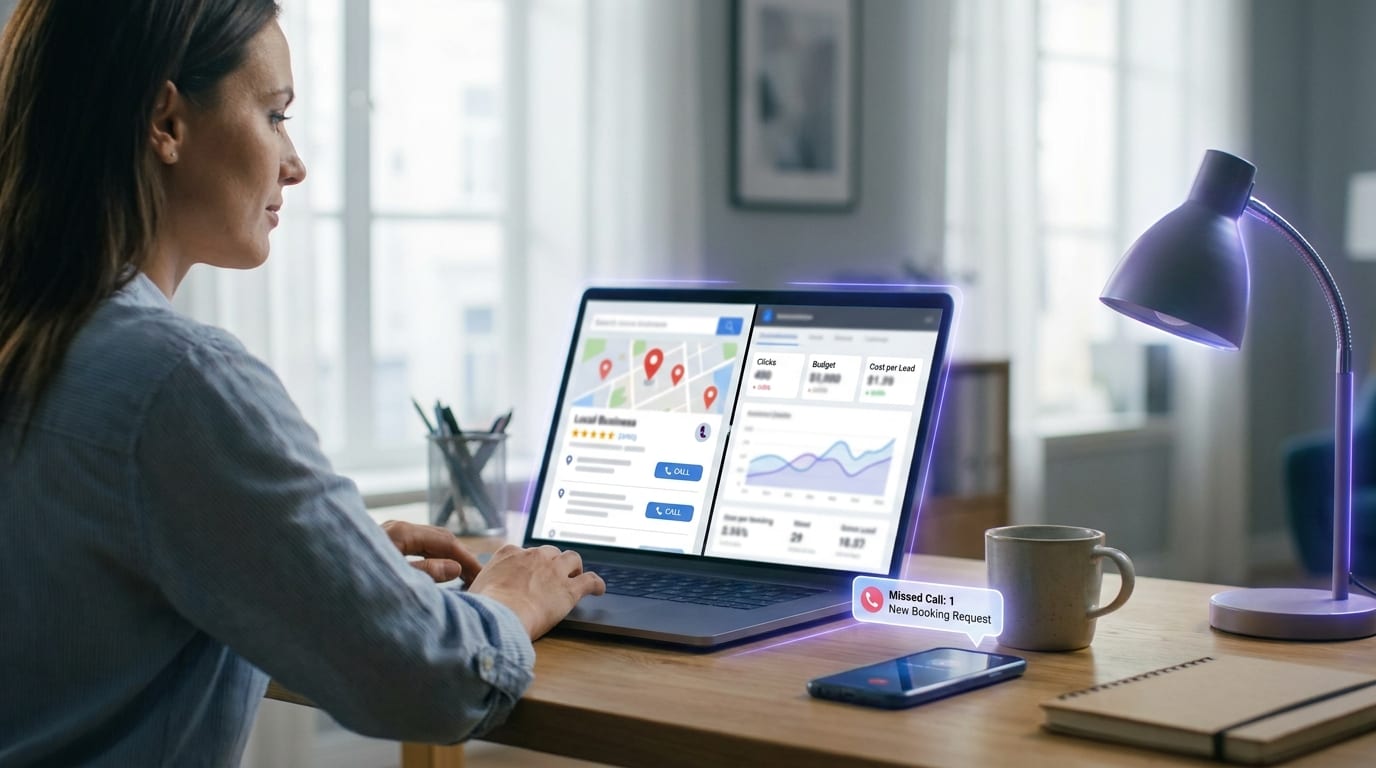
Absolutely—that’s one of its biggest benefits. The system can automatically alert your team via text or mobile app the instant a high-scoring lead comes in, ensuring you reach out within minutes rather than hours or days. Since responding within 5 minutes can increase conversion rates by up to 391% and 78% of customers buy from the first company that responds, this speed advantage alone can dramatically increase your win rate against competitors who are still manually checking their email inbox.
Ready to Stop Guessing and Start Converting?
The difference between businesses that thrive and those that struggle often comes down to one thing: knowing where to focus.
AI-powered lead scoring takes the guesswork out of sales prioritization. It tells you exactly which prospects are ready to buy, which ones need nurturing, and which ones aren’t worth your time—automatically, 24/7, based on real behavioral data.
For Twin Falls businesses competing in crowded markets, this isn’t just a nice-to-have. It’s quickly becoming essential.
Your competitors are either already using these tools—or they will be soon. The question is: will you be ahead of the curve or playing catch-up?
The technology is proven. The ROI is measurable. And the barrier to entry has never been lower.
Start your journey to smarter sales today:
- Join the LeadProspecting AI Founder’s Club (lifetime pricing for first 200 members)
- Explore how email automation nurtures warm leads
- See why ready-made websites fail without automation
- Learn how field service integration completes your growth system
The leads are already there. The technology is ready. The only question left is: are you?