The Question Every Local Service Owner Gets Wrong
If you've ever stared at your marketing budget wondering whether to pour more money into Google Ads or finally fix your Google Business Profile, you're dealing with one of the most expensive guessing games in local business. AI lead generation tools have changed the math entirely, and most business owners haven't caught up yet.
Here's the honest answer upfront: both channels work. But they work differently, cost differently, and attract very different buyer intent. Choosing between them without understanding that distinction is like buying a truck because your neighbor loves his, without knowing he hauls equipment for a living and you mostly drive to a coffee shop.
Let's break down what's actually happening in each channel, what the data says, and how to build a system that converts in both lanes.
What Google My Business Actually Does to Your Lead Flow
Your Google Business Profile (formerly Google My Business) is essentially a free piece of digital real estate that sits at the top of local search results. When someone searches "plumber near me" or "best chiropractor open now," Google's Local Pack shows three businesses before any paid ads or organic website results. That's prime position, and it costs you nothing per click.
According to Forbes, businesses with complete and optimized Google Business Profiles are 2.7 times more likely to be considered reputable and receive 7 times more clicks than incomplete profiles. That's not a small edge. That's the difference between a phone that rings and one that sits silent.
The leads coming from a well-optimized GMB profile also tend to be further along in the buying cycle. They've already searched a specific service in a specific area. They've read your reviews. They've seen your photos. By the time they tap "Call," they're closer to a yes than almost any other lead source.
What makes GMB powerful is compounding. A paid ad stops the moment your budget runs out. A GMB profile with 80 five-star reviews, accurate business hours, and regularly posted updates keeps generating calls month after month without an additional spend. It's the closest thing to a lead generation tool that runs on momentum rather than money.
What Paid Ads Actually Do (and Where They Fall Short)
Google Ads and Local Service Ads are not bad. They're just different. Paid ads give you immediate visibility, which is genuinely useful if you're new to a market, launching a promotion, or competing in a category where organic rankings take time to build.
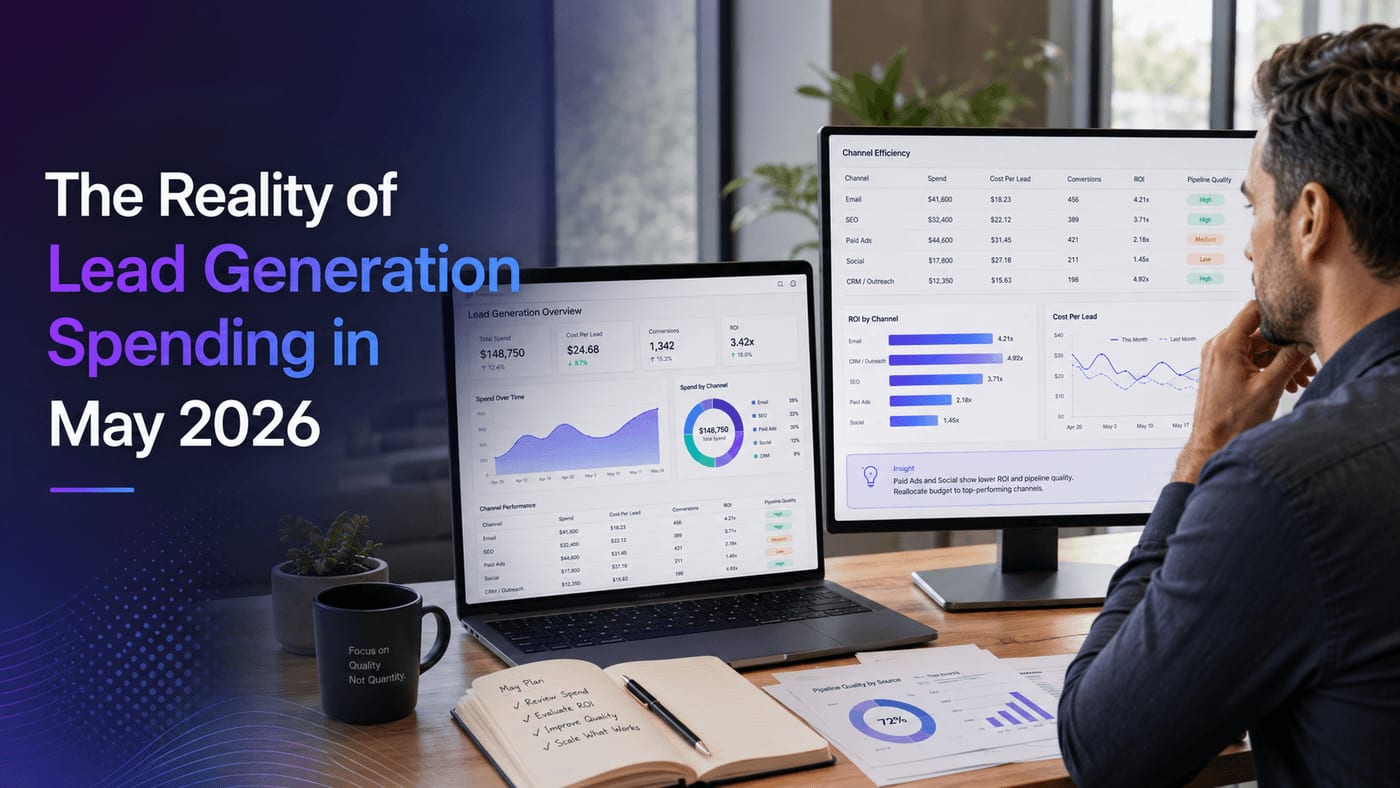
The tradeoff is cost and intent quality. The average cost-per-click for home service keywords runs between $15 and $50, with competitive verticals like legal or financial services hitting $100 or more per click, according to WordStream's industry benchmark data. At those rates, a modest $1,500 monthly budget might generate 30 to 100 clicks, and only a fraction of those clicks become actual leads.
Paid traffic also requires continuous management. Ad copy needs testing. Bids need adjusting. Negative keyword lists need pruning. If you're a solo operator or running a lean team, that ongoing overhead either eats your time or requires hiring someone.
That said, paid ads give you targeting flexibility that GMB cannot match. You can target by ZIP code, time of day, device type, and keyword intent. For seasonal promotions or specific service pushes, a short-run paid campaign paired with a strong landing page can move fast.
The mistake most local service owners make is treating paid ads as a replacement for organic presence rather than a supplement to it. Paid without organic is a leaky bucket. You fill it constantly and it empties the moment you stop.
AI Lead Generation: The Layer Most Businesses Are Missing
Here's where the conversation shifts. Whether you're winning through GMB or paid ads, what happens after someone expresses interest is where most businesses leak revenue. A potential customer calls, goes to voicemail, and books with your competitor 20 minutes later. A form fills on your website at 10 PM, and you follow up the next morning after they've already moved on.
This is the gap that AI lead generation infrastructure fills. The goal isn't just generating leads. It's capturing, qualifying, and following up with every lead before the window closes.
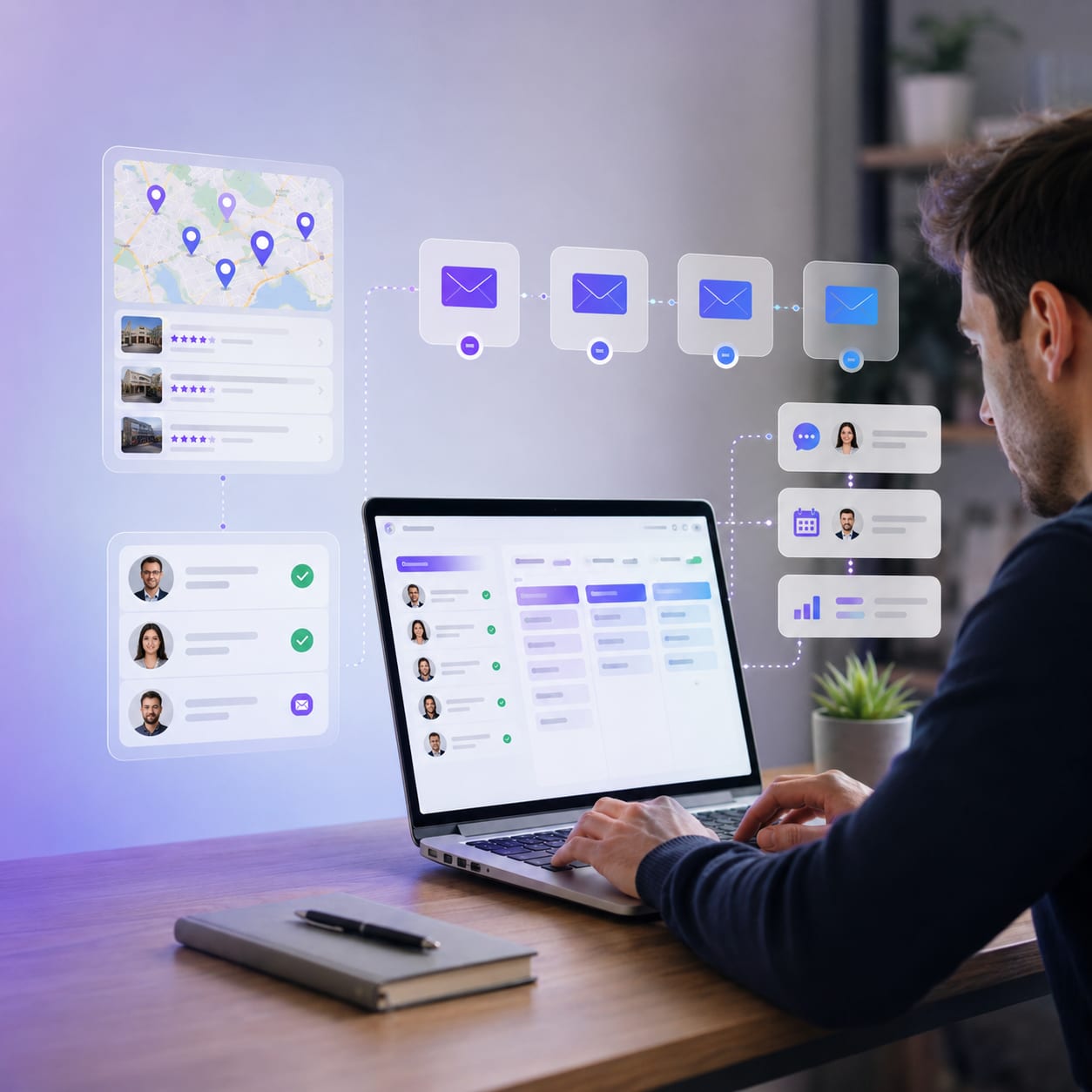
Tools like missed-call text-back recovery automatically send a text to anyone who called and didn't reach you. Instant reply automations respond to web form submissions in under 60 seconds. Smart pipelines move leads through stages with triggered follow-ups based on where they are in the decision process. Together, these tools function like a 24-hour sales assistant who never calls in sick.
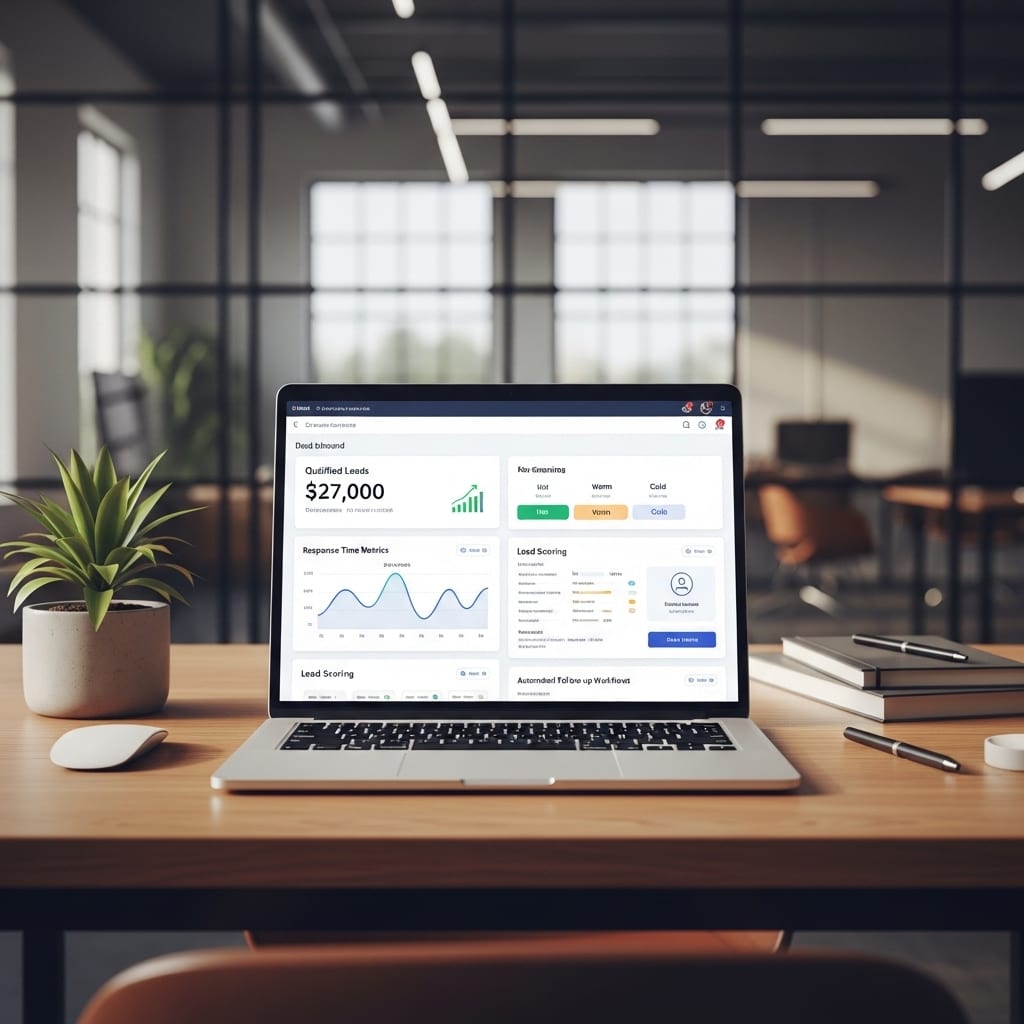
LeadProspecting AI bundles all of this into one platform, from a field service CRM with drag-and-drop pipeline management to automated review requests and AI-powered follow-up sequences. You can see the full feature set at Features - Lead Prospecting AI. Instead of juggling five different tools with five different logins, you get one operating system for your lead flow.
If you're curious how this stacks up against platforms you may have already heard of, check out this breakdown: HubSpot vs. Salesforce vs. LeadProspecting AI: Which CRM Actually Fits a Small Business?
Building a System That Uses Both Channels Intelligently
The smartest local service businesses aren't choosing between GMB and paid ads. They're running them as a sequence with automation as the connective tissue.
Here's what a functional lead system looks like in practice:
- GMB as the foundation: Fully optimized profile with current photos, weekly posts, active review requests, and accurate service categories. This is your long-term organic engine.
- Paid ads for acceleration: Short-burst campaigns to fill gaps during slow seasons or push a specific high-margin service. Budget capped. Landing page tested. Not left running on autopilot.
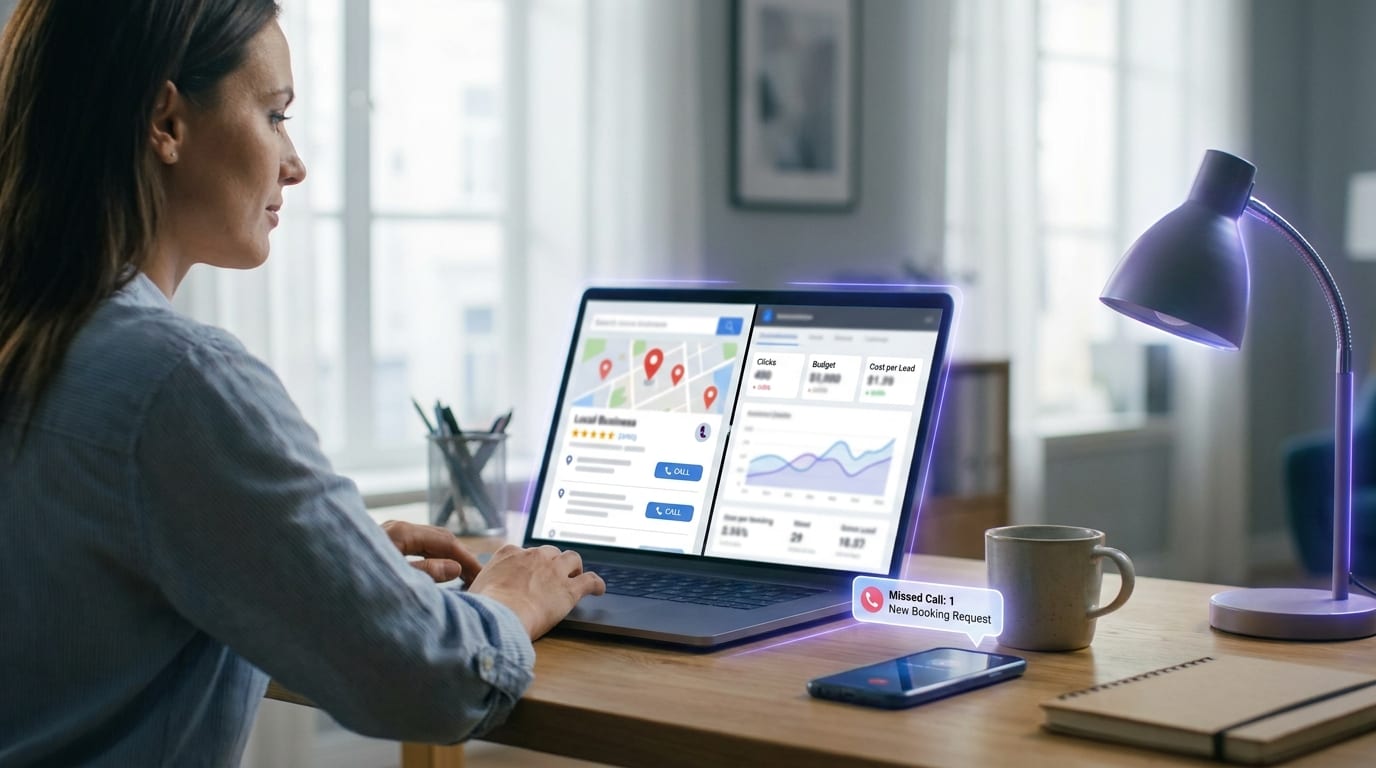
- Missed-call text-back: Every call that goes unanswered triggers an automatic text reply with a booking link. This alone recovers leads that would otherwise be lost.
- AI email marketing and nurture: Leads that don't convert immediately go into an automated sequence. A good ai email marketing workflow sends value-first messages over 7 to 14 days, nudging the prospect toward a booked appointment without requiring manual effort.
- Review automation: Every closed job triggers a review request via text. More reviews improve your GMB ranking, which reduces your need to pay for clicks over time.
- Cold outreach for proactive growth: Using a verified cold email tool, you can target businesses or property types that match your ideal customer profile before they're even searching. This is particularly effective for B2B-adjacent services like commercial HVAC or property maintenance contracts. See how lead scraping tools compare here: B2B Lead Scraper Tools Compared: Which Actually Deliver Verified Emails in 2026.
When these pieces run together, your cost-per-acquired-customer drops significantly because you're no longer leaving leads on the table at every stage of the funnel.
If you suspect your current setup is leaking leads, this is worth reading: Why Your Small Business Isn't Getting Enough Leads | Fix It Now
The Concrete Takeaway You Can Implement Today
Before spending another dollar on paid ads, audit your Google Business Profile against this checklist:
- Is your business name, address, and phone number exactly consistent across every online listing?
- Have you selected the most specific primary and secondary service categories available?
- Do you have at least 20 reviews with an average above 4.5 stars?
- Have you posted an update, offer, or photo in the last 7 days?
- Is your "Services" section filled out with keyword-rich descriptions?
- Are your business hours correct, including holiday hours?
If you answered "no" to three or more of those, your GMB profile is actively costing you leads. Fix that before writing your next ad check.
On the automation side, the single fastest win most local businesses can implement today is a missed-call text-back. Set it up so anyone who calls after hours or when you're unavailable gets a text within two minutes. Studies consistently show that response speed is one of the top predictors of lead conversion, and most local service businesses respond to new leads hours later, not minutes.
LeadProspecting AI's platform handles all of this, from GMB setup and optimization to automated follow-up and AI lead generation workflows. If you want to see what that looks like for your specific business type, visit Services - Lead Prospecting AI for a full overview. When you're ready to talk numbers and see what plan fits your budget, the pricing page lays out every option clearly.
For those heading into a busier season, this is also worth bookmarking: The Spring Lead Explosion: Handle 3x More Leads Without Hiring Anyone New
Frequently Asked Questions About GMB, Paid Ads, and AI Lead Generation
Q: How long does it take for Google My Business optimization to generate leads?
Most businesses start seeing measurable improvement in profile views and call volume within 30 to 60 days of a full GMB optimization, assuming you're also consistently adding reviews and posts. Competitive markets may take 90 days to see significant ranking movement, but the long-term return is far more sustainable than paid traffic.
Q: Is it worth running paid ads while also optimizing my GMB profile?
Yes, but with a clear strategy. Paid ads work best as a short-term accelerator while your organic presence builds. Once your GMB profile ranks consistently in the Local Pack and your review volume is strong, you can reduce paid spend and reallocate that budget toward automation tools or additional service marketing.
Q: What makes AI lead generation different from just buying more leads?
Buying leads means paying for someone else's list with no context on intent or fit. AI lead generation means building a system that captures, qualifies, and follows up with prospects based on real behavior signals, whether they called, filled out a form, or engaged with your content. The leads are yours, the data is yours, and the cost per conversion drops significantly over time.
Q: Do I need a separate CRM if I'm already using GMB and Google Ads?
GMB and Google Ads are lead sources, not lead managers. Without a CRM or field service CRM to track what happens after a lead comes in, you're flying blind. You won't know your close rate, which channel converts best, or which leads fell through. A proper CRM connects those dots and turns marketing data into business decisions.
Q: How do I know if my current setup is actually converting leads or just generating clicks?
Pull your last 90 days of data and compare total leads (calls, form fills, messages) to total new customers. If that conversion rate is below 20 to 30 percent, you have a follow-up problem, not a traffic problem. That's exactly what automation and a strong lead generation tool are built to fix.