The Real Cost of an Empty Pipeline
You are running an email drip campaign right now, or you are thinking about starting one, because your pipeline has gone quiet and you know it. The leads are not flowing, the follow-ups are getting ignored, and the revenue projections you built in January are starting to feel fictional.
Here is the question nobody answers directly: should you be investing in cold email outreach, or should you be scraping fresh, targeted leads and feeding them into an automated sequence? Both approaches promise to fill your pipeline. Both cost real money and real time. Only one is likely to produce faster results in 2026, and the answer depends heavily on how you set things up.
According to Harvard Business Review, companies that systematically test and iterate their outreach approaches see measurably higher conversion rates than those who rely on intuition alone. That means the data you gather from your first campaign shapes every campaign after it. So let us get the comparison right from the start.
Cold Email Outreach: The Promise vs. the Reality
Cold email has been the backbone of B2B prospecting for over a decade. At its best, a well-targeted cold email campaign can generate a 5 to 10 percent reply rate with a solid value proposition and clean list hygiene. At its worst, it torches your domain reputation, buries you in spam folders, and produces zero booked calls.
The hard truth is that most small businesses execute cold email outreach badly. They buy a list from a sketchy data provider, send a hundred emails from their primary business domain on day one, and then wonder why nothing lands. The inbox placement problem is real. Statista reports that spam consistently accounts for over 45 percent of global email traffic, which means email providers are increasingly aggressive about filtering anything that looks promotional.
If you want cold email to work in 2026, you need three things in place before you send a single message:
- Domain warming: A fresh domain needs at least 4 to 6 weeks of gradual sending before it can handle bulk outreach without triggering spam filters.
- Verified contact data: Sending to unverified addresses tanks your deliverability score fast. Bounce rates above 3 percent start hurting your sender reputation.
- A multi-touch email drip campaign: Single-email outreach is dead. You need a 5 to 7 step sequence with spaced follow-ups, personalization tokens, and conditional logic that adapts based on whether someone opens, clicks, or replies.
The infrastructure overhead is significant. That is why many small business owners using an email outreach platform for the first time get frustrated within 60 days. They are not failing because cold email does not work. They are failing because they skipped the foundation.
If you want to avoid the most common mistakes before launching your next sequence, read through Spam Fix Email Mistakes Killing Your Q2 Drip Campaigns before you hit send on anything.
Lead Scraper: Faster Targeting, Fresher Data
A lead scraper solves a different problem than cold email. Instead of asking "how do I reach people," it asks "who exactly should I be reaching?" That distinction matters more than most business owners realize.
The traditional prospecting model works like this: you define your ideal customer, you guess at where to find them, and you buy a list that is 18 months old and already oversaturated. A modern lead scraper flips that model. You define your target by niche, location, business type, and size, and you pull live data from sources like Google Maps that includes verified emails, phone numbers, and social profiles.
The B2B Lead Scraper Tools Compared: Which Actually Deliver Verified Emails in 2026 breakdown lays out exactly what separates quality scraping tools from the ones that waste your prospecting budget. The short version: verification matters more than volume.
When you use LeadProspecting AI's built-in Lead Scraper, you are pulling Google Maps data that is current, paired with verified emails and social profiles, so your outreach lands in front of real business owners who are actually operating right now. You can filter by category, rating, and review count, which means you can segment by business health before you ever write a single email.
The speed advantage is real. Instead of spending two weeks building a list manually and another week cleaning it, you can have a targeted list of 500 verified prospects loaded into a pipeline and ready for an automated email drip campaign within the same afternoon.
Building an Email Drip Campaign That Actually Converts
Here is where the two strategies converge. A lead scraper gets you the who. An email drip campaign gets you the conversation. Neither works without the other in 2026.
A high-performing drip sequence for cold outreach typically looks like this:
- Day 1: Short, direct intro email. One specific problem, one specific outcome. No attachments.
- Day 3: Value-add follow-up. Share a relevant insight, stat, or case study specific to their industry.
- Day 7: Social proof touch. Mention a result you got for a similar business without using a client name if confidentiality matters.
- Day 12: Soft ask. Offer a low-commitment next step like a 15-minute call or a free audit, not a sales pitch.
- Day 18: The breakup email. Make it light, make it human, and you will be surprised how many responses this one triggers.
The key is that every step should fire based on behavior, not just a timer. If someone opens your email three times but does not reply, that is a signal to escalate. If someone clicks a link, your sequence should pivot to a more specific offer. This is where an ai sales assistant built into your CRM becomes a multiplier rather than just a convenience.
LeadProspecting AI's Automation Workflow Builder handles this with trigger-based logic, If/Else branching, and smart reminders so your follow-up adapts to what your prospects actually do, not just what you hope they will do. You can explore the full capability set at Features - Lead Prospecting AI.
For a deeper look at what blocks most pipelines even after leads start coming in, check out Why Your CRM Pipeline Isn't Moving: 7 Bottlenecks Killing Your Sales Velocity. The issue is usually not lead volume. It is what happens after the first touch.
Which Strategy Fills Your Pipeline Faster: The Honest Breakdown
If speed is your primary goal, lead scraping combined with a pre-warmed sending domain and a structured email drip campaign wins on every measurable metric. You get targeted, verified contacts into an automated sequence faster than any manual list-building process, and you eliminate the guesswork around who you are actually reaching.
Cold email without a scraper means you are either buying dirty data or building your list by hand. Both slow you down before you even start. A scraper without a drip campaign means you have a great list and no follow-through system, which is just a more expensive version of doing nothing.
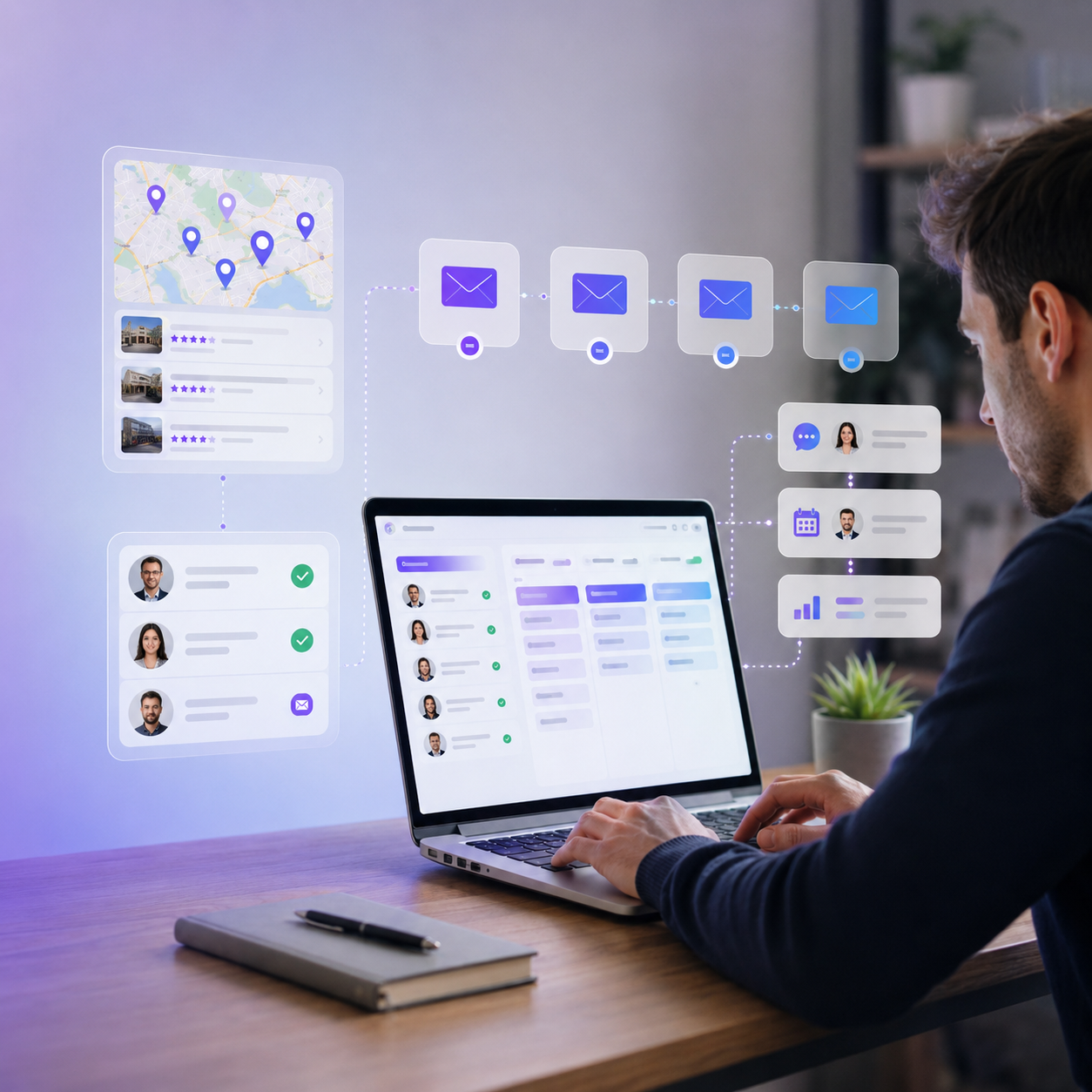
The combination looks like this in practice:
- Use the Lead Scraper to pull 300 to 500 verified prospects in your target niche this week.
- Load them into your CRM pipeline with proper tagging by source and segment.
- Trigger a pre-built email drip campaign sequence with behavioral If/Else logic.
- Monitor inbox placement using domain warming data so you are not flying blind on deliverability.
- Route any replies or booked calls directly into your pipeline for follow-up tracking and payment capture.
The platforms that bundle all of this together eliminate the integration tax you pay when you are running separate tools for scraping, CRM, email sending, and pipeline management. Using an ai content creation platform layer on top of that means your follow-up messaging does not require you to write from scratch every time either.
And when a prospect calls in after receiving your sequence, an ai phone answering layer ensures they do not hit voicemail and disappear. Missed calls are one of the highest-cost problems in small business sales, and automating that recovery is a direct revenue fix, not just a nice-to-have feature.
See what the full system looks like when it is running together at Services - Lead Prospecting AI.
For prospecting strategy and toolset comparison, the Lead Prospecting Software: What Actually Works vs. What Wastes Your Budget guide gives you a side-by-side breakdown of what is actually worth your budget in 2026.
Frequently Asked Questions About Cold Email and Lead Scraping
Q: How long does it take to see results from a lead scraper combined with a drip campaign?
Most businesses see their first replies within 7 to 14 days of launching a properly warmed sequence with verified contacts. Significant pipeline movement, meaning booked calls and quoted deals, typically appears within 30 days if your targeting is specific and your messaging addresses a real pain point.
Q: What is the difference between a cold email campaign and an email drip campaign?
A cold email campaign is about initial outreach to people who do not know you yet. An email drip campaign is a structured, multi-step sequence that nurtures those contacts over time based on their behavior. Cold email is the first touch. The drip campaign is everything that turns that first touch into a booked call or closed deal.
Q: Do I need a separate domain for cold email outreach?
Yes, strongly recommended. Sending cold outreach from your primary business domain puts your entire email operation at risk if deliverability suffers. Use a subdomain or a closely related domain, warm it properly over 4 to 6 weeks, and keep your sending volume gradual. LeadProspecting AI's Email Warming tool automates this process to protect your sender reputation from day one.
Q: Can a small business with no sales team run this kind of outreach system?
Absolutely. The entire point of combining a lead scraper with automated drip sequences and CRM pipeline management is that it removes the need for a dedicated sales team in the early stages. One person can manage outreach to hundreds of prospects simultaneously when the system is built correctly. Check the Pricing | CRM, Lead Scraper & Email Warming Plans | LPAI | Lead Prospecting AI page to see which plan fits your current stage of growth.
Q: What is the biggest mistake businesses make with lead scraping?
Prioritizing volume over verification. A list of 2,000 unverified emails will destroy your domain reputation faster than it will ever fill your pipeline. Start with 300 to 500 verified, targeted contacts, run your sequence, analyze what converts, then scale. Quality targeting with a clean email drip campaign will always beat a massive list with sloppy execution.
If you are ready to stop guessing and start building a pipeline that actually moves, Lead Prospecting AI | CRM & Lead Generation Software gives you the tools to do it. The Lead Scraper, Email Warming, drip campaign automation, and CRM pipeline management are all under one roof, so you are not paying for five separate subscriptions to accomplish what one system should handle. Start with a clean list, a warmed domain, and a structured sequence, and your pipeline will look very different 30 days from now.