TL;DR:
Manual follow-up is quietly costing Magic Valley businesses real revenue. This blog breaks down five common myths that stop small businesses from adopting AI CRM systems, including cost, complexity, messy data, and fear of replacing staff. The truth is that modern AI CRM tools are affordable, easy to use, and built to help teams follow up faster, stay organized, and close more deals without adding more manual work. Businesses that keep relying on spreadsheets, email chains, and memory are leaving money on the table, while competitors with better systems are pulling ahead.
The Silent Revenue Killer: Why Your Magic Valley Business Is Losing Deals
Your sales rep closes a deal on a Tuesday morning. By Thursday, the paperwork is lost in someone's email. The customer never gets a follow-up, and by next week they have moved on to a competitor who actually stayed in touch.
This is the everyday reality of Magic Valley businesses running on manual processes, spreadsheets, and pure luck. According to a report by the Aberdeen Group, the average company loses 12% of its revenue due to poor sales practices. For a business with $10 million in annual revenue, that translates to a staggering $1.2 million in lost sales per year. Yet many Magic Valley business owners do not realize that myths about AI CRM systems are one of the reasons they are still operating this way.
They have heard concerns about complexity, cost, and data quality. They have read that AI is not meant for small businesses. So they keep juggling tools, chasing down information, and watching deals slip away. It is not laziness. It is misinformation that keeps revenue sitting on the table.
Let's bust five myths that are actively costing your Magic Valley business money.
Myth #1: AI CRM Is Too Expensive for Small Businesses
Business owners hear "AI CRM" and picture a six-figure implementation with consultants, custom integrations, and enterprise pricing. That may have been true in 2010, but it is no longer the reality today.
Seventy-five percent of SMBs already use AI in some capacity, and seventy-six percent of businesses are increasing their tech spending compared to previous years. Why? Because many AI-powered tools now cost less than what most businesses spend on coffee.
The real cost is not the software. The real cost comes from not using it. Poor data quality costs businesses an average of $15 million annually. When your Magic Valley team is manually tracking leads in spreadsheets and emails, the price shows up in lost productivity, missed follow-ups, and deals that quietly disappear.
Thanks to cloud computing and open-source AI frameworks, organizations of all sizes can access AI solutions at a fraction of the historical cost. Many platforms now offer scalable, pay-as-you-go models. You can start small, see the value, and scale as you grow. No massive upfront investment required.
Myth #2: Your Data Needs to Be "Perfect" Before You Can Use AI
This myth paralyzes more Magic Valley businesses than any other. You think: "Our data is messy. Our CRM is incomplete. We can't start until we clean everything up."
Meanwhile, your competitors are already using AI to spot patterns in their imperfect data and closing deals faster.
AI thrives on meaningful data, not perfect data. Instead of obsessing over perfection, focus on consistency and outcomes. Your data needs to be decent, not perfect. Most AI tools can work with typical CRM messiness, like missing fields or duplicate records, and many even help clean things up as they run.
In our experience working with Magic Valley service businesses, the teams that wait for perfection are the same ones watching opportunities pass by. Start with what you have. AI will help you improve it.
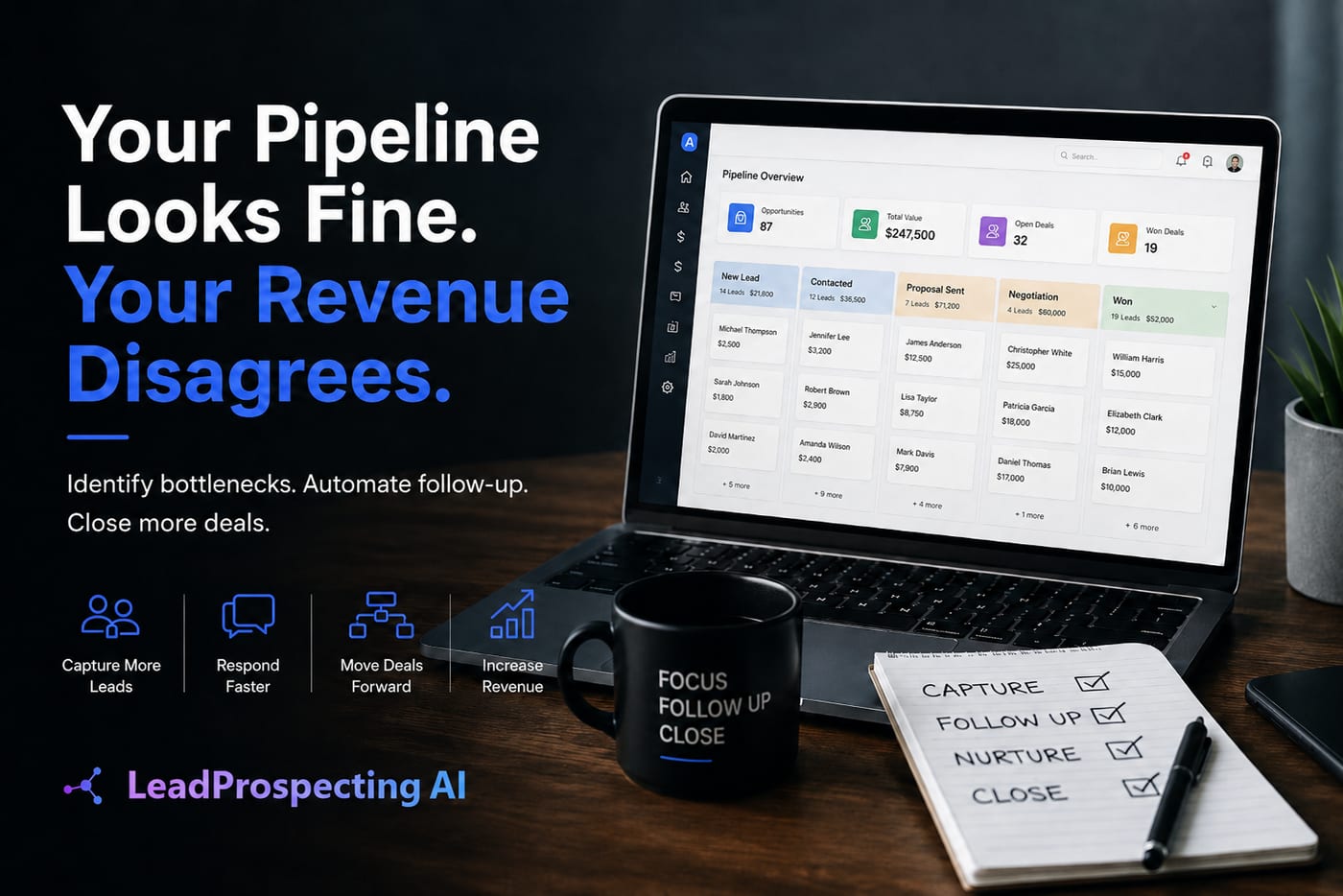
A good CRM platform like LeadProspecting AI centralizes all your customer data in one place, automating follow-ups and reminders so no deal falls through the cracks, even with messy data. The system gets smarter as you use it.
Myth #3: AI CRM Systems Are Too Complex for Non-Technical Users
You picture your team needing computer science degrees just to log a call or update a deal stage. That's outdated thinking.
Modern AI solutions are designed with usability in mind; many AI tools come with intuitive interfaces and no-code or low-code options, enabling business users (not just data scientists) to implement and utilize AI effectively.
Most AI tools today are plug-and-play for GTM teams, and most tools are built for marketers and salespeople, not engineers. If your team can send an email and navigate a dashboard, they can use modern AI CRM software. It's designed for them, not against them.
The complexity myth comes from old enterprise CRM systems that required implementation teams and months of setup. New cloud-based platforms built for small businesses prioritize ease of use. Your Magic Valley contractors, agents, or consultants shouldn't need IT training to manage their pipeline.
Myth #4: AI Will Replace My Sales Team (Or Make Their Job Meaningless)
This fear is understandable, but misses the entire point of what AI actually does.
AI is best understood as a tool that enhances, not replaces, human labor. It can handle data-heavy, repetitive tasks such as gathering insights or analyzing audience behavior, which allows employees to dedicate their energy to roles that require human intuition, creativity, and empathy.
A Magic Valley home service contractor doesn't want to spend 2 hours every morning updating spreadsheets and remembering who to call. They want to close deals, build relationships, and grow revenue. AI CRM handles the busy work. Your team focuses on what they actually get paid for: selling and serving customers.
With smaller teams, SMBs strategically use AI in multiple ways to automate repetitive tasks and improve efficiency, and nine in ten SMB leaders admit AI makes their businesses efficient. That's not replacing people, that's giving them superpowers.
Myth #5: AI CRM Systems Are a "Set-and-Forget" Silver Bullet
This is the myth that actually leads to the most expensive failures.
Some businesses buy a CRM, plug it in, and assume it will automatically fix everything. The primary reason CRM systems miss the mark in helping companies increase revenue is because they are too often used for inspection, rather than creating improvement in the sales process. They treat it like a recording device instead of a growth tool.
The truth: Successful AI deployment is iterative; it involves starting with small pilot projects, analyzing results, and making adjustments based on feedback, with companies often spending months fine-tuning their AI solutions.
A CRM is a system, not magic. You need to:
- Define what success looks like for your Magic Valley business (faster follow-ups? More repeat customers? Higher deal size?)
- Make sure your team actually uses it (adoption is critical, it's not IT's responsibility, it's leadership's)
- Review the data regularly and adjust your process based on what you learn
- Continuously improve your pipeline and sales steps
When you treat an AI CRM as a strategic tool, not a silver bullet, that's when the revenue shows up. Magic Valley competitors who've automated their follow-up process are already pulling ahead, closing more deals faster because the system never forgets and they always know what's next.
What This Means for Your Magic Valley Business Right Now
You're leaving money on the table every single day your sales process relies on memory, emails, and spreadsheets. Research shows that 85% of SMBs that invest in AI are confident they'll yield positive outcomes.
Here's the hard truth: Magic Valley businesses using AI CRM systems are closing more deals, following up faster, and tracking everything in one place. Businesses not using them are hoping their next big opportunity doesn't slip through the cracks.
Your competitors already know this. In fact, modern AI-powered CRM platforms are now essential for Twin Falls businesses wanting to stay competitive in 2026, they aren't luxuries anymore.
The platform you choose should combine AI CRM with integrated lead generation, email automation, and pipeline management. You shouldn't have to pay for five different tools when one system can handle contacts, quotes, invoicing, automated follow-ups, and team accountability all in one place. That's how service businesses in Magic Valley set up efficient systems in days, not months.
Stop letting myths about cost, complexity, and data perfection keep revenue off the table. Your Magic Valley business can implement an AI CRM today, start seeing results this week, and scale as you grow.
Start Closing More Deals This Month
You've built your Magic Valley business by solving real problems for real customers. An AI CRM isn't about technology for technology's sake; it's about making sure every lead gets followed up, every deal is visible, and your team spends time selling instead of searching for information.
LeadProspecting AI combines everything you need in one platform: AI-powered CRM, lead generation, email automation, pipeline management, and team coordination. No spreadsheets. No lost deals. No wondering who's supposed to follow up.
Start your 21-day free trial today, no credit card required. See firsthand why Magic Valley businesses are replacing five disconnected tools with one growth engine that actually works. Or schedule a free strategy call with our team to see exactly how we'd set up your sales process.
Frequently Asked Questions
Q: How quickly can we implement an AI CRM if our data is messy right now?
Most Magic Valley businesses go live in 1-2 weeks. You don't wait for perfect data; you start capturing clean data from day one while the system helps you manage what you already have. Many platforms include automated data cleanup features that run continuously.
Q: Will our sales team actually use an AI CRM, or will it end up like our last software purchase?
The biggest difference between CRMs that work and ones that don't is adoption. User-friendly platforms with clear benefits (no more lost deals, better visibility, easier follow-ups) get adopted naturally. CRMs that require extensive manual data entry and don't show immediate value get abandoned. Choose a system built for your team's workflow, not against it.
Q: How much revenue could we actually save by switching to AI CRM?
The average company loses 12% of revenue to poor sales practices. For a $2M Magic Valley business, that's $240K in lost revenue annually, from missed follow-ups, slow responses, and forgotten deals alone. Even recovering 25% of that ($60K) pays for a CRM for years.
Q: What if we're already using a basic CRM? Do we need to switch?
Not necessarily, but ask yourself: Do you have integrated lead generation? Automated follow-up reminders? Email warming for better deliverability? Team accountability dashboards? If you're paying for multiple tools or manually doing what automation should handle, you're paying more and getting less.
Q: How do we know if an AI CRM is actually helping our business?
Track the metrics that matter: average time to first follow-up (should be hours, not days), deals won vs. deals lost, customer acquisition cost, and pipeline visibility. If your team can answer "Who should follow up with this prospect and when?" in under 10 seconds, the CRM is working. If someone has to search emails or check multiple systems, it's not.