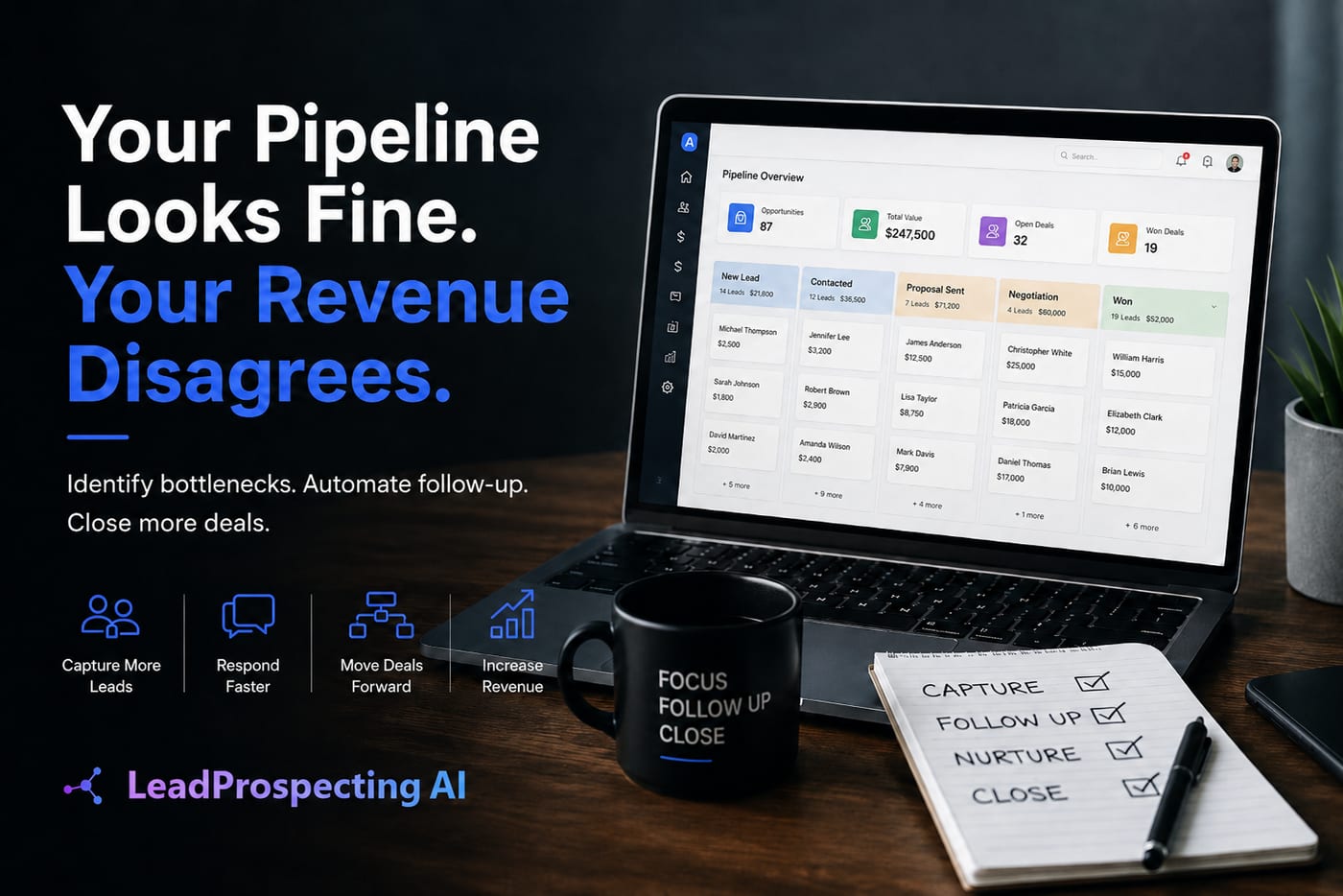
Your Pipeline Looks Fine. Your Revenue Disagrees.
If you're doing any level of CRM pipeline management, you already know the basics: leads come in, they move through stages, deals close (or don't). But here's the problem most business owners discover too late: the CRM shows you what happened, not why it stalled.
And the numbers back this up. According to research on sales pipeline challenges, 79% of sales organizations miss their forecasts by more than 10%, with only 7% hitting 90%+ accuracy. That's not a forecasting problem. That's a visibility problem hiding inside a tool you're already paying for.
So before you blame your sales team or assume leads are just slow this quarter, let's look at the five bottlenecks quietly bleeding your revenue dry, and what you can actually do about them today.
Bottleneck 1: Leads That Enter the Pipeline But Never Get a Real First Touch
Most CRM setups log a new contact the moment someone fills out a form or gets imported from a list. The system marks them as "New Lead" and everyone assumes someone will follow up. Often, nobody does for 24 to 72 hours.
Here's the brutal truth: 63% of sales managers report their organization does a poor job managing its pipeline, and the biggest culprit is almost always the top of the funnel where response time kills intent faster than any competitor can.
If a lead fills out your form at 8:47 PM on a Tuesday, they're not waiting until Thursday morning for a callback. They've already called three other businesses by Wednesday at noon.
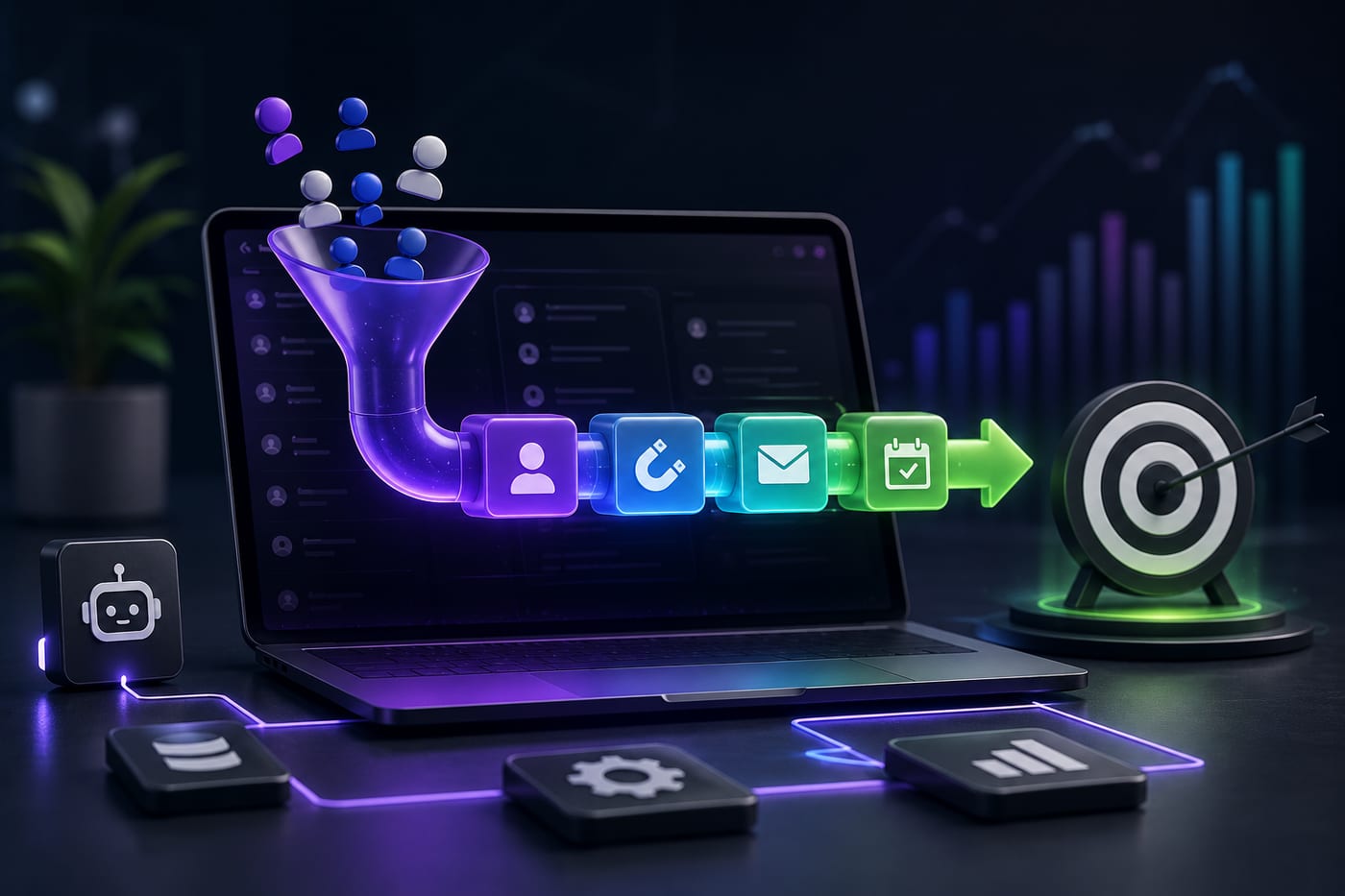
The fix is automation that triggers within minutes, not hours. LeadProspecting AI's Smart Forms and Instant Text Replies automatically respond the second a lead submits anything, keeping your business at the top of the conversation before your pipeline has even had a chance to go cold. Pair that with the Missed-Call Text-Back Recovery feature and you've plugged the most expensive leak most small businesses don't even realize they have.
Bottleneck 2: Deal Stages That Are Cosmetic, Not Functional
Open up most small business CRMs right now and you'll see stages like "Contacted," "Proposal Sent," and "Follow-Up." Those labels sound useful. They're usually meaningless.
The problem is that most business owners set up pipeline stages once during onboarding and never revisit them. As a result, deals pile up in "Follow-Up" or "Proposal Sent" for weeks with no signal, no trigger, and no urgency. According to sales pipeline analysis from CaptivateIQ, bottlenecks are specifically the points where deals stall or slow down, creating friction that delays revenue and reduces conversion rates. That "Proposal Sent" pile-up? That's a textbook bottleneck.
Real CRM pipeline management means each stage has a defined action, a deadline, and an automatic reminder when neither happens. You need smart reminders that fire when a deal hasn't moved in 3 days, not when you remember to check the board.
This is exactly where LeadProspecting AI's drag-and-drop pipeline with built-in smart reminders changes the dynamic. You can build If/Else automation logic directly into your pipeline so that stalled deals trigger a follow-up text, reassign to another rep, or escalate to you automatically. You don't just see the problem; the system acts on it.
If you want a deeper breakdown of what causes pipelines to freeze at specific stages, this post on Why Your CRM Pipeline Isn't Moving: 7 Bottlenecks Killing Your Sales Velocity is worth reading cover to cover.
Bottleneck 3: The Follow-Up Gap Between Proposal and Close
You sent the quote. They said they'd think about it. Now it's been 11 days and you're wondering whether to follow up again without looking desperate. Meanwhile, they've forgotten who you are and hired someone else.
This is the most common revenue leak in professional services, home service trades, and health and wellness businesses alike. A roofing contractor using a basic roofing CRM might track that a proposal was sent, but without an automated nurture sequence, the follow-up depends entirely on someone remembering to do it. Same story for a plumber CRM setup where techs are in the field all day and nobody owns the post-estimate follow-through.
The data is damning here too. Only 34% of organizations are highly confident in their CRM data, and only 18.7% of sales organizations achieve forecast accuracy of 75% or higher. If your data confidence is that low, your follow-up execution is probably just as inconsistent.
The solution is a structured email drip campaign tied directly to pipeline stage movement. When a deal moves to "Proposal Sent," the system automatically sends a day-2 check-in email, a day-5 value reminder, and a day-9 closing nudge without anyone lifting a finger. For businesses already fighting the deliverability battle, make sure your domain reputation is solid before you scale this. The post on Your Email Deliverability Is Costing You Revenue (And You Might Not Know It) lays out exactly why this matters before you build any automated sequence.
Bottleneck 4: Revenue Leakage Between Pipeline Stages You Don't Measure
Here's a stat that stings: for B2B businesses in growth mode, MQL-to-SQL conversion averages only about 39%, meaning more than half your qualified leads are disappearing before they ever reach a real sales conversation. Most businesses have no idea this is happening because their CRM doesn't show stage-to-stage conversion rates by default.
They see the pipeline. They don't see the drain.
Strong CRM pipeline management means tracking conversion percentages at every stage, not just total deal count. If 60 leads enter your pipeline this month but only 14 make it to the proposal stage, there's a story in that gap. Is it a qualification problem? A response time issue? A pricing mismatch at first contact? You can't fix what you can't measure.
The LeadProspecting AI all-in-one CRM surfaces these conversion gaps inside the operations dashboard so you can see exactly where deals are dying and when. Combine that with the Automation Workflow Builder to test different triggers at each stage and you have a feedback loop that actually improves over time.
Teams that get this right see real results. Teams using data-driven pipeline analysis report 30 to 40% higher forecast accuracy and catch at-risk deals earlier for course correction. That's not marginal improvement; that's a completely different business outcome.
Bottleneck 5: Weak Top-of-Funnel Feeding a Pipeline That Was Never Going to Convert
Sometimes the pipeline isn't broken. The leads are. If you're running on referrals only, a stale contact list, or traffic from a website that hasn't been touched in three years, no amount of CRM pipeline management is going to save you. Garbage in, garbage out applies to pipelines the same as it does to everything else.
This is where businesses using an all in one CRM platform with built-in lead generation have a real edge. Instead of patching together five tools, you need inbound working (SEO content, Google My Business, social media) and outbound working (Lead Scraper, email campaigns, targeted outreach) simultaneously and all feeding the same pipeline.
A strong google business profile management tool keeps your local visibility sharp and drives warm traffic into your funnel. SEO blog content builds trust over time and converts searchers at a much higher rate than cold traffic. And a Lead Scraper that surfaces verified emails and social profiles from Google Maps means you're never waiting on inbound alone.
If you're evaluating which outbound approach actually works, check out the breakdown in Cold Email vs. Lead Scraper: Fill Your Pipeline Faster in 2026. It will save you a lot of wasted budget.
The goal isn't more leads. The goal is more of the right leads moving through a system built to convert them. See the full suite of tools built for exactly this at LeadProspecting AI's complete service offerings.
What Fixing These Bottlenecks Actually Looks Like in Practice
Patching one bottleneck while the others remain open is like fixing a leak in one pipe while three more are dripping. The compounding effect of all five working together is where real revenue growth lives. Here's a quick summary of where to start:
- Top of funnel: Set up instant text and email responses so no lead goes cold in the first 30 minutes.
- Pipeline stages: Audit every stage. Assign a required action and maximum time limit to each one. Automate the reminder when the clock expires.
- Post-proposal follow-up: Build a 3-touch email drip campaign that fires automatically when a deal enters the proposal stage. Don't rely on memory.
- Stage conversion tracking: Pull a conversion rate report for each stage transition. Find the biggest drop-off and fix that stage first.
- Top-of-funnel volume: If inbound is inconsistent, activate outbound using a lead scraper, optimized Google Business Profile, and SEO content that compounds over time.
If you're serious about tightening this system, explore the LeadProspecting AI pricing and plan options to see how these tools stack up for your business size and budget. The platform is built specifically so you don't need a separate CRM, a separate email tool, a separate SEO vendor, and a separate automation platform all fighting each other for the same contact data.
Frequently Asked Questions About CRM Pipeline Bottlenecks
Q: How do I know which pipeline stage has the biggest bottleneck?
Look at conversion rates between each stage, not just total deal count. If 80 leads enter your pipeline but only 20 reach the proposal stage, the bottleneck lives somewhere between lead entry and proposal. Most basic CRMs don't show this automatically, which is exactly why so many organizations miss it. A platform with a built-in operations dashboard will surface this for you without manual calculation.
Q: Is CRM pipeline management different for service businesses like plumbers or roofers?
The principles are the same but the timing and touchpoints differ. A plumber CRM or roofing CRM needs to account for same-day or next-day urgency, seasonal volume spikes, and technicians who close deals in the field without sitting at a desk. Automations that work while the tech is on a job site are especially critical. Missed-call text-back, instant quote follow-up, and automated review requests after job completion are the highest-leverage moves for trades businesses.
Q: What is the fastest bottleneck to fix right now?
Response time. If you're not responding to new leads within 5 to 10 minutes automatically, fix that today before touching anything else. Every hour you wait drops your odds of ever reaching that lead in a meaningful way. Smart Forms with instant text replies are the fastest implementation you can do and they require zero manual effort once they're live.
Q: Does email deliverability affect pipeline performance?
Absolutely. If your automated follow-up emails are landing in spam, they might as well not exist. Your CRM will show "email sent" but the lead never saw it. Domain reputation issues silently kill nurture sequences and proposal follow-ups. Before you build any automated sequence, make sure your email sending domain is warmed and your deliverability is verified. Check out this resource on Spam Fix Email Mistakes Killing Your Q2 Drip Campaigns for a practical walk-through.
Q: Can one platform really handle CRM, lead generation, and email marketing together?
Yes, and it's actually more effective than cobbling together separate tools because the data stays in one place. When your lead scraper, CRM pipeline, email campaigns, and automation workflows all share the same contact record, you get a complete picture of where every prospect is and what they've experienced. That's the entire premise behind an all in one CRM approach. Fragmented tools create fragmented pipelines; unified platforms create unified revenue. You can connect with the LeadProspecting AI team to see how the full platform maps to your specific business workflow.