The Local SEO Gap That's Costing You Customers Right Now
If you've been watching competitors outrank you on Google while you're still trying to figure out your content strategy, ai email marketing and local SEO have quietly merged into something most small business owners haven't caught up with yet. The businesses winning search in 2026 aren't hiring $5,000-per-month agencies. They're building systems.
Here's the uncomfortable truth: the SBA reports that nearly half of small businesses still don't have a functioning digital marketing strategy. Meanwhile, local search has become the single highest-intent traffic source available to any business with a physical or service-area presence. If someone searches "HVAC repair near me" or "best chiropractor open Saturday," they are ready to buy. You either show up or you don't.
The good news is that you no longer need a full marketing department or a retainer agency to compete. What you need is a content system that works while you work, and the right tools to connect that content to lead capture and follow-up. That's what this post is about.
Why Local Content Marketing Fails for Most Small Businesses
Most small business owners try content marketing by writing one or two blog posts, seeing no immediate results, and quitting. That's not a strategy problem. That's a system problem.
Local content marketing fails for three predictable reasons:
- No keyword targeting: Writing about what you think people want to read, not what they're actually searching for.
- No publishing consistency: Google rewards frequency and freshness. One post every three months won't move the needle.
- No follow-up infrastructure: Getting a visitor to your blog is only valuable if you have a way to capture and nurture that lead. Most sites don't.
According to Statista, over 5.4 billion people used the internet globally as of 2024, and local search queries continue to grow year over year. The volume is there. The problem is that most small businesses have no repeatable process for creating content, optimizing it, and converting the traffic it generates.
That third point is where most businesses leak revenue. You write a blog post, someone reads it, clicks away, and you never see them again. There's no smart form to capture their email, no automation to follow up, no small business marketing automation running in the background converting readers into booked appointments. Without that infrastructure, content marketing is just an expensive hobby.
If this sounds familiar, check out You Don't Need a Marketing Department. You Need a Content System. It breaks down exactly how to structure this without a team.
How AI Email Marketing Turns Blog Traffic Into Booked Revenue
Here's where the strategy gets interesting. Content marketing and ai email marketing aren't separate channels. In 2026, they're the same channel operating in sequence.
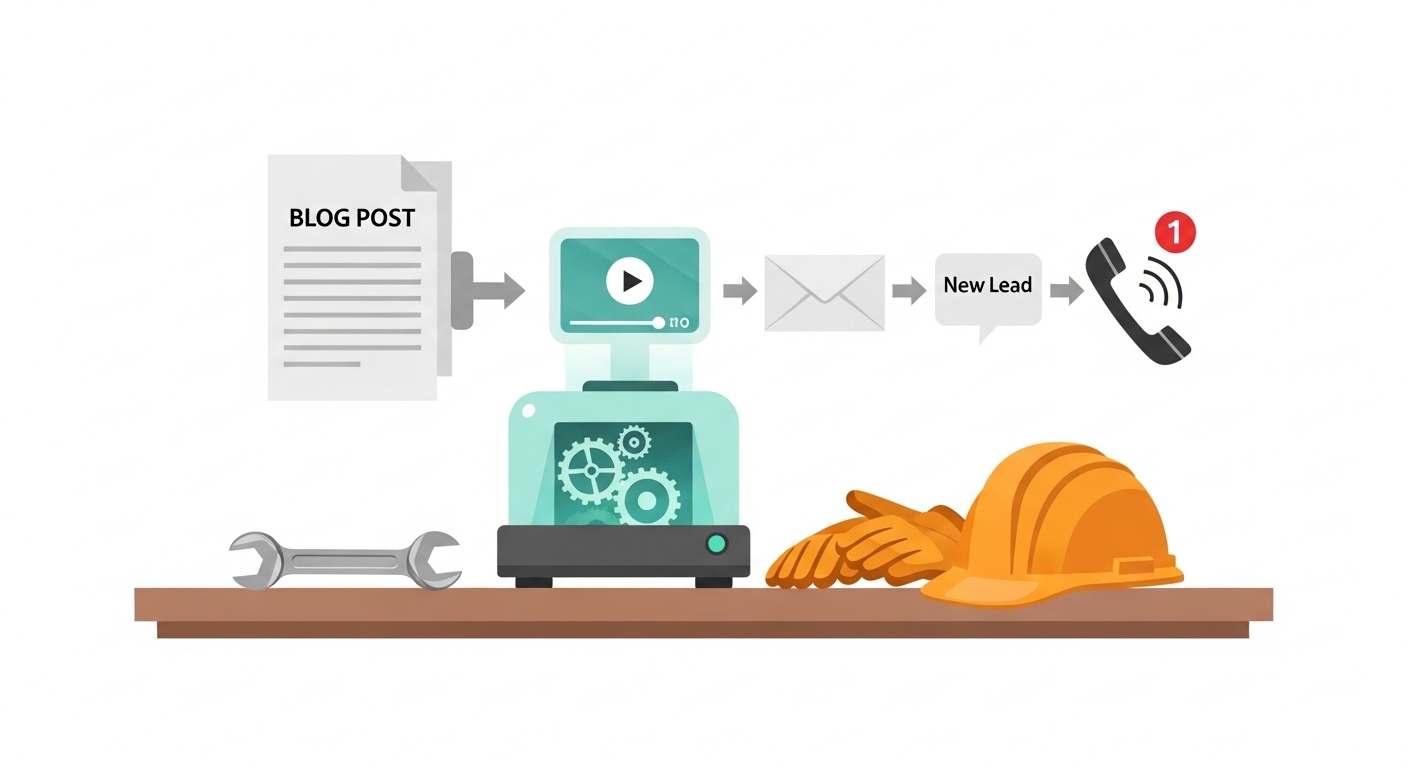
Someone finds your blog post because it ranked for a local search term. They read it, see value, and you have a smart form offering them something useful: a checklist, a free estimate, a guide. They opt in. Now your email system takes over automatically, sending a nurture sequence that builds trust, answers objections, and moves them toward booking or buying.
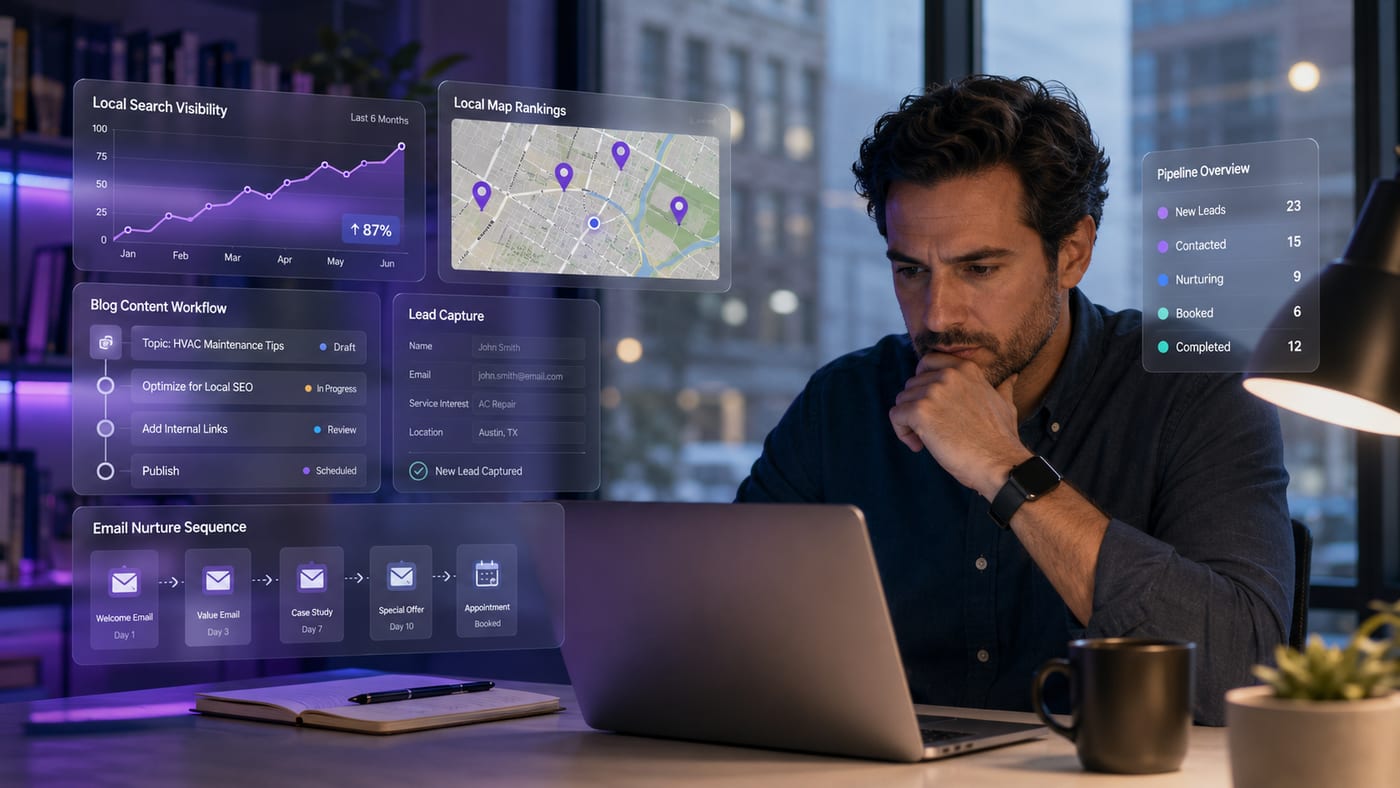
That's not a funnel a local agency builds for you over six weeks. That's a system you set up once and it runs. LeadProspecting AI's platform handles every step of this: the SEO blog content creation, smart forms, email campaigns, and automation workflows are all built into one dashboard. No stitching together five different tools with duct tape and prayer.
The ai email marketing component specifically handles what most business owners get wrong: timing and personalization at scale. When someone downloads your guide on Tuesday at 11 PM, the first email goes out within minutes. The second email follows up 48 hours later. If they click a specific link, a new branch of the sequence triggers. None of that requires you to be awake, let alone involved.
For solo contractors and service businesses especially, this changes the math entirely. You're not paying a marketing coordinator to manually send follow-up emails. The system does it, and it does it consistently, which is something humans almost never manage over the long run.
Building the Local SEO Stack That Actually Scales
Let's get practical. Here's what a working local content and lead generation tool stack looks like in 2026, and how the pieces connect.
- Keyword-driven blog content: Target local and service-specific search terms. A roofing company writing about "how to know if your roof needs replacing" is targeting buyers, not browsers. LeadProspecting AI's SEO blog service does this research and writes the posts for you, on a consistent publishing schedule.
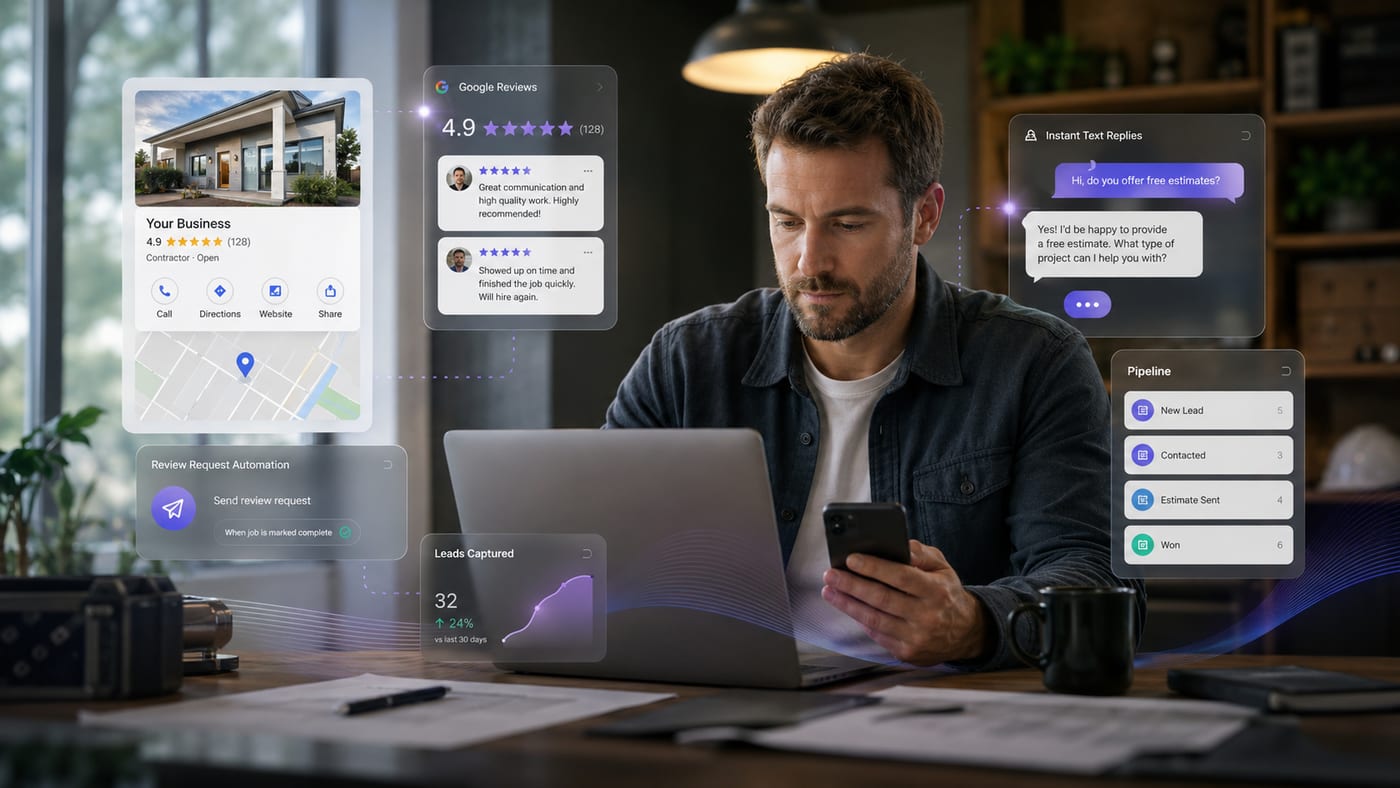
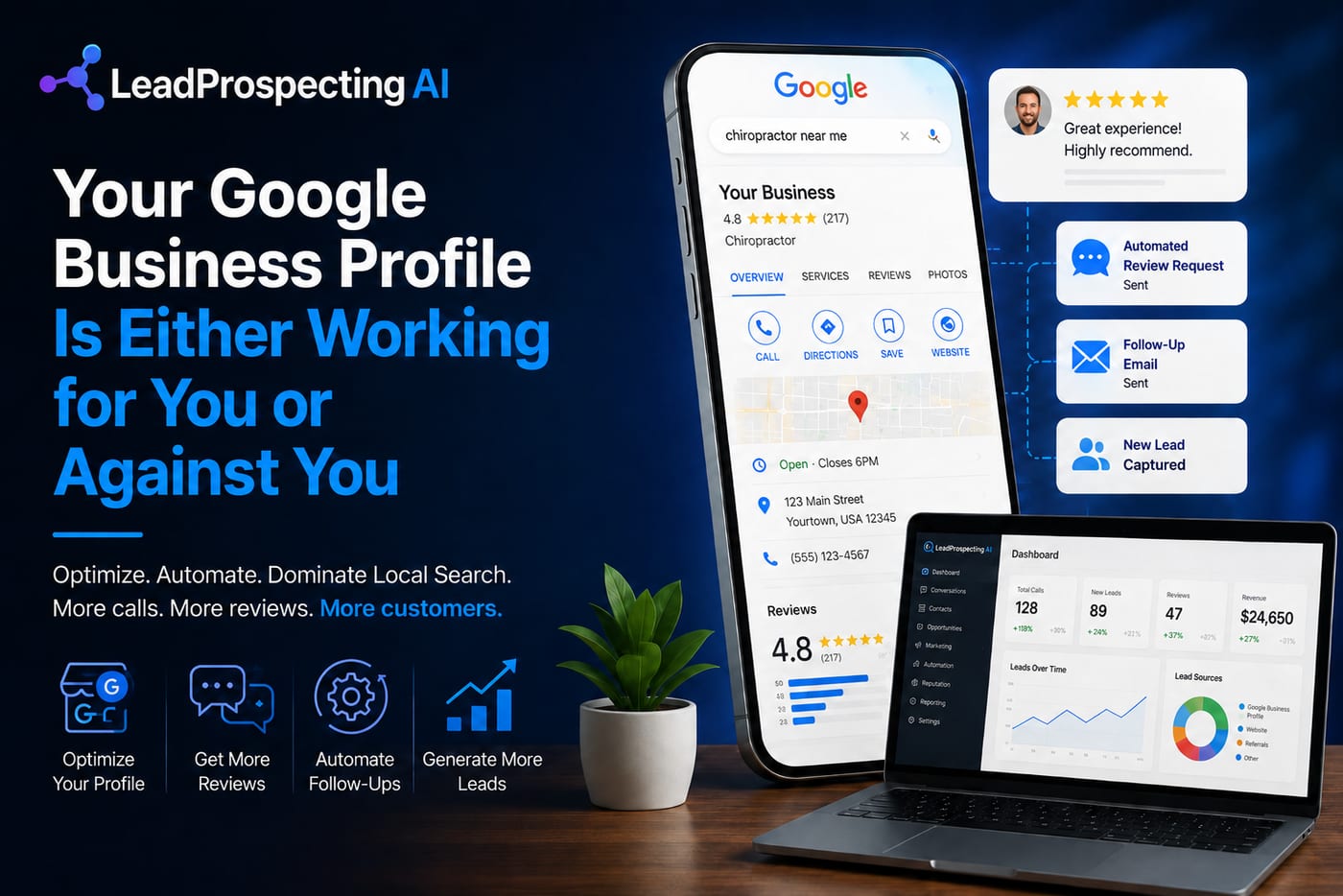
- Google My Business optimization: Your GMB profile is often the first thing a local searcher sees. It needs complete information, weekly posts, and regular review responses. This is a direct ranking factor that most businesses ignore after the initial setup.
- Lead capture at every entry point: Every blog post, landing page, and contact page needs a smart form or instant text-reply trigger. Visitors who don't convert on the first visit are gone unless you capture something.
- Email warming and deliverability: Before you blast an email list, your domain needs to be warm or your emails land in spam. This is a technical reality most business owners discover after the damage is done. Learn how to avoid it with this guide on Email Warmup vs. Deliverability: A 2026 Small Business Guide.
- Automated nurture sequences: Once leads are captured, your crm with email marketing handles the follow-up. Segment by service interest, location, or behavior. Send relevant content that moves people toward a buying decision without you manually doing anything.
- Pipeline and appointment tracking: When a lead is ready to book, they should be able to do it directly from an email or landing page. Quote requests, appointment confirmations, and payment collection should all connect back to your CRM automatically.
This is not a theoretical stack. It's what LeadProspecting AI's platform is designed to run. You can see the full breakdown of how these pieces connect on the Services page.
Using AI Email Marketing as a Cold Outreach Engine
Beyond inbound content, there's an outbound play that very few local businesses are running well. If you've ever wanted to proactively reach out to prospects in a specific area or industry, a cold email tool combined with verified contact data is one of the most cost-effective approaches available.
LeadProspecting AI's Lead Scraper pulls verified emails, phone numbers, and social profiles directly from Google Maps data. You define the niche and geography, the tool does the prospecting. Those contacts then feed directly into your ai email marketing sequences, where personalized outreach goes out automatically based on the triggers and templates you set up in the automation builder.
The critical piece here is deliverability. Cold outreach with a cold domain gets you flagged as spam immediately. That's why email warming isn't optional. It's the foundation. Without a warmed domain, even a perfectly written cold email tool sequence will land in junk and generate zero results. With a properly warmed domain, you can realistically hit 98 percent inbox placement rates and actually get responses.
For businesses that are ready to invest in their full digital infrastructure rather than piecing together separate tools, Why Small Businesses Are Consolidating Their Tech Stack (And What It Actually Saves) lays out exactly what you save in money and time when you stop paying five vendors to do what one platform handles better.
What This Looks Like 90 Days From Now
Let's be honest about timelines. Local SEO is not a week-one revenue spike. It's a compounding asset. Here's a realistic 90-day picture if you start today:
- Days 1 to 14: Domain warming begins, GMB profile is optimized, first two blog posts are published targeting local search terms. Smart forms and lead capture are live on your site.
- Days 15 to 45: Email nurture sequences are live. Outbound lead scraping identifies 500 to 1,000 verified prospects in your target market. First cold outreach campaign launches with a warmed domain. Early blog posts begin picking up impressions in Google Search Console.
- Days 46 to 90: Blog traffic starts converting through smart forms. Automated follow-up emails are working leads without manual effort. Review request automations are generating new GMB reviews, which feeds back into local search rankings. Pipeline is populated and tracked inside the CRM.
The results compound because every piece feeds the next. More reviews improve local rankings. Higher rankings drive more blog traffic. More blog traffic feeds more email subscribers. A stronger email list produces more bookings. The small business marketing automation handles the handoffs so you're not the bottleneck.
For a deeper look at how web presence and content creation tie into ROI specifically, the AI Content Writer for Business: Web Design ROI Guide 2026 is worth reading before you commit to any design or content investment.
If you're ready to stop piecing this together manually and want to see exactly what's included in a plan that handles all of it, the Pricing page breaks down every tier with full feature details. No hidden costs, no vague deliverables.
Frequently Asked Questions About Local SEO and AI Email Marketing for Small Businesses
Q: Do I need a big email list before AI email marketing is worth setting up?
No. In fact, setting up your ai email marketing sequences before you have a large list is the smart move. Every lead you capture from day one flows into a system that nurtures them automatically. Waiting until your list is "big enough" means you've already let hundreds of leads go cold while you waited.
Q: How long does it take for local SEO blog content to rank?
Most local blog content targeting low-to-medium competition keywords starts seeing meaningful impressions within 60 to 90 days, with page-one rankings possible at the 3 to 6 month mark. The key variables are domain authority, publishing frequency, and how well the content targets specific search intent rather than broad topics.
Q: What's the difference between a CRM with email marketing and just using a standalone email tool?
A crm with email marketing connects your contact records, pipeline stages, and email behavior in one place. When a lead opens an email, clicks a link, or books an appointment, that action updates their record and can trigger the next step automatically. Standalone email tools can't see your pipeline, which means you're still doing manual follow-up work to bridge the gap.
Q: Is cold email still effective in 2026 or has spam filtering made it obsolete?
Cold email is still highly effective when domain warming, personalization, and proper list hygiene are in place. The businesses failing at cold outreach are usually skipping the warming step or sending generic blasts to unverified lists. A properly configured cold email tool with verified contacts and a warm domain consistently outperforms paid ads for direct B2B and local service outreach at a fraction of the cost.
Q: Can a solo business owner actually manage all of this without a team?
Yes, and that's exactly the point of automation. The setup investment is real: you need to configure sequences, create your initial content assets, and define your pipeline stages. But once that's done, the system runs itself. A solo contractor using LeadProspecting AI's CRM and automation platform can operate like a business that has a marketing coordinator, a follow-up specialist, and a content team without actually hiring any of them.