Your Calendar App Is Booking Jobs. Your Business Is Still Leaking Revenue.
If you're running a home services business and you think your scheduling tool is doing its job, you need a better inbox placement tool working alongside it. Because here's what nobody tells you: getting the appointment on the calendar is the easy part. Keeping it, following up after it, and converting that one job into a repeat customer is where most contractors silently hemorrhage money.
You've got Calendly, or maybe a booking widget bolted onto your website. It pings you when someone books. It sends them a confirmation. And then what? The job happens, maybe you send an invoice, and the customer vanishes. No review request. No referral ask. No follow-up estimate for the next service they actually need.
That's not a scheduling problem. That's a systems problem. And it's costing you more than you realize.
The Real Cost of a "Calendar-Only" Approach
According to Must-Know Online Appointment Scheduling Stats 2024, businesses that adopt online booking systems see an average revenue increase of 27%, with some local businesses experiencing surges of up to 120%. The same data shows that 78% of home services jobs go to the first responder. Read that again: 78%. If a prospect books with you and doesn't hear back within minutes, there's a very real chance they've already called someone else.
A standalone calendar app cannot respond to that reality. It can book the appointment, but it cannot send an immediate confirmation text, trigger a pre-job reminder sequence, fire off a post-job review request, or drop that customer into a pipeline for seasonal follow-up. Those gaps are where your competitors are quietly winning.
The Field Service Scheduling Market Research Report 2033 puts the global field service scheduling market at USD 4.9 billion in 2024, growing at 13.1% CAGR toward USD 14.5 billion by 2033. Businesses that invest in intelligent scheduling infrastructure now are building a compounding advantage. Those that stick with basic calendar tools are already falling behind.
What "Enough" Actually Looks Like for Home Services
Let's be specific. A real scheduling and follow-up stack for a home services business needs to do at least these things without you touching a single button:
- Instant text reply when a lead fills out a form or misses your call (missed-call text-back is one of the highest-ROI automations you'll ever run)
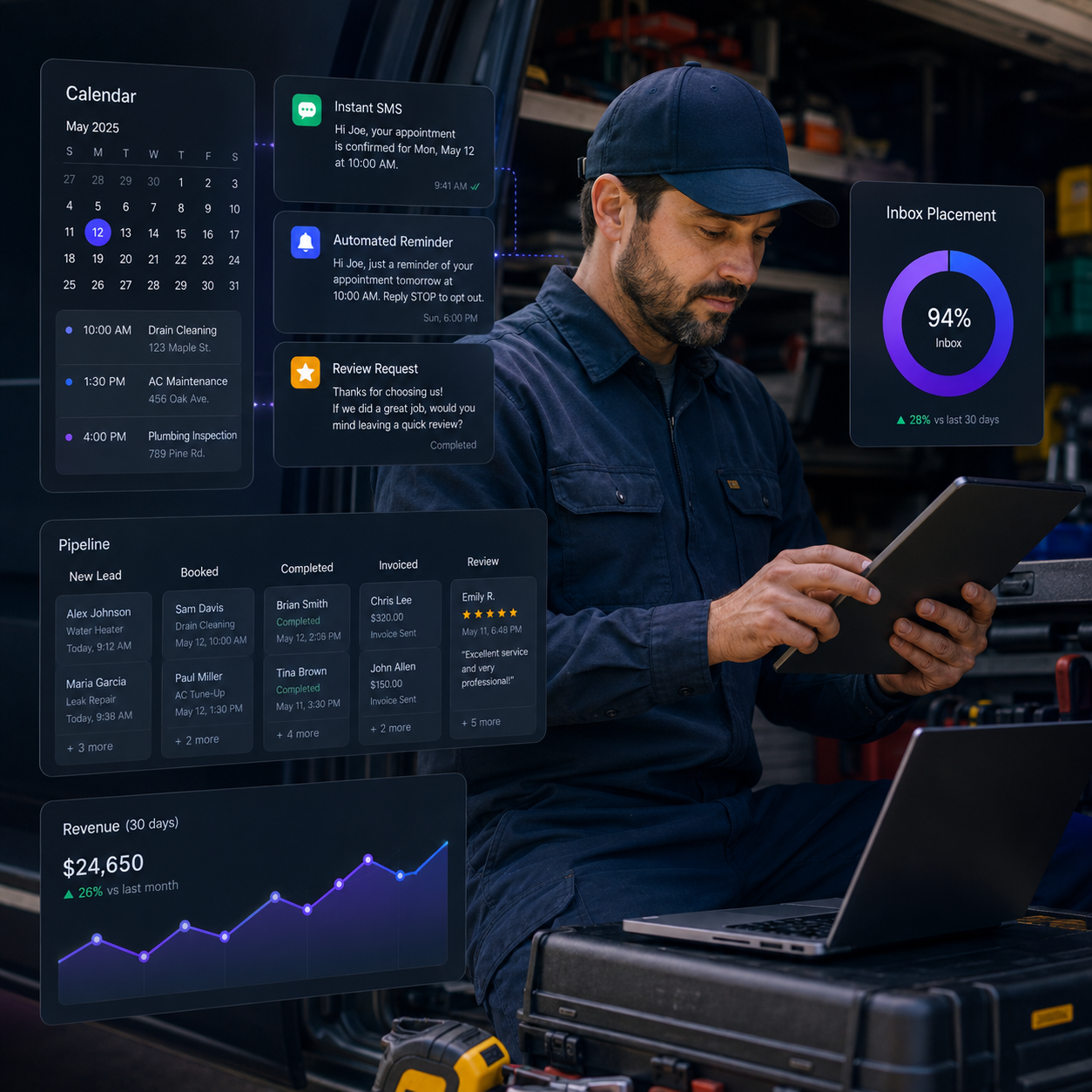
- Automated confirmation and reminder sequences via both email and SMS before the appointment
- Post-job review request triggered automatically after service completion
- Referral ask sent 3 to 5 days after a positive interaction
- Pipeline stage movement so every lead has a visible status: booked, serviced, invoiced, reviewed
- Automated follow up email for estimates that were sent but never accepted
- Seasonal re-engagement campaigns to past customers before peak season hits
None of that is magic. It's just connected infrastructure. The problem is that most home service contractors are running 4 to 7 separate tools that don't talk to each other, and they're paying for all of them separately while still doing most of the follow-up manually.
That's where a crm with ai automation layer changes everything. Instead of you remembering to send the post-job email, the system sends it. Instead of chasing unpaid invoices, the system nudges the customer. Instead of guessing where leads fall off, you see it in a dashboard.
Why Your Email Follow-Up Is Probably Landing in Spam (and Killing Your Close Rate)
Here's a problem that almost no calendar tool addresses: your follow-up emails aren't being seen. If your domain hasn't been warmed properly, your confirmation emails, quote follow-ups, and re-engagement campaigns are landing in spam or promotions folders at a rate that would shock you.
A quality inbox placement tool does exactly what it sounds like: it builds your domain's sender reputation so your emails land in the primary inbox, not the junk folder. This matters enormously for home services businesses because your average job value is high enough that a single missed follow-up email can cost you hundreds or thousands of dollars in lost revenue.
LeadProspecting AI's Email Warming feature is built to get you to 98% or higher inbox placement rates by systematically building your domain reputation before you ever run a major campaign. If you're already sending follow-up sequences that aren't converting, check your deliverability before you blame your copy. The issue is often that nobody is reading the emails in the first place.
For a deeper dive on what's sabotaging your email performance, read Spam Fix Email Mistakes Killing Your Q2 Drip Campaigns and see if any of those patterns look familiar. You may be working harder than your email deliverability deserves.

The Inbox Placement Tool Your Follow-Up System Actually Needs
Think of an inbox placement tool as the foundation your entire follow-up stack sits on. You can build the best automated follow up email sequence in the world, but if the emails aren't reaching inboxes, none of it matters. This is especially true for home services businesses that rely on quote follow-ups and re-engagement campaigns to close delayed decisions.
A 2025 Deloitte study cited by What Is Field Service Scheduling? found that intelligent scheduling improves field productivity by over 30%. That productivity gain is completely undercut if your digital follow-up infrastructure is broken. Scheduling smarter means nothing if the customer never gets your confirmation or your quote reminder.
Using a reliable inbox placement tool alongside your scheduling and pipeline systems creates a closed loop. The appointment gets booked. The customer gets the confirmation they trust. The follow-up lands in their inbox at the right time. The review request comes through clearly. And your pipeline moves instead of stalling.
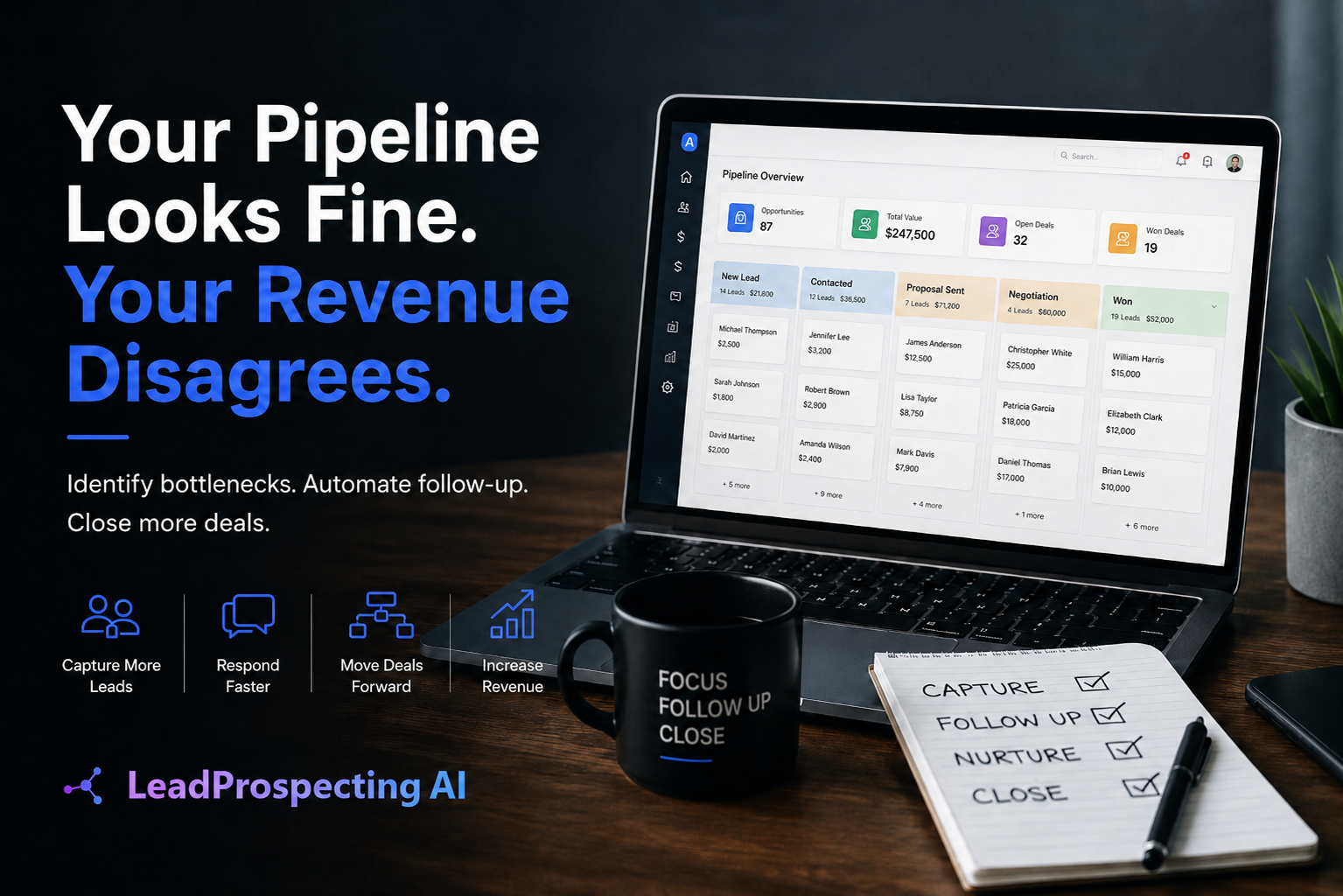
If your pipeline feels stuck, by the way, this is worth reading: Why Your CRM Pipeline Isn't Moving: 7 Bottlenecks Killing Your Sales Velocity. It covers the exact friction points that cause jobs to stall between booking and payment.
How to Build a Home Services Scheduling Stack That Actually Converts
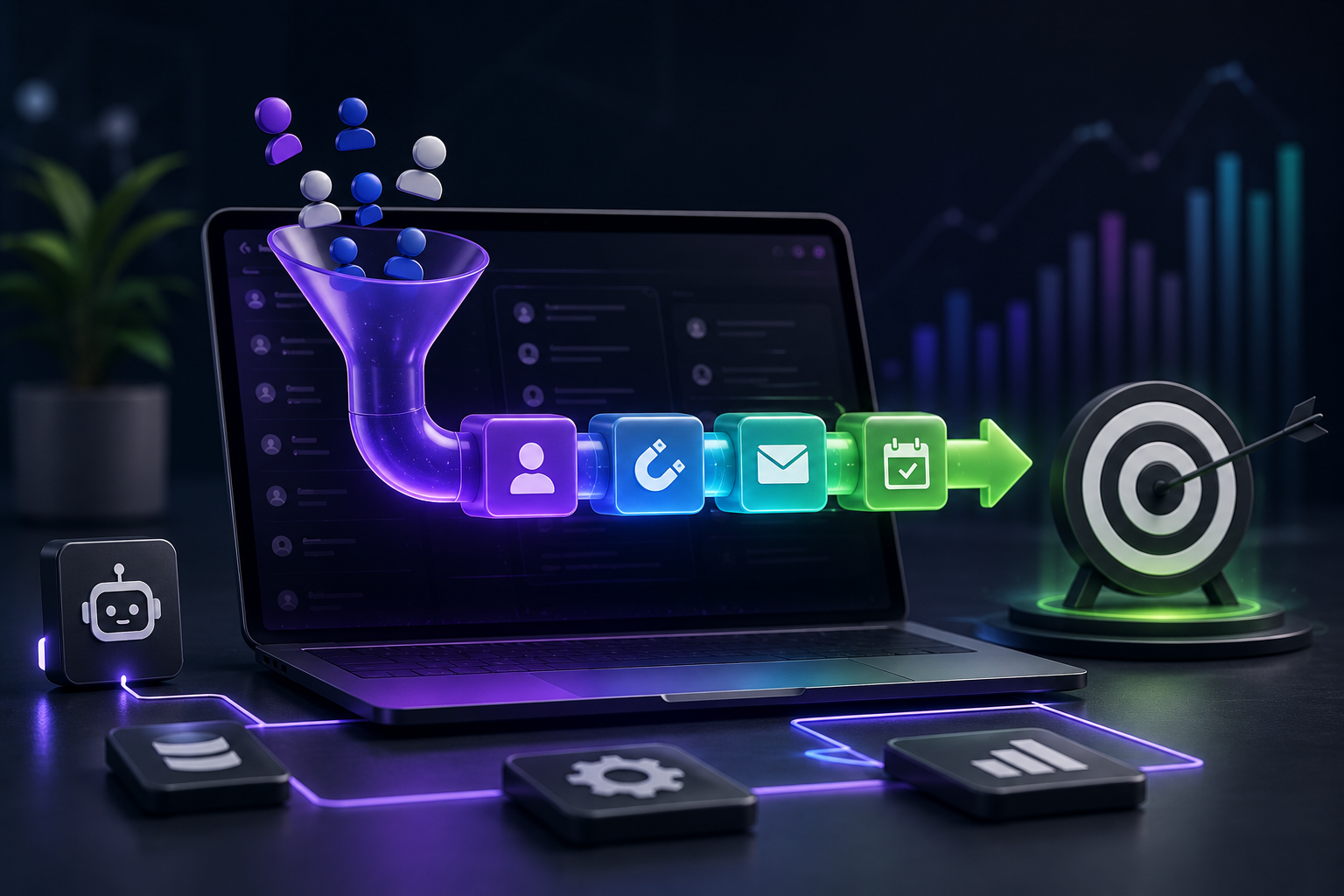
Here's the practical framework. You don't need to buy ten tools. You need one platform that handles scheduling, follow-up, pipeline management, and deliverability together.
Start with your lead entry point. Whether someone finds you through Google Maps, your website, or a referral, they should hit a smart form that immediately triggers a text reply and enters them into your sales pipeline tool. No manual data entry. No leads falling through the cracks.
Then your pipeline should carry them through clearly defined stages: new lead, appointment booked, job completed, invoice sent, reviewed. At each stage, the system should know what to do next without you telling it. That's the difference between automation and just having a digital to-do list.
The 60 Field Service Industry Statistics: Growth, Costs and Trends report notes that 82% of field service organizations already rely on AI, automation, and mobile data, and that optimized routing alone can reduce travel time by around 16%. For growing home services teams, this isn't futuristic. It's the current competitive baseline.
LeadProspecting AI's platform features are built around exactly this workflow: CRM with drag-and-drop pipeline stages, smart reminders, automation workflows with If/Else logic, missed-call text-back, review requests, and Email Warming all under one roof. You can also browse the pricing plans to see which tier fits your current team size and volume.
For those earlier in the growth process who are still trying to identify which lead prospecting tools actually deliver ROI versus which ones drain budget, this breakdown is worth your time: Lead Prospecting Software: What Actually Works vs. What Wastes Your Budget.
One honest note: no platform solves everything perfectly out of the box. You'll still need to configure your workflows, warm your domain correctly, and review your pipeline stages for your specific service mix. The difference is doing that once inside one system versus patching it together across five disconnected tools every six months.
If you want to see the full picture of what a connected platform looks like for home services businesses, the LeadProspecting AI services page walks through every component in plain language. And if you're ready to stop guessing and start with a real audit of what's working and what isn't, reach out directly and let's look at your current stack together.
Frequently Asked Questions About Home Services Scheduling and Follow-Up
Q: Isn't a basic scheduling tool like Calendly or Acuity enough for a small home services business?
It works for capturing bookings, but it stops there. You still need automated confirmations, pre-job reminders, post-job review requests, invoice follow-ups, and pipeline visibility. Without those layers, you're leaving revenue and reviews on the table after every single job. For most home service contractors, the gap between booking and repeat customer is where the real money lives.
Q: What is an inbox placement tool and why does it matter for home services?
An inbox placement tool builds your email domain's sender reputation so your messages land in the primary inbox instead of spam or promotions folders. For home services businesses sending quote follow-ups, appointment reminders, and re-engagement campaigns, poor inbox placement means your emails are invisible. A warmed domain dramatically increases open rates and, by extension, your close rate on pending estimates.
Q: How many tools do I actually need to run a complete scheduling and follow-up system?
Ideally, one. The more tools you add, the more integration points break and the more time you spend troubleshooting instead of running your business. A platform that combines CRM, pipeline management, scheduling, Email Warming, automated follow up email sequences, and review requests in one place is almost always more effective than stitching together a dozen cheaper tools.
Q: What is a sales pipeline tool and how does it help home service contractors specifically?
A sales pipeline tool gives you a visual, stage-by-stage view of every lead and job in your business. For home service contractors, that means seeing at a glance which quotes are waiting for a response, which jobs are completed but not invoiced, and which past customers haven't been re-engaged in over 90 days. It turns guesswork into a managed process and makes scaling a crew far more predictable.
Q: When should I start thinking about automation for my home services business?
The moment you miss a follow-up because you were on a job. The moment a review request didn't go out because you forgot. The moment a lead booked with a competitor because you didn't respond fast enough. These aren't signs that you need to work harder. They're signs that your systems need to work harder so you don't have to.