The Real Problem With Most Contractor CRM Options
If you run a contracting business and you've tried to find a contractor CRM that actually fits the way you work, you already know the frustration. Most CRM platforms were built for software sales teams, not for the person juggling job estimates, follow-up calls, crew schedules, and invoice chasing on the same Tuesday afternoon.
According to ServiceTitan's breakdown of construction CRMs, most general-purpose CRMs stop at "Closed Won," forcing contractors to manually create projects, duplicate data entry, and manage execution in completely separate systems. That gap costs you time, money, and clients.
This post cuts through the marketing copy and gives you a real side-by-side look at four platforms: HubSpot, Keap, Zoho, and LeadProspecting AI. Real pricing. Real feature gaps. Real talk about who each one actually serves.
Pricing Reality Check: What You Actually Pay
Let's start with the number that ends a lot of conversations before they begin. According to Expert Market's analysis of 13 leading CRM systems across 84 areas of investigation, pricing structures across major platforms vary wildly, and the advertised price is almost never what you pay once you factor in add-ons, seat limits, and feature tiers.
Here is what the four platforms actually look like at the small business level:
- HubSpot: Free tier exists but is severely limited. The Starter CRM Suite starts around $20/month per seat, but the moment you want automation, reporting, or sequences, you are looking at $800 to $3,200 per month for Marketing Hub Professional and above. Most contractors hit that wall fast.
- Keap (formerly Infusionsoft): Starts around $249/month for up to 2 users and 1,500 contacts. Additional contacts and users cost extra. It includes some automation, but the learning curve is steep and setup often requires a paid consultant.
- Zoho CRM: More affordable at $14 to $52 per user per month depending on tier, but you will likely need Zoho One (around $37 to $105 per user per month) to get the full suite of tools contractors actually need. And Zoho's interface has a reputation for overwhelming new users.
- LeadProspecting AI: Flat-rate plans starting at a fraction of what HubSpot's mid-tier costs, with CRM, pipelines, automation, email marketing, and more included without per-seat surprises. See the full breakdown at Pricing | CRM, Lead Scraper & Email Warming Plans | LPAI.
The math matters. If you are a roofing company with three salespeople, HubSpot's Professional tier can run you $800 to $1,600 per month before you have sent a single email campaign. That is money that should be going toward Google Ads or a second truck.
Feature Breakdown: What Contractors Actually Need vs. What They Get
A contractor CRM needs to do more than store contacts and log calls. You need it to track quotes, send follow-ups automatically, recover missed calls, request reviews after a job, and give your operations team visibility without giving everyone admin access to everything.
Here is how the platforms stack up on the features that matter to field-service businesses:
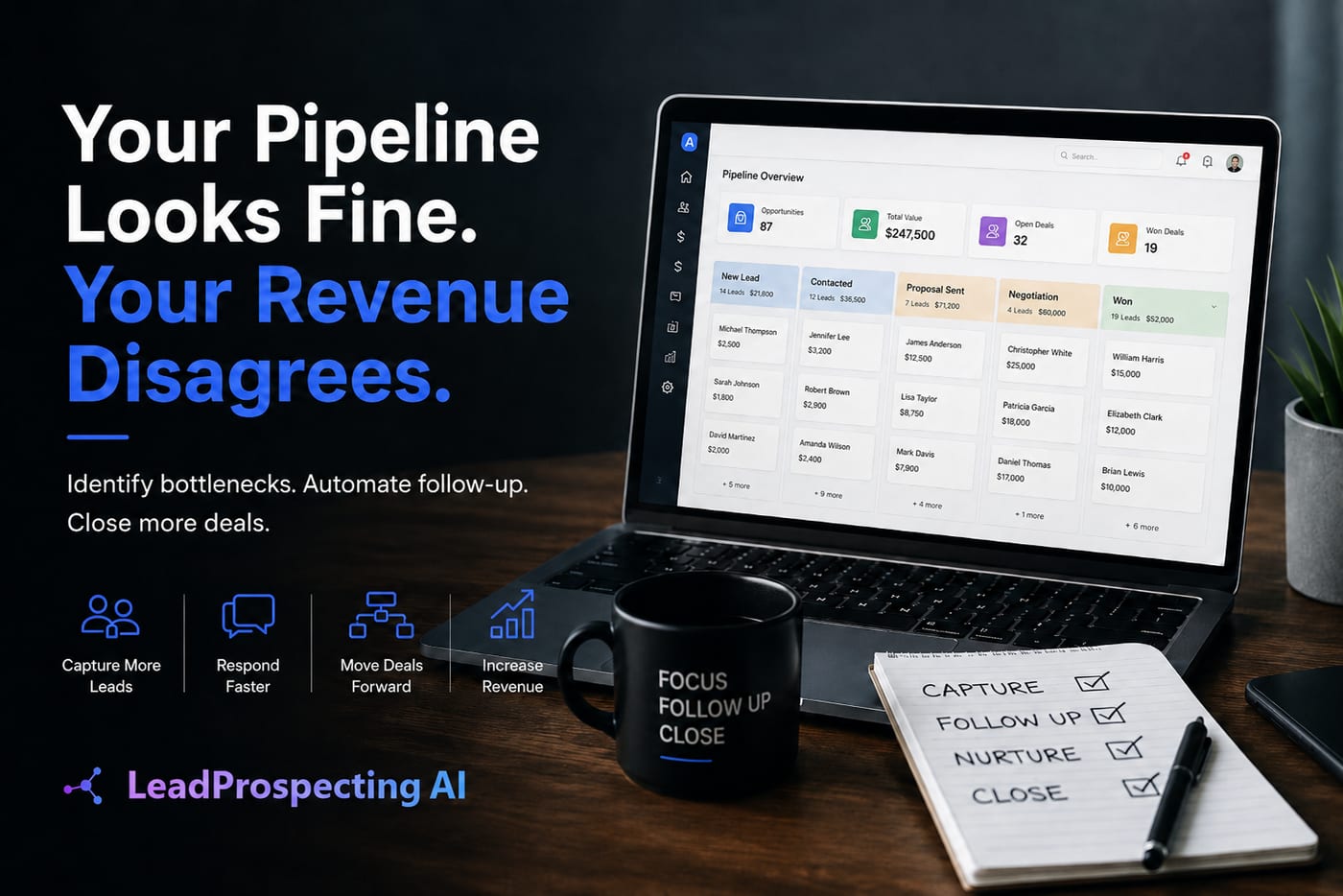
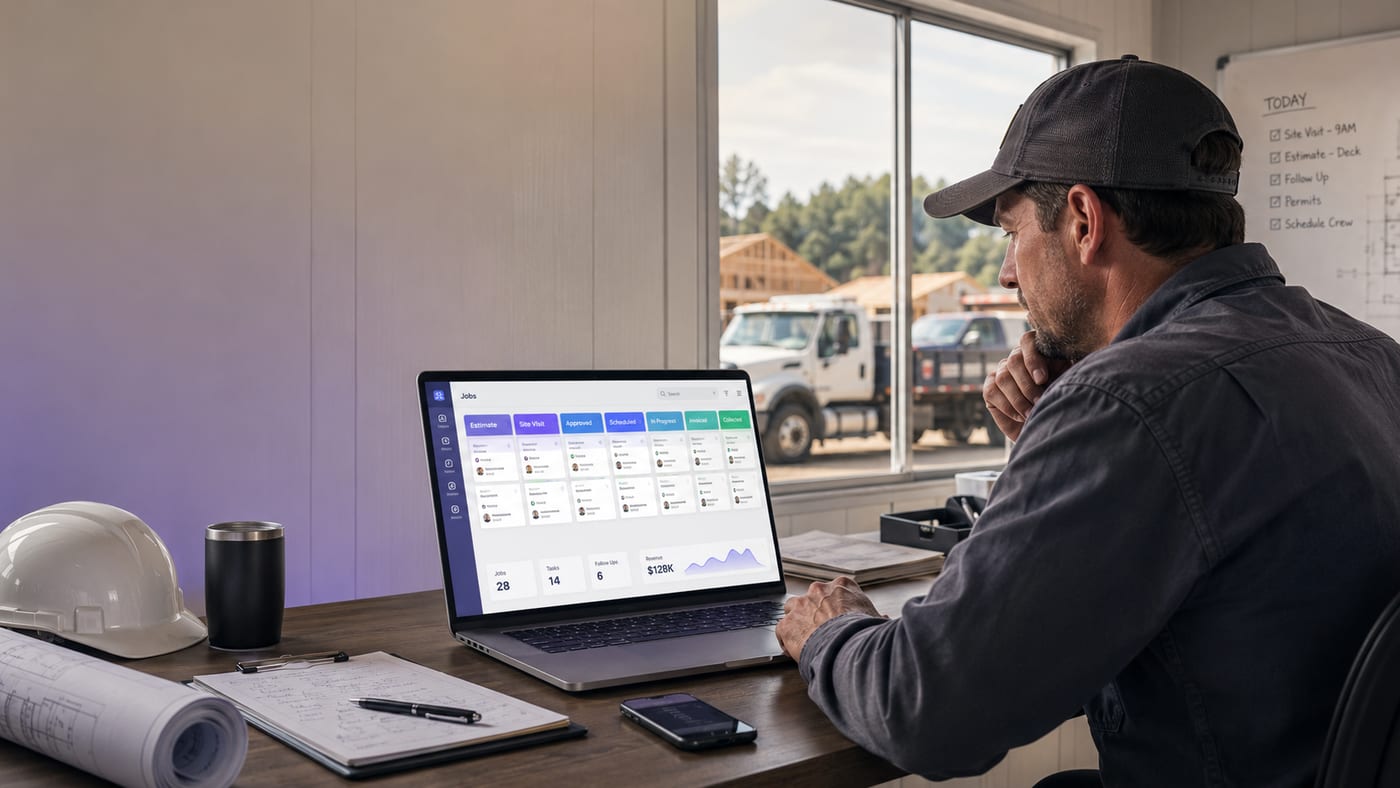
- Pipeline Management: HubSpot and Zoho both offer pipelines, but customizing them for how contracting jobs actually move (estimate, site visit, approved, scheduled, in-progress, invoiced, collected) requires significant setup time. LeadProspecting AI ships with drag-and-drop pipeline stages and smart reminders built in from day one.
- Automation Workflows: Keap has solid automation, but it takes a dedicated person to build and maintain it. LeadProspecting AI's Automation Workflow Builder uses triggers, templates, and If/Else logic that a non-technical business owner can actually configure without a developer on retainer.
- Missed-Call Text-Back: None of the three competitors include this natively. LeadProspecting AI's missed-call text-back feature fires an automatic SMS the moment someone hangs up without reaching you. In contracting, the first business to respond usually wins the job.
- Review and Referral Requests: Automated review requests after job completion are not a standard feature in HubSpot, Keap, or Zoho without third-party integrations. LeadProspecting AI handles this out of the box.
- Lead Scraping: None of the three competitors offer built-in lead prospecting from Google Maps with verified emails and social profiles. That is a capability unique to LeadProspecting AI's Lead Scraper, which makes it a legitimate lead prospecting tool and not just a contact organizer.
- Email Warming: Deliverability is ignored by most CRM comparisons, but it is quietly killing campaigns for a lot of contractors. LeadProspecting AI includes email warming that builds domain reputation and achieves 98 percent or better inbox placement, which makes it a serious email outreach platform and not just a follow-up tool. A spam fix email infrastructure is baked into the product, not sold as an add-on.
For a deeper look at how these platforms compare on the small business side of CRM, the post HubSpot vs. Salesforce vs. LeadProspecting AI: Which CRM Actually Fits a Small Business? goes into even more detail on where the enterprise tools break down for owners operating under $5M per year.
The Hidden Costs Nobody Mentions in the Reviews
The global CRM market was valued at USD 73.40 billion in 2024 and is projected to reach USD 163.16 billion by 2030, growing at a 14.6 percent CAGR. That kind of growth means every software company is racing to add features, which sounds great until you realize most of them lock those features behind premium tiers.
Here are the hidden costs that don't show up in the comparison table:
- Onboarding and setup fees: Keap charges anywhere from $500 to $2,000 for onboarding. HubSpot's Professional onboarding can run $3,000 or more. Zoho is DIY, which is free in theory but expensive in hours.
- Integrations you have to pay for separately: Want your CRM to talk to your invoicing tool, your review platform, and your scheduling app? On HubSpot, Keap, and Zoho, that usually means Zapier or native integrations that cost extra per month.
- Seat-based pricing: Adding your office manager, your lead tech, and a part-time salesperson to HubSpot or Keap can double or triple your monthly bill overnight.
- Training time: Zoho's feature depth is real, but so is the learning curve. If your crew is not using the system, the system is worthless. Adoption is where most CRM implementations quietly die.
LeadProspecting AI is built as a small business marketing platform, not a scaled-down enterprise product. The pricing reflects that, and the feature set was designed to be used by owners and small teams without a dedicated ops department. Check out the full feature list at Features - Lead Prospecting AI | Advanced Business Automation.
The CRM That Works Like a Contractor CRM Should
Think about the actual flow of a contracting job. Someone calls or submits a form. You respond (or you don't, and you lose them). You send an estimate. You follow up. You schedule. You do the work. You invoice. You ask for a review. You ask for a referral. Each one of those steps is a moment where a lead can go cold or a client can fall through the cracks.
A real contractor CRM should automate every handoff in that process. Not just remind you to do it manually, but actually do it. LeadProspecting AI's system handles the text-back when you miss the call, the follow-up sequence after the estimate goes out, the review request after the invoice is paid, and the referral ask a week later. That is the full cycle, not just the front half.
It also works as a social media AI tool for contractors who want to stay visible without spending hours per week on content. Social media scheduling and management is built in, so you are not adding another subscription to your stack just to post project photos and before-and-afters.
If you are also thinking about the cost of having someone answer phones versus automating the response, the post AI Voice Receptionist vs. Hiring: Real Cost Breakdown for 2026 runs the real numbers on that decision, and they are probably not what you expect.
You can explore all of what the platform includes at Services - Lead Prospecting AI | Complete Business Solutions or go straight to the Small Business CRM Software | All-in-One Sales & Marketing | LPAI page to see how the CRM specifically compares to what you are using now.
Which Platform Should You Actually Choose?
Here is the honest answer. If you are a large enterprise with a dedicated CRM administrator, a RevOps team, and 50 or more users who need complex integrations with Salesforce and SAP, HubSpot or Zoho makes sense. Those platforms were built for that world.
If you are running a contracting business with 1 to 30 employees, you are juggling sales and operations yourself or with a small team, and you need a system that works on day one without a six-month implementation project, the calculus is very different.
91 percent of companies with 10 or more employees now use CRM software, which means the competitive advantage is no longer whether you have a CRM. It is whether yours actually does the work for you or just collects data you have to act on manually.
LeadProspecting AI was built for the contractor who wants automation that fires without them touching it, pricing that does not punish growth, and a platform that covers CRM, lead generation, email warming, reviews, and social media without requiring five separate subscriptions. That is the difference. Ready to see if it fits your operation? Talk to the team at LeadProspecting AI and get a real conversation about what your business actually needs.
Frequently Asked Questions About Contractor CRM Software
Q: Is HubSpot's free tier actually useful for contractors?
HubSpot's free CRM is useful for basic contact storage and deal tracking, but it does not include automation, sequences, or most reporting features. Most contractors outgrow it quickly and face a significant price jump to get the tools they actually need. For a field-service business, the free tier is a starting point at best.
Q: Can I use Zoho CRM without buying the full Zoho One bundle?
Yes, but you will likely find yourself needing Zoho Books for invoicing, Zoho Campaigns for email, and Zoho Desk for customer support separately. By the time you add those per-user costs, the total often approaches or exceeds Zoho One pricing. Many contractors find the modular approach ends up more expensive than expected.
Q: What makes a CRM specifically suited for contractors vs. general business use?
A contractor CRM should support quote and estimate tracking, job scheduling, field-to-office communication, missed-call recovery, automated review requests, and invoice follow-up. General CRMs focus on the sales pipeline and stop at the point of close, leaving contractors to manage job execution manually in separate tools.
Q: How does email warming affect my contractor CRM strategy?
If your follow-up emails are landing in spam, your CRM is not actually doing its job. Email warming builds your domain's reputation so that outreach from your system reaches inboxes at a high rate. LeadProspecting AI includes this natively, which is a significant deliverability advantage over platforms that do not address domain reputation at all.
Q: How long does it take to get LeadProspecting AI set up?
Most users are operational within a few days, not weeks. The platform is built for small business owners, not enterprise IT departments, and the onboarding process is designed to get your pipelines, automations, and follow-up sequences running quickly without needing a consultant or developer to set things up for you.