TL;DR:
Agencies that actively manage their sales pipeline generate 28% more revenue than those that don't, yet over 50% of revenue leaders missed their forecast at least twice last year. The fix is not a bigger team. It is a structured pipeline with clear stages, defined exit criteria, and automation that keeps deals moving without manual follow-up.
Why Your Pipeline Is Your Agency's Most Valuable Asset
Revenue at agencies does not happen by accident. It flows through a pipeline, and the health of that pipeline determines whether your month-end review is a celebration or a coaching session.
The problem most agencies have is not a lack of leads. It is a lack of structure. One rep is working from a spreadsheet. Another is relying on memory. Your manager is forecasting based on gut feel instead of data. The result is missed deals, inconsistent revenue, and no clear picture of where things are actually breaking down.
The data backs this up. According to an Xactly 2024 report, only 20% of sales organizations met their forecasts within 5% of projections last year, and over 50% of revenue leaders missed a forecast at least twice. The most common reason was not poor sales skills. It was reporting systems that could not access reliable pipeline data.
When you build a proper pipeline inside a CRM, with defined stages, consistent data entry, and automation that flags stalled deals, you get something most agencies never have: a clear picture of where revenue is coming from and where it is leaking out.
Research shows that companies which actively manage their pipeline generate 28% more revenue than those that do not. That gap is not about who has the best salespeople. It is about who has the best system.
The 7 Pipeline Stages That Actually Drive Results
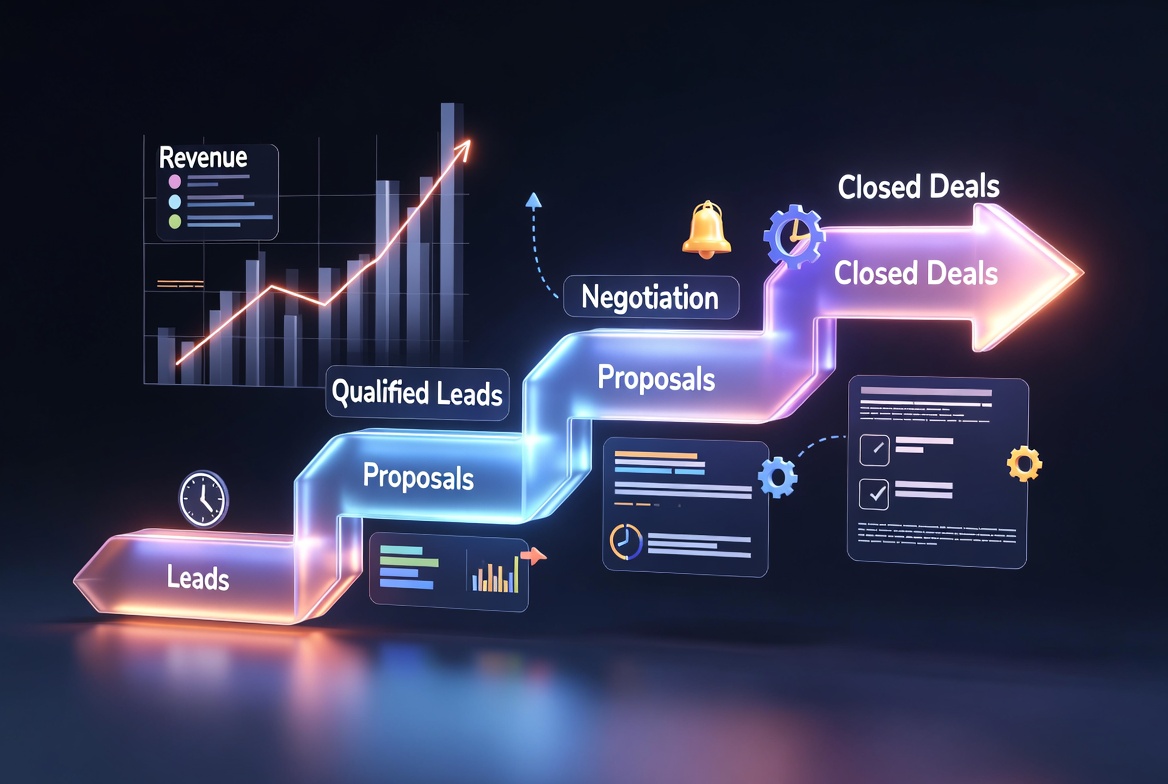
Not all pipeline stages are created equal. Here is how each one maps to your agency's revenue cycle, and what you should be measuring at every step.
Stage 1: Prospecting
This is where everything starts. You are identifying potential clients and building a qualified pool of opportunities. For agencies, that might mean companies matching your target industry, revenue range, or service need.
The goal at this stage is not to close. It is to keep a healthy volume of the right prospects entering the funnel. B2B buyers now spend only 17% of their total purchase time with all vendors combined, which means by the time someone talks to you, they have already done most of their research. Your prospecting needs to reach people while they are still forming their view of the market, not after they have already decided.
Stage 2: Lead Qualification
Not every prospect is worth pursuing. This stage is where your team assesses whether a prospect has the budget, authority, need, and timeline to actually become a client. The BANT framework is a practical starting point for agencies.
According to Outreach's 2025 Sales Data Report, lead qualification is now the number one challenge for B2B sellers, a shift from the prior year when opportunity management held that spot. With more pipeline ownership falling to fewer people, agencies cannot afford to chase unqualified prospects. Letting weak leads clutter your pipeline is one of the fastest ways to distort your forecast and waste your team's time.
Stage 3: Initial Contact
You have connected with the prospect. This might be a discovery call, introductory meeting, or a response to an outreach sequence. The goal here is to confirm they fit your ideal client profile, understand their pain points, and position your agency as worth their attention.
Momentum is critical at this stage. Slow follow-up kills deals before they even get started. Gartner data shows 70% of B2B sellers feel overwhelmed by the number of tools required to do their work, which often leads to slower responses and missed touchpoints. An integrated CRM with automated follow-up reminders removes that friction.
Stage 4: Proposal
The prospect is engaged and interested. Now you are presenting a tailored solution to their specific needs. This stage requires your CRM to do more than store notes. It should help you send proposals, track when they are opened, and trigger follow-up automatically if there is no response within a defined window.
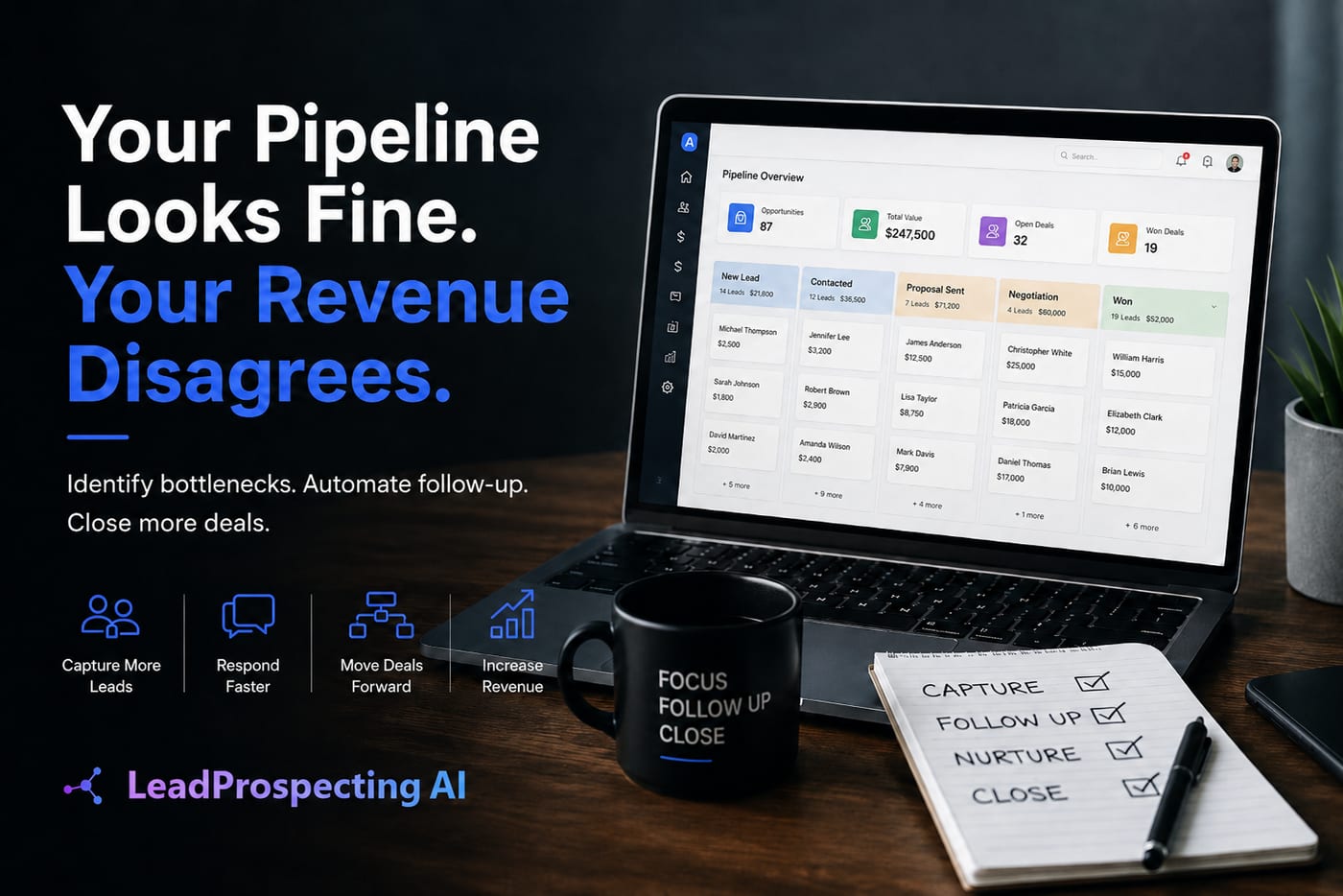
A drag-and-drop pipeline interface that lets your team move deals forward without manual updates keeps your data accurate and your team focused on the conversation rather than the admin.
Stage 5: Negotiation
Price, scope, timeline, or contract terms are on the table. This stage can stretch longer than expected if your team is not equipped to handle objections confidently and keep next steps clear.
Outreach's 2025 data found that 34% of revenue teams report average sales cycles of one to two full quarters, making longer cycles the norm. Regular check-ins and automated reminders prevent deals from stalling silently. When a deal enters negotiation, your CRM should alert the team and set a clear next-step deadline automatically.
Stage 6: Deal Closing
The prospect has said yes. Now it is about getting the contract signed and moving them into onboarding. This stage finalizes the conversion from prospect to client and involves securing signatures, processing contracts, and initiating the handoff to your delivery team.
Accuracy matters here. Errors in this stage delay onboarding, damage first impressions, and create internal confusion. A CRM with built-in quote and payment tracking means nothing falls through the cracks between the close and the kickoff.
Stage 7: Customer Retention
Your work does not end at the contract signature. Post-sale follow-up, regular check-ins, and identifying upsell opportunities are how agencies build long-term revenue. Referrals and renewals are far cheaper to generate than new business, and they tend to convert at dramatically higher rates.
Referral-sourced leads convert at approximately 26%, compared to cold outreach channels that convert at a fraction of that. Agencies that treat retention as a pipeline stage, not an afterthought, build compounding revenue that does not require constant new prospecting to sustain.
How to Track Pipeline Health and Spot Bottlenecks
Having stages defined is only half the battle. You need to know what is actually happening in your pipeline and where deals are getting stuck.
Start by measuring your conversion rate at each stage. If 50 prospects enter your Initial Contact stage and only 20 move to Proposal, that is a 40% conversion rate. That number tells you whether your discovery calls are working or whether you are qualifying leads poorly before they reach that stage. Tracking this at every transition gives you a precise view of where momentum builds, slows, or dies.
The average B2B win rate sits at approximately 21%, according to research compiled by Salesso. If your agency is consistently below that, the problem is almost always sitting in one of the earlier stages. Either leads are not truly qualified, or your proposal and negotiation process needs work. A CRM with built-in stage-level reporting lets you catch these patterns in real time rather than waiting for a month-end review to surface them.
Fewer than 50% of sales leaders report high confidence in their forecast accuracy, per Gartner, yet most make hiring and budget decisions based on that same data. Pipeline discipline, which means consistent stage definitions, regular deal reviews, and clean data entry, is what converts a guess into a reliable forecast.
Automation Keeps Deals Moving Without Micromanaging Your Team
Agencies are stretched thin. Your team members are juggling client delivery, proposals, and follow-ups simultaneously. That is where automation becomes essential rather than optional.
McKinsey reports that businesses using sales automation boost their reps' selling time by 15 to 20% while also enhancing conversion rates. Research also shows that sales reps who automate follow-ups close deals 20% faster on average, and 78% of sales teams that use automation report improved pipeline management and deal tracking.
Simple automation rules make a measurable difference. If a proposal is sent but not opened within three days, the system triggers a follow-up automatically. When a deal moves to Negotiation, the team gets an alert and a five-day check-in reminder is set. When a deal has not moved stages in two weeks, the rep gets flagged before the deal goes cold. These are not complicated workflows. They are the difference between a pipeline that moves and one that collects stalled opportunities your team stops thinking about.
Teams using CRM automation see a 14% productivity increase. For a small agency team, that is a significant recovery of time that can go back into selling.
The Real Revenue Impact of Pipeline Discipline
Here is the uncomfortable truth most agency owners do not want to sit with: if you do not know your true win rate, your average deal value by source, or your conversion rate between stages, you are managing your business on assumptions.
Salesforce data shows CRM adoption can increase sales by up to 29%, improve forecasting accuracy by 32%, and boost productivity by 39%. Those are not theoretical benefits. They are what happens when you replace scattered notes and spreadsheets with a single system that gives everyone visibility into the same data.
When you impose real structure on your pipeline, managers can run weekly reviews without surprises. When a rep has three deals stuck in Proposal for 30 days, you catch it immediately and address it. When inbound referrals convert at 26% and cold outreach converts at a fraction of that, you make smarter decisions about where to invest your prospecting effort.
The best part is you do not need enterprise software to get this done. A platform built for small and growing agencies gives you pipeline visualization, contact management, automation, and built-in quote and payment tracking in one system that actually works the way your team operates.
Ready to Build a Pipeline That Actually Closes?
LeadProspecting AI's CRM is built specifically for service businesses and agencies that need pipeline clarity without the complexity of enterprise software. You get drag-and-drop pipeline stages, automated follow-up workflows, quote and invoicing tools, and a unified inbox, all in one platform connected to your lead generation and email outreach tools.
If you are also running outbound prospecting, our Lead Scraper pulls verified contacts directly into your pipeline, and our AI Email Campaigns keeps your sequences running automatically so no prospect goes cold while your team is focused on delivery.
Start a 30-day free trial with no credit card required and see what a properly structured pipeline looks like in practice.
Frequently Asked Questions
Q: How often should we review our sales pipeline?
Weekly reviews are ideal for growing agencies. They keep your team aligned, surface stalled deals before they rot, and give managers the visibility to coach in real time rather than react at month-end. Bi-weekly works if your deal volume is lower, but monthly is too slow to catch problems before they cost you revenue.
Q: What is a realistic conversion rate between stages?
It varies by agency type and deal complexity, but the average B2B win rate overall sits around 21%. Prospecting to qualified lead typically converts at 10 to 20%, while proposal to close may run 40 to 60% for well-run agencies with strong qualification upstream. Track your own historical rates and use them as your benchmark. A rep dropping significantly below their own average is a coaching signal, not a failure.
Q: How do we stop deals from sitting in one stage too long?
Set clear exit criteria for each stage: what must happen before a deal moves forward? Then automate reminders when deals linger beyond your defined threshold. If a proposal sits for five days with no response, the system alerts your rep. This prevents deals from being forgotten and keeps momentum consistent across your whole team.
Q: Should every deal follow the same pipeline stages?
Mostly yes. Consistent stages let you compare performance across your team and build forecasts you can trust. That said, some deals naturally skip a stage. A referral from a current client may go straight to Proposal. That is fine as long as your CRM allows that flexibility without breaking your data or your reporting.
Q: How does CRM pipeline management improve close rates?
Visibility drives action. When you know exactly where every deal stands, you catch stalled opportunities early, coach your team on specific bottlenecks, and ensure consistent follow-up. Clean pipeline data also reveals which lead sources, outreach approaches, and deal sizes convert best, intelligence that sharpens your entire sales process over time.