Google Maps Lead Generation vs. Traditional Advertising: Which Works Better for Twin Falls Contractors
You've got the skills. Your crew can handle any job in Twin Falls and beyond. But your phone isn't ringing as it should be, and you're tired of guessing where your next customer will come from. That's not a management problem, it's a marketing problem, and one that's easier to solve than you think.
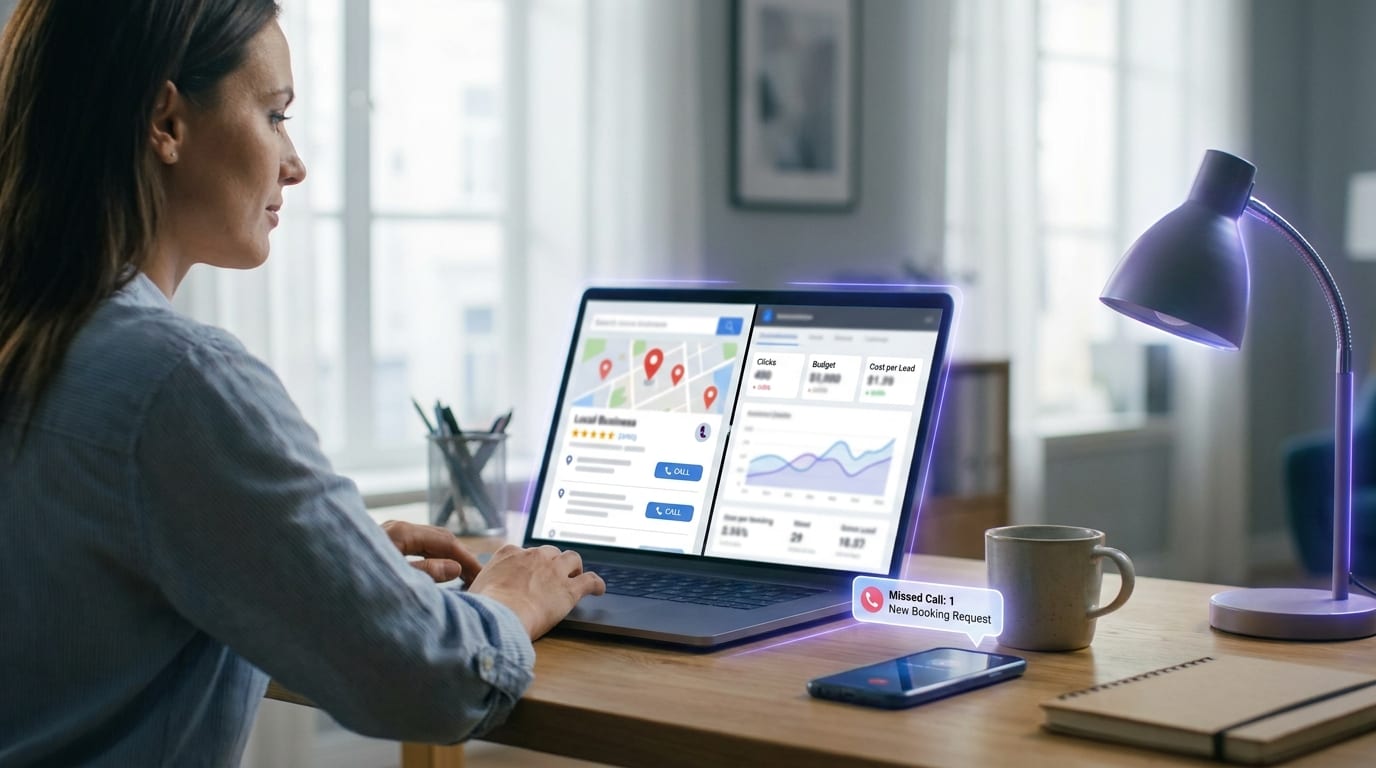
The old playbook for Twin Falls contractors, yard signs, newspaper ads, and hoping referrals roll in, still works, but it's slow and expensive. Meanwhile, local search often begins inside map apps. BrightLocal’s Consumer Search Behavior research found that 1 in 5 consumers conduct local searches directly within maps, making Maps a true digital front door for contractors. The question isn't whether you should market online. It's whether Google Maps lead generation or traditional advertising makes sense for your budget and timeline.
The Case for Google Maps Lead Generation: Speed and Intent
Consumers rely heavily on Google for local discovery. SOCi’s Consumer Behavior Index research found that 72% of consumers use Google Search and 51% use Google Maps to look up information about a local business. Google Maps isn't just a navigation tool anymore; it's where contractors win or lose jobs before any sales conversation happens.
Inbound leads from search tend to close at much higher rates than outbound outreach. HubSpot data compiled by Ahrefs reports that SEO leads have a 14.6% close rate, compared to 1.7% for outbound leads. That difference matters because search-based leads are usually coming from people actively looking for your exact service right now, not cold prospects you have to convince.
What makes Google Maps lead generation work for Twin Falls contractors is speed. Click costs vary by trade and competition, but broad benchmarks show Google Ads CPC averaging around $5.26. Because you're showing up exactly when someone searches "plumber near me" or "HVAC repair today," you skip the awareness and consideration phases. You show up at the moment of decision.
How Google Maps Lead Generation Compares on Cost
Google Local Services Ads are priced per lead. Google notes that lead prices vary by location, job type, lead type, and bidding mode, but you’re charged for each valid lead you receive. For budgeting, many contractors use a planning assumption around $92 per lead to estimate volume, then adjust based on what their account actually pays. On the surface, that looks expensive. But here's where the math changes: you're not paying for clicks, you're only paying when a real person calls or messages you directly. Because LSAs are pay-per-lead and designed for high-intent searches, performance can be strong, but the exact conversion rate depends on your category, reviews, and response time. What’s consistent is that conversion rates jump more than 8X if attempted in the first 5 minutes, which is why speed-to-lead matters as much as ad spend.
Compare that to traditional lead generation platforms. Angi leads are commonly reported in the $25–$120 per lead range and are often shared with multiple contractors. Thumbtack pricing varies by job type and market, and customers can contact multiple pros, which makes response speed a major factor in who wins the job. Even worse: SEO-generated leads close at 14.6%, while outbound and shared platform leads close at 1.7%, an 8.6x difference in close rate. The "cheaper" leads often aren't cheap at all when you factor in your time chasing dead ends.
For Twin Falls contractors specifically, the math is compelling. Referral leads cost just $52 on average, making them the most affordable quality leads available to contractors, but referrals require existing customers. Google Maps fills the gap between word-of-mouth and expensive paid platforms.
Traditional Advertising: Still Relevant, But Slow and Hard to Track
Billboard ads, direct mail, local newspaper ads, and radio spots aren't dead in Twin Falls. They still work, but they work slowly, and they're nearly impossible to track.
Traditional advertising methods like print, radio, or billboards often struggle to track effectiveness and reach a targeted audience, while Google Maps advertising offers measurable, intent-driven exposure. That difference is critical when you're spending marketing money.
If you're getting your name in front of people via radio, yard signs, or local publications, you're building brand awareness. Some percentage of those people will remember your name when they need work done, months later. But you have no way to know which ads actually drove jobs. With Google Maps, every call, message, and direction request is tracked and tied directly to your campaign.
That's why digital ads are quite cost-effective compared to traditional advertising. A contractor running traditional ads locally might spend $1,000-$3,000 monthly with zero visibility into ROI. The same $1,000 on Google Maps generates measurable leads you can compare against your close rates.
The Local Twin Falls Advantage: Dominating Your Backyard Online
Twin Falls is a specific market. Unlike national contractors competing for thousands of leads, you're fighting for market share in a defined area. That's where Google Maps becomes even more powerful.
Contractors who optimize their Google Business Profile and implement local SEO methods and targeted advertising experience improved visibility and increased customer engagement and lead generation rates. For Twin Falls home service businesses, optimizing your Google Business Profile is your first move, and it's free. Adding verified photos, updating your service area, and collecting reviews puts you in front of local searchers.
Once your profile is optimized, Google Local Services Ads (LSAs) let you appear at the very top of results. These ads display your business name, Google rating, and the "Google Guaranteed" badge that builds instant trust with homeowners, with qualified leads only, you pay for actual contacts, not clicks. For roofing contractors, HVAC techs, plumbers, and electricians in Twin Falls, this is the highest-intent channel available.
Don't overlook one critical detail: Businesses with the Google Verified badge (in addition to fast response times) see up to 40% higher conversion rates. That's not a small bump; it's the difference between booking jobs and losing them to competitors.
One more advantage: you control timing. With Google Maps Ads fitting almost any budget, even small businesses can start with a modest daily spend and scale up as results improve. You can test the channel without big upfront commitments.
Building a Mixed Strategy That Actually Works for Twin Falls Contractors
This isn't an all-or-nothing decision. The best Twin Falls contractors are using Google Maps while still maintaining a strong local presence.
Here's what actually works: The decision to pursue an organic approach (refining your Google Maps listing) or a paid approach (purchasing Google Maps Ads) depends on your goals, budget, and timeline, and combining both approaches can yield the best results and make the most of the advantages of each strategy.
Your playbook should look like this:
- Step 1: Optimize Your Google Business Profile (Free). Claim it, verify it, add your best photos, and get reviews. This alone will generate leads if you're in Twin Falls.
- Step 2: Run Google Local Services Ads. Start with a $20-30/day budget to test. Track which calls convert into jobs. If your close rate is 25%+, scale it.
- Step 3: Build a Simple Website. When prospects find you on Google Maps, they check your website before calling. A professional website design that loads fast and shows past work increases your conversion rate dramatically.
- Step 4: Automate Your Follow-Up. Half the jobs go to whoever responds first. A CRM that handles missed calls, text automations, and appointment reminders means you never lose a lead to slow response time.
Traditional advertising, like sponsoring local Twin Falls events or maintaining a presence in community directories, can complement this. But it should never be your only channel.
If you want to see how this works end-to-end, check out how automated review systems help Twin Falls service businesses generate referrals and CPL benchmarks for Magic Valley contractors to see where you stand against your competition.
The Real Numbers: What Contractors Are Actually Spending and Making
Let's talk budget. Small businesses (local cafes, salons, small retailers) spend around $100-$1,000 monthly on Google Maps ads, medium businesses spend $1,000-$5,000 monthly, and larger businesses might invest $5,000-$50,000+ monthly.
For a Twin Falls contractor just starting with Google Maps, a realistic budget is $500-$1,500/month. At $92 per lead average, that's roughly 5-16 leads per month. With 25-32% conversion rates, you're booking 1-5 jobs per month from Google Maps alone. If your average job is $2,000+, the ROI is immediate.
Meanwhile, if you're spending that same $500-$1,500 on traditional advertising, billboards, direct mail, or print ads, you can't track which ones drove calls. You'll never know if any of it worked.
SEO-generated leads average $25-$45 per lead at maturity (12+ months), while platform leads average $91 and climbing, which means if you're willing to wait 4-6 months for SEO to kick in, it becomes your lowest-cost channel long-term. But Google Maps wins if you need customers this quarter.
Many contractors also discover that once they're set up with a strong Google presence, the compound effect of consistent marketing across Google, email, and social posts drives exponential growth. Google Maps is the entry point, not the entire strategy.
What About Missing Calls and Lead Response Time?
Here's a problem most Twin Falls contractors don't talk about: missing calls.
Prioritizing lead response time is especially important for Local Service Ads because Google wants LSAs to be fast and reliable for customers, so they continue to come back. Google rewards contractors who move quickly to satisfy customers.
If you're running Google Maps ads but your team misses calls or takes hours to respond, you're wasting money. A single missed call is a lost job. With the right tools, missed-call text-back recovery, instant form responses, and appointment reminders, you capture every opportunity, even when your team is on job sites.
Local SEO + Google Maps Ads = Unstoppable for Twin Falls Businesses
If you want to dominate Google Maps in Twin Falls, you need to understand the combination: contractors who optimize their Google Business Profile and implement local SEO methods and targeted advertising experience improved visibility and increased customer engagement.
Here's how it works:
- Your Google Business Profile (optimized) makes you show up organically in Maps when locals search.
- Google Local Services Ads can place you at the top of local results when you’re eligible and competitive in your category, and you only pay when you receive a lead.
- Together, you dominate the first page of results, and your competitors can only watch.
An optimized Google Business Profile is free. Google Local Services Ads cost whatever you decide to spend. Neither requires you to hire an agency, though if you want to maximize results, consulting with someone who understands Twin Falls specifically can shorten your timeline.
For more on this, read about how to improve lead prospecting by fixing what prospects actually see on your profiles.
The Bottom Line: Google Maps Wins, But You Still Need to Execute
Google Maps lead generation beats traditional advertising for Twin Falls contractors in almost every metric: speed, measurability, cost-per-lead, conversion rates, and ROI. A radio ad might bring 1-2 vague calls per month. Google Maps brings 5-15 qualified leads you can track and convert.
But Google Maps isn't magic. You need:
- A verified, optimized Google Business Profile with real reviews.
- A website that doesn't look like it was built in 2005.
- Fast response time (ideally within 30 minutes).
- A system to track calls, capture leads, and follow up automatically.
- A realistic expectation that 25-32% of leads will convert into jobs.
If you're running Twin Falls and you've been relying on yard signs and hope, switching to Google Maps isn't optional anymore. Google research found that 50% of consumers who conducted a local search on their smartphone visited a store within a day, and 18% of local searches on smartphone led to a purchase within a day. Your customers are already on Google Maps. You just need to be there when they arrive.
Want to see how this works end-to-end? Read our guide on lead generation for service businesses and understand the full picture, from how to generate leads to how to convert them into repeat customers.
Get Started with Google Maps Lead Generation Today
Google Maps lead generation works better for Twin Falls contractors than traditional advertising; it's faster, cheaper, and measurable. But you need more than just ads to win. You need a system that captures every lead, automates follow-up, and helps your team convert faster than your competitors.
That's where LeadProspecting AI comes in. Our platform includes a built-in CRM that syncs with Google, email warming for 98%+ deliverability, professional website design, and automation tools that mean you never miss a call or forget a follow-up. From capturing leads on Google Maps to closing jobs and collecting payment—all in one place.
You've been grinding long enough. It's time to work smarter. Start your free 21-day trial today, no credit card required, cancel anytime. See exactly how much revenue you could be generating if every lead were captured, every call answered, and every opportunity converted. Your Twin Falls competition is still using yard signs. Don't let that be you.
Common Questions About Google Maps Lead Generation vs. Traditional Advertising
Q: How much should I budget for Google Maps ads as a Twin Falls contractor?
Start with $500-$1,500/month. At $92 per lead average with 25-32% conversion, that's 1-5 jobs per month, depending on your close rate. If your average job is $2,000+, you're cash-positive immediately. Track your CPL (cost per lead) and conversion rate for 30 days, then scale what's working. Don't budget more than 10-15% of monthly revenue to lead generation.
Q: Does Google Maps lead generation replace traditional advertising?
For most Twin Falls contractors, yes, Google Maps should be your primary channel. But traditional advertising (event sponsorships, local directory listings, community involvement) still builds brand awareness and can complement paid ads. The key is measuring ROI. If you can't track what a traditional ad generated, it shouldn't be your primary spend.
Q: How long does it take to see results from Google Maps ads?
You can see leads within 24-48 hours if your campaign is set up correctly. But give it 30 days to see real patterns: which types of leads convert, what your actual CPL is, and how many jobs you're closing. Don't judge results on Week 1 alone.
Q: Can I run Google Maps ads without a professional website?
Technically, yes, leads can call you directly from Google Maps. But 40-60% of people will check your website before calling. A slow, outdated website kills conversions. Invest in a simple, mobile-friendly site that shows past work and makes it easy to request a quote. It pays for itself in the first month of Google Maps ads.
Q: What if I miss calls from Google Maps leads?
You lose the job. That's why response time matters so much. If you can't answer within 30 minutes, use automation, text-back systems, instant chatbots, or appointment booking forms. Your competitors are faster than you think.