You're Paying for Warm-Up, But Your Emails Still Land in Spam
You signed up for an email warm up service, watched the dashboard tick toward a healthy reputation score, and felt good about it. Then you sent your first real campaign and crickets. Open rates cratered, replies dried up, and a few prospects flat-out told you their system flagged you as junk.
That gap between "my warm-up tool says I'm fine" and "my actual emails still get buried" is more common than you think. The warm-up itself is rarely the problem. The problem is what's happening around it.
After running cold outreach for hundreds of small businesses, we've seen the same three hidden mistakes sink deliverability over and over. None of them show up on a warm-up dashboard, which is exactly why they go unnoticed for months.
Let's break down what's actually killing your inbox placement, and what you can fix today.
Mistake #1: Your Sending Behavior Contradicts Your Warm-Up
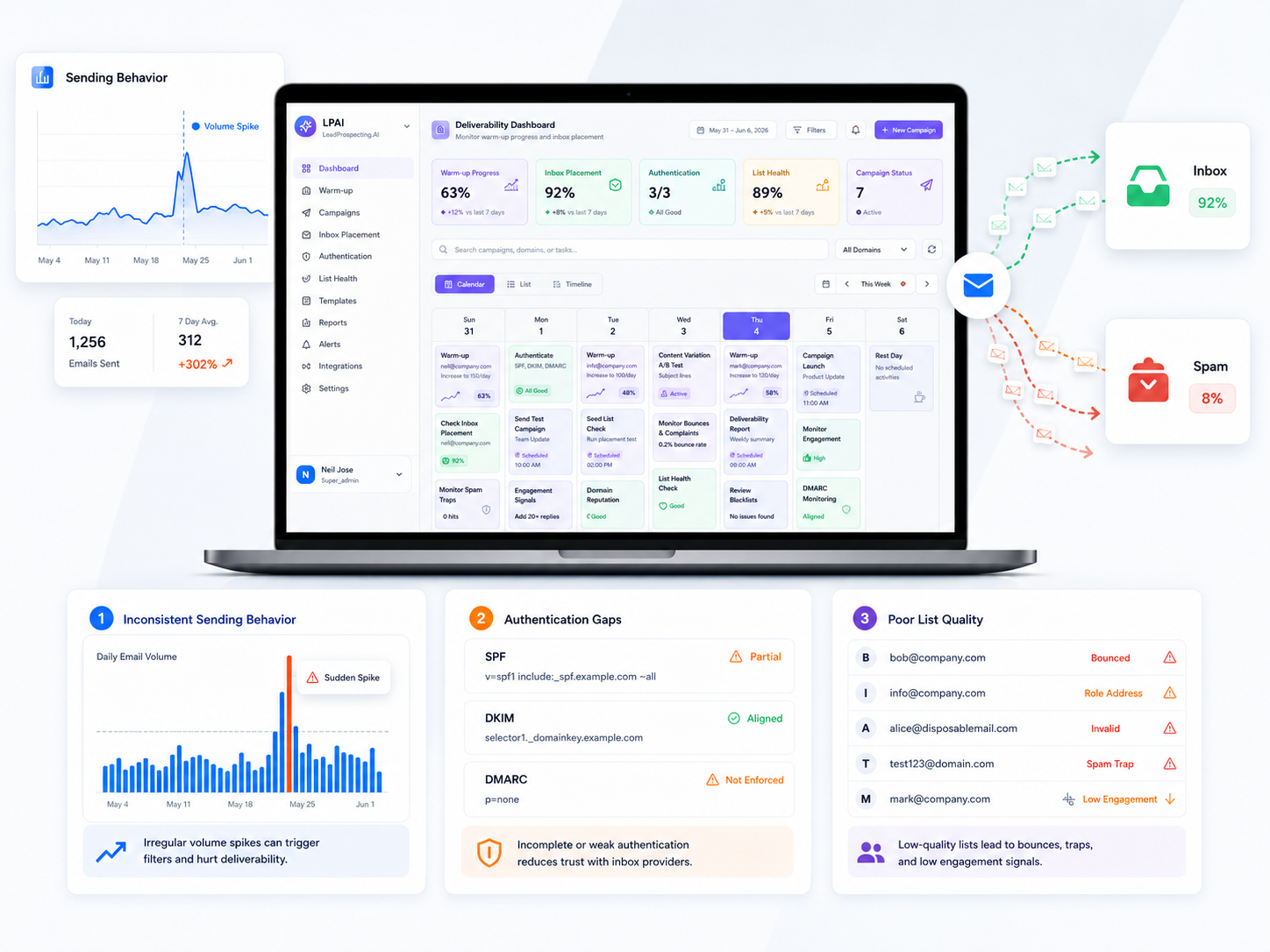
Here's the uncomfortable truth: a warm-up tool sends tiny, friendly, low-volume emails that get opened and replied to. Your real campaigns often do the opposite. They blast 400 cold contacts at 9 a.m. with a link in the first line and a "Hi {FirstName}" that didn't merge correctly.
Mailbox providers like Google and Microsoft don't grade you on your warm-up activity in isolation. They grade your sending pattern as a whole. When your warmed-up domain suddenly behaves like a spam cannon, the reputation you built evaporates fast.
The fix is to make your real sending look like your warm-up:
- Ramp gradually. Don't jump from 20 warm-up emails a day to 300 cold ones. Increase real volume by roughly 20 to 30 percent per week.
- Cap daily sends per inbox. Keep cold volume under 40 to 50 per inbox per day on a freshly warmed domain.
- Watch your reply rate. If nobody responds, providers assume your mail isn't wanted. Personalization that earns replies protects deliverability.
This is the same logic behind avoiding the 5 email drip mistakes that are quietly killing your results. A warm-up keeps your domain trusted; your behavior is what either confirms or destroys that trust.
Mistake #2: Your Authentication and Domain Setup Has Holes
This is the one that gets ignored most, and it quietly tanks more inboxing than anything else. Your email warm up service can build a sterling reputation, but if your DNS records are incomplete, providers treat you with suspicion regardless.
As of February 2024, Google and Yahoo require bulk senders to authenticate with SPF, DKIM, and DMARC. According to Google's official sender guidelines, senders mailing more than 5,000 messages a day must have all three in place or face filtering and outright rejection.
Most small business owners we audit have one or two of these configured and assume that's enough. It isn't. Here's the checklist worth running today:
- SPF: Confirms your sending server is authorized. One record, no duplicates.
- DKIM: Cryptographically signs your mail so providers know it wasn't tampered with.
- DMARC: Tells providers what to do with mail that fails the first two. Start at p=none to monitor, then tighten.
- Custom tracking domain: If your links point to a shared tracking domain that other senders abused, you inherit their bad reputation.
- Separate sending domain: Never warm up and blast from your primary domain. Use a lookalike domain so a misstep doesn't burn your main brand.
Phishing and spoofing are exactly why these rules tightened. The FBI has tracked billions in losses from business email compromise, and providers responded by raising the authentication bar for everyone. If your setup has holes, you're paying the price for other people's bad behavior. We dig deeper into this distinction in our guide on email warmup vs. deliverability, because the two are not the same thing.
Mistake #3: Your List Quality Is Poisoning Your Reputation
You can warm up flawlessly and authenticate perfectly, then torch it all by mailing a garbage list. Every hard bounce, spam complaint, and spam-trap hit is a black mark that compounds.
Spam traps are the silent killers. These are email addresses that exist only to catch senders who don't clean their lists. Hit a few and your IP and domain reputation drop overnight, no matter how good your warm-up looked yesterday.
Here's what a poisoned list usually looks like:
- Old, scraped data with no verification. Addresses go stale fast; people change jobs constantly.
- Role-based addresses like info@ or sales@, which complain and bounce at higher rates.
- No bounce suppression. Mailing an address that bounced last week tells providers you don't maintain your list.
- Zero engagement filtering. Repeatedly mailing people who never open trains the algorithm to filter you.
This is where most warm-up services fail you: they have no control over what you feed into your sends. A clean, verified list is half the deliverability battle. That's why our Lead Scraper pulls Google Maps data with verified emails and social profiles, so you're not building campaigns on guesses. Pair that with our email warming, which targets 98%-plus inbox placement, and the list quality problem stops sabotaging your reputation.
If you've already noticed campaigns sliding into spam folders, the tactical fixes in spam fix email mistakes killing your Q2 drip campaigns will help you triage fast.
How These Three Mistakes Compound (And Why Tools Alone Won't Save You)
The reason your email warm up service feels broken is that deliverability isn't a single feature. It's a system. Authentication, sending behavior, and list hygiene all feed the same reputation score, and weakness in any one drags down the others.
Consider the math. According to data compiled by Statista on email marketing, email remains one of the highest-ROI channels available to small businesses, often cited in the range of $36 returned per $1 spent. But that ROI assumes your messages actually reach the inbox. Every percentage point of placement you lose is revenue you never see.
This is the same systemic problem we see with sales pipelines. A great tool doesn't fix a broken process, which is why we wrote about the bottlenecks killing sales velocity. Email deliverability works the same way: the warm-up is one gear in the machine, not the whole engine.
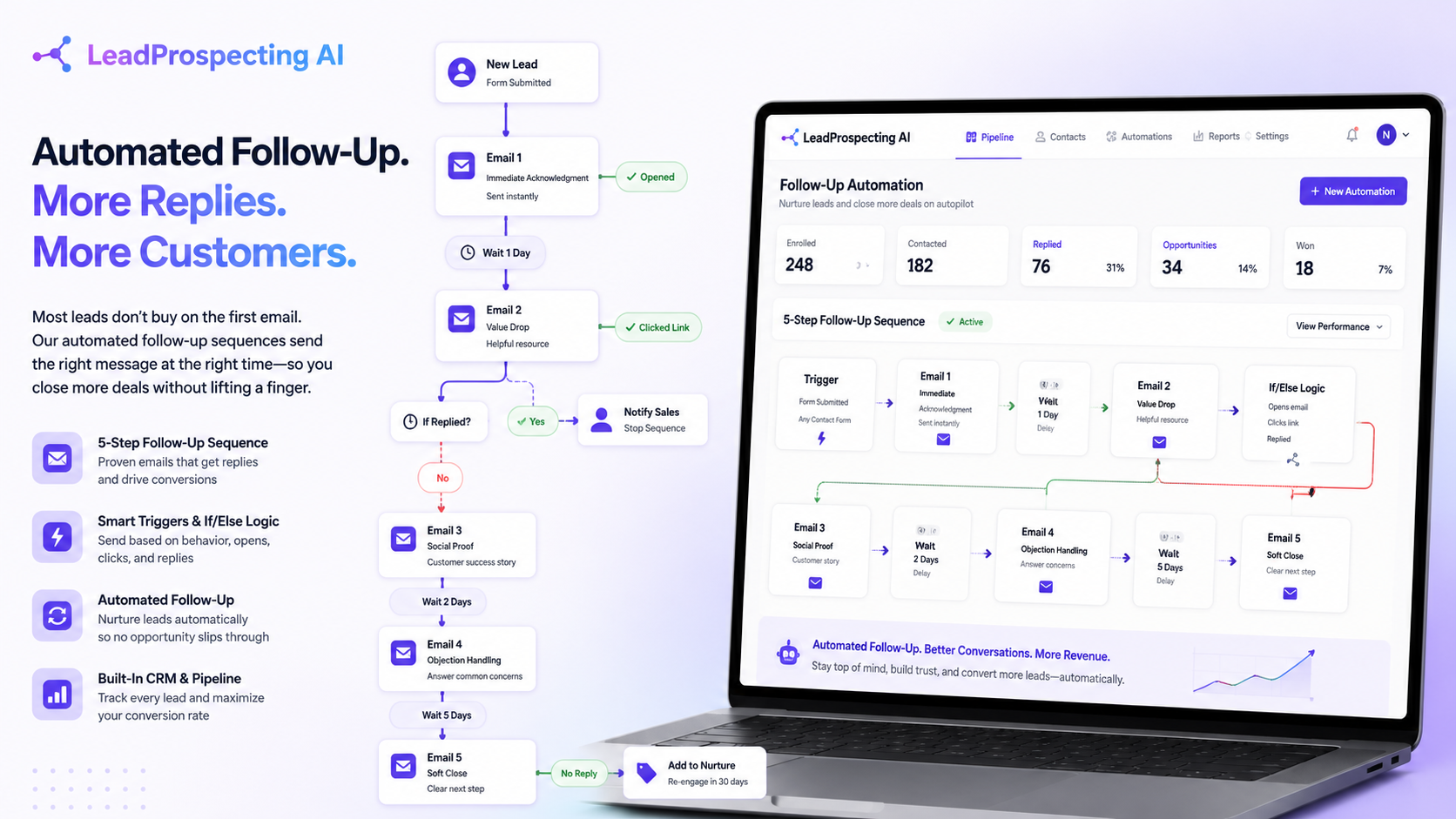
This is exactly why we built our platform around an integrated approach instead of a single email deliverability service bolted onto everything else. When your CRM, list sourcing, warming, and nurture campaigns live in one place, you can actually see where the breakdown happens. For small teams juggling six disconnected tools, that visibility is the difference between guessing and fixing. If you're shopping for a Keap alternative that doesn't make you stitch deliverability together with duct tape, that consolidation matters more than any single feature.
Marketing automation for small business shouldn't require a deliverability consultant on retainer. It should just work, and you should be able to see why when it doesn't. You can compare what's included on our features page.
Your Same-Day Action Plan
Don't wait for the next campaign to flop. Here's what you can implement today:
- Check your DNS. Verify SPF, DKIM, and DMARC are all live. Use any free authentication checker and fix gaps first.
- Audit your sending ramp. If you're sending more than 50 cold emails per inbox per day on a young domain, pull it back.
- Scrub your list. Remove bounces, role addresses, and contacts with zero engagement over the last 90 days.
- Separate your domains. Warm up and send cold from a secondary domain to protect your primary brand.
- Track placement, not just opens. Use seed testing to confirm where your mail actually lands.
One honest limitation: deliverability is never permanently "solved." Providers change rules, recipient behavior shifts, and reputation needs ongoing maintenance. The goal isn't a one-time fix; it's a repeatable system that catches problems before they cost you deals.
Frequently Asked Questions
Q: How long should an email warm up service run before I start sending?
Plan on a minimum of two to three weeks for a new domain, and four-plus weeks before high-volume sending. Rushing the ramp is the fastest way to undo the work.
Q: Does warm-up fix a domain that's already flagged as spam?
Sometimes, but not always. Warming can help rebuild reputation, but if the underlying issues (authentication, list quality, sending behavior) aren't fixed, you'll just burn the domain again. Severely damaged domains are often cheaper to replace.
Q: Can I warm up and send from the same domain?
You can, but you shouldn't blast cold campaigns from your primary domain. Use a separate sending domain so a deliverability mistake doesn't poison the address you use with existing clients.
Q: Is an email warmup tool enough on its own?
No. Warming protects reputation, but list quality and authentication determine whether that reputation actually translates into inbox placement. They work together or not at all.
Q: How do I know if my emails are actually landing in the inbox?
Open rates alone lie because of privacy features. Use seed-list or inbox-placement testing tools that report where your mail lands across Gmail, Outlook, and Yahoo specifically.
Ready to stop guessing why your emails miss the inbox? LeadProspecting AI combines verified list sourcing, true email warming with 98%-plus inbox placement, and a CRM that shows you exactly where deliverability breaks down. See plans on our pricing page, or reach out to our team for a straight answer on whether your current setup can be saved or needs a fresh start.